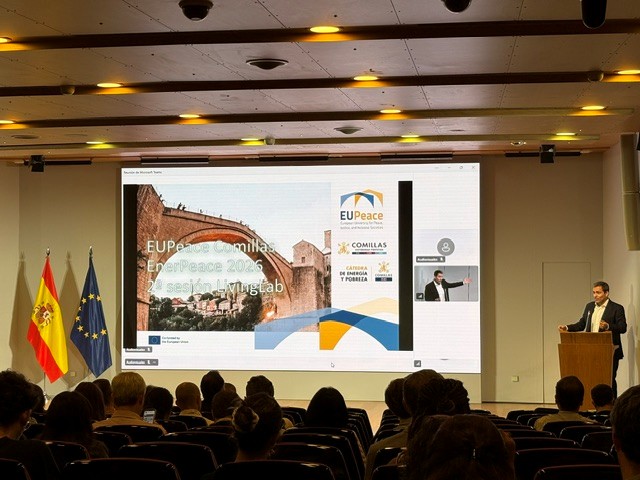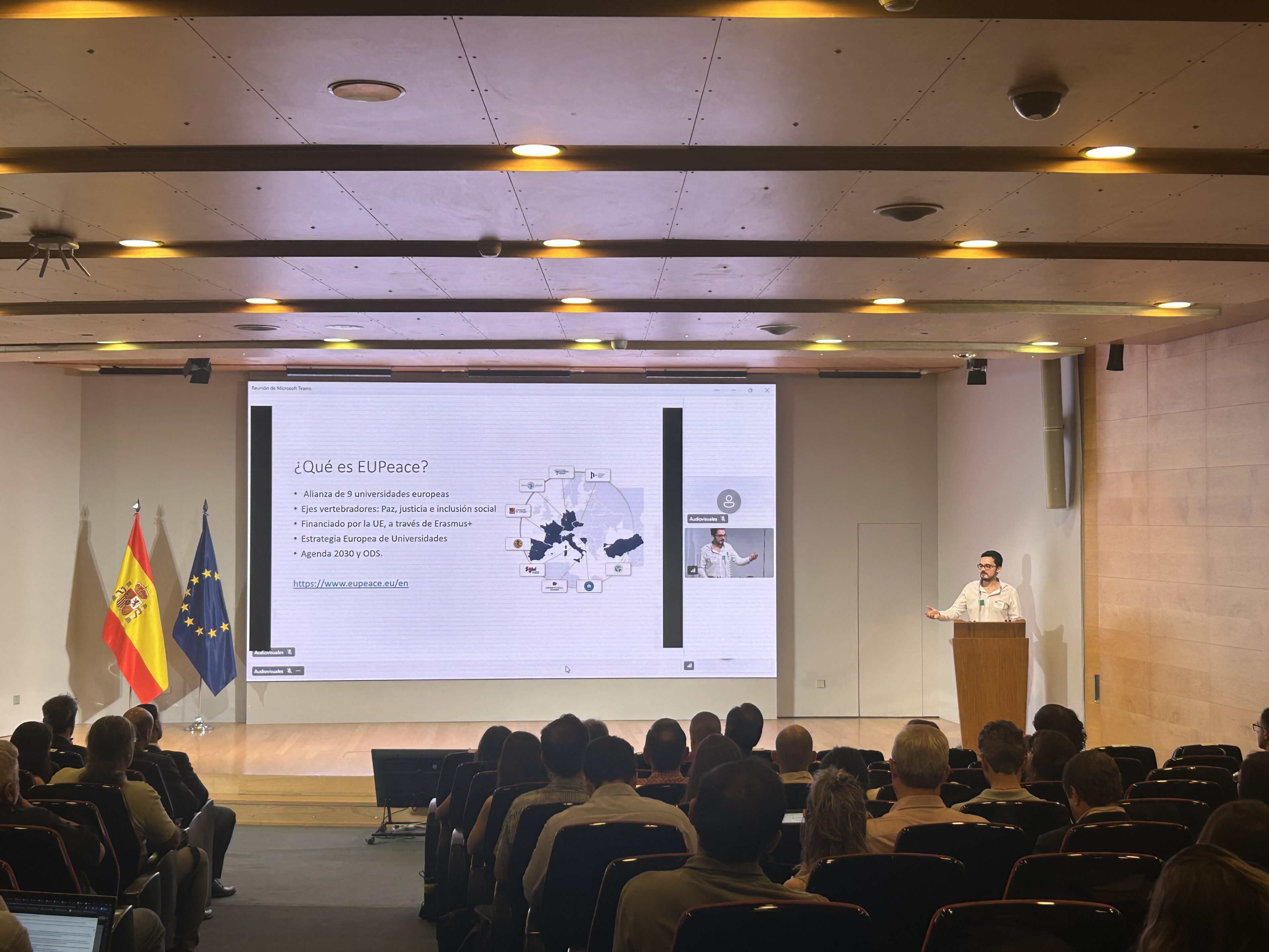
On the 18th of June The Chair of Energy and Poverty at Comillas Pontifical University participated in the Working Session on the Social Climate Plan with Civil Society, organised by the Spanish State Secretariat for Energy. The event brought together representatives from public institutions, universities, civil society organisations and experts to discuss measures aimed at ensuring a fair and socially inclusive energy transition.
Addressing Energy Poverty Through Knowledge Exchange
During the session dedicated to energy poverty, Roberto Barrella, researcher at the Chair of Energy and Poverty and the Institute for Research in Technology (IIT) at Comillas, presented key challenges related to identifying barriers and improving access to support schemes for vulnerable households.
The event also featured João Pedro Gouveia, Principal Researcher at the Centre for Environmental and Sustainability Research (CENSE) at NOVA University Lisbon and one of Europe’s leading experts on energy poverty. His presentation provided an overview of the current situation of energy poverty across Europe, recent regulatory developments promoted by the European Union and the challenges associated with implementing the Social Climate Fund.
Learning from European Experiences
Among the topics discussed were Portugal’s experiences in identifying vulnerable households, the automation of social energy tariffs, the role of national energy poverty observatories and initiatives focused on social support and energy advice. These examples offered valuable insights for the future design and implementation of public policies in Spain.
The discussions highlighted the importance of strengthening institutional capacities, improving governance mechanisms and ensuring that support measures effectively reach those most affected by energy vulnerability.
Contact


EnerPeace and the Living Labs Approach
The session was linked to EnerPeace, a Living Lab funded through the EUPeace project and led by the Chair of Energy and Poverty at Comillas Pontifical University. Through collaboration between academia, policymakers and civil society, EnerPeace promotes the exchange of knowledge and experiences on issues such as vulnerability identification, access to support schemes, governance and institutional capacity-building.
As part of EUPeace’s Living Labs initiative, EnerPeace demonstrates how universities can contribute to addressing complex societal challenges by creating spaces for dialogue, co-creation and evidence-based policymaking.
Supporting a Just Energy Transition
The participation of Comillas Pontifical University in this national working session reinforces the role of universities in generating knowledge that supports public decision-making. By connecting research, policy and community perspectives, EnerPeace contributes to the development of more equitable and sustainable approaches to the energy transition while advancing EUPeace’s commitment to social inclusion and societal engagement.