
EUPeace is the European University for Peace, Justice, and Inclusive Societies.
Our mission is to provide tomorrow’s citizens with the skills, knowledge, and experience to cultivate Peace, Justice, and Inclusive Societies. We explicitly address all sciences and fields, from the humanities and social sciences to the natural and life sciences as well as engineering, and are inspired by the rebuilt bridge of Mostar – the symbol in our logo – as a testament to how dialogue can overcome conflict.
EUPeace is comprised of 9 institutions coming together, embracing and fostering our unique geographic distribution and the implications these geographic roots bring to EUPeace: our institutions are located in regions with a lot of internal diversity and sometimes a still recent history of conflict.
We are Marburg University (Germany), Justus Liebig University Giessen (Germany), University of Limoges (France), University of Calabria (Italy), Comillas Pontifical University (Spain), University of West Bohemia in Pilsen (Czechia), University of Mostar (Bosnia and Herzegovina), Çukurova University (Türkiye), University of Sarajevo (Bosnia and Herzegovina) as well as our associated partners in Europe and beyond.
Contact


How to reach us

Marburg University

Contact:
Sandy Halliday,
eupeace@uni-marburg.de
Address:
Marburg University, International Office and Family Services, Deutschhausstraße 11+13, 35037 Marburg, Germany
Justus Liebig University Giessen

Contact:
Eva Zimmermann,
eupeace@uni-giessen.de
Address:
University of Giessen, International Office, Goethestr. 58, 35390 Giessen, Germany
University of Limoges
Contact:
Laurent Bourdier,
eupeace@unilim.fr
Address:
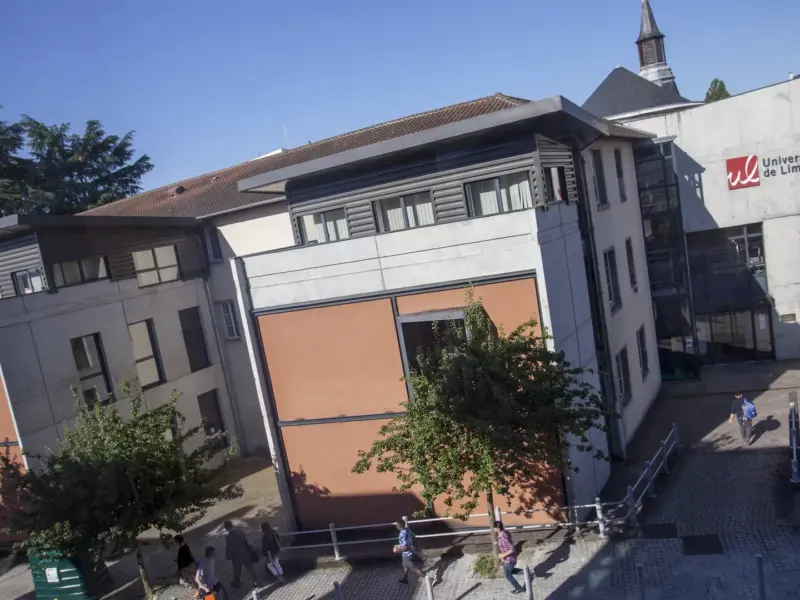
University of Limoges, Campus de Vanteaux, 39 H rue Camille Guerin, 87036 Limoges, France
University of Calabria

Contact:
Address:
University of Calabria, Via Pietro Bucci, 87036 Rende CS, Italy
Comillas Pontifical University

Contact:
Teresa Morales de la Fuente,
eupeace@comillas.edu
Address:
Comillas Pontifical University, C/ Alberto Aguilera, 32, Madrid 28015, Spain
University of West Bohemia in Pilsen

Contact:
Ondřej Benda,
eupeace@rek.zcu.cz
Address:
University of West-Bohemia, Univerzitní 8, 306 14 Pilsen, Czech Republic
University of Mostar

Contact:
Inja Stojkić,
rektorat-ms@sum.ba
Address:
University of Mostar, International Relations Office, Kralja Petra Krešimira IV, 88 000 Mostar, Bosnia and Herzegovina
Çukurova University

Contact:
Duygu Bahçekapılı,
bahcekapili.duygu@gmail.com,
eupeace@cu.edu.tr
Address:
Çukurova Üniversitesi Rektörlüğü 01250, Sarıçam/Adana, Türkiye
University of Sarajevo

Governance

The Governing Board (GB) is the Alliance’s primary decision-making body, responsible for setting strategic guidelines, and providing political support, orientation and validation for project-based activities and the overall development of EUPeace. It is composed of the Rectors and Presidents of the member institutions or their direct representatives
The Education Board (EB) supervises joint curriculum development and related educational initiatives. It ensures that all member universities actively contribute their perspectives, expertise and input. Members are the Vice-Rectors and Vice-Presidents for Education, Study, and Teaching from each partner institution.
The Steering Committee (SC) guides EUPeace’s governing bodies and serves as a link to the coordination structures. Each partner institution is represented by two individuals: one from the upper administrative level and one academic leader responsible for implementing Alliance activities at their institution.
The Research Council (RC) brings together Vice-Rectors/Vice-Presidents responsible for research and the heads of units supporting research projects accross partner univerisities. The Council advises on alliance-wide research initiatives and promotes the recognition of Alliance-specific research priorities embedded within the institutions.
The Coordination Office (CO) manages the day-to-day operations of EUPeace and serves as the first point of contact for the execution of Alliance activities. It coordinates between stakeholder groups and member institutions, overseeing implementation and progress. The office is led by the Secretary General with the support of the full coordination team.
The Coordination Network (CN) implements project management, activity coordination, and progress monitoring at institutional level. It represents EUPeace administration locally and ensures the transfer of information from the Coordination Office to each member institution via dedicated local coordinators. The network comprises local correspondents and representatives from the Coordination Office.
As part of the Coordination Network, the Communications Office is guided by the Secretary General and coordinated by the EUPeace Communications Officer. It manages internal communication, fosters Alliance identity and belonging, and supports external communication activites.
As part of the Coordination Network, the Digitisation Office (DigiO) is guided by the Secretary General andcoordinated by the EUPeace Digitisation Officer. It supports teams working on digitisation, including the Online Campus, and ensures the application of state-of-the-art standards in data security and institutional EDI practices.
The Student Council (STC) comprises two elected representatives per member institution. It collaborates closely with all other bodies to ensure student representation, providing input and a relaying information on the implementation of activities.
The Senate includes one representative per status group (students, doctoral candidates, early career researchers, faculty, administration) from each member institution. It represents the various EUPeace communities at the level of the Alliance and provides feedback on the implementation and impact of Alliance activities.
The Equality, Diversity and Inclusion Board (EDIB) analyses structural exclusions and promotes the development of safe, inclusive EUPeace campuses. Working alongside the Student Council, it advices teams on creating a joint EUPeace Code of Conduct fostering diversity and inclusion.
The EUPeace Quality Assurance Board (QAB) advises mainly on matters related to the quality of joint educational offerings. It works closely with the Education Board, an the two bodies consult and coordinate as needed.
The External Advisory Board (EAB) is an independent body providing strategic advice and external perspectives on EUPeace activities. It evaluates past achievements, current performance, and future goals, and submits an annual report with recommendations to the Governing Board. Members are recognised experts from diverse sectors supporting Alliance’s overall objectives.