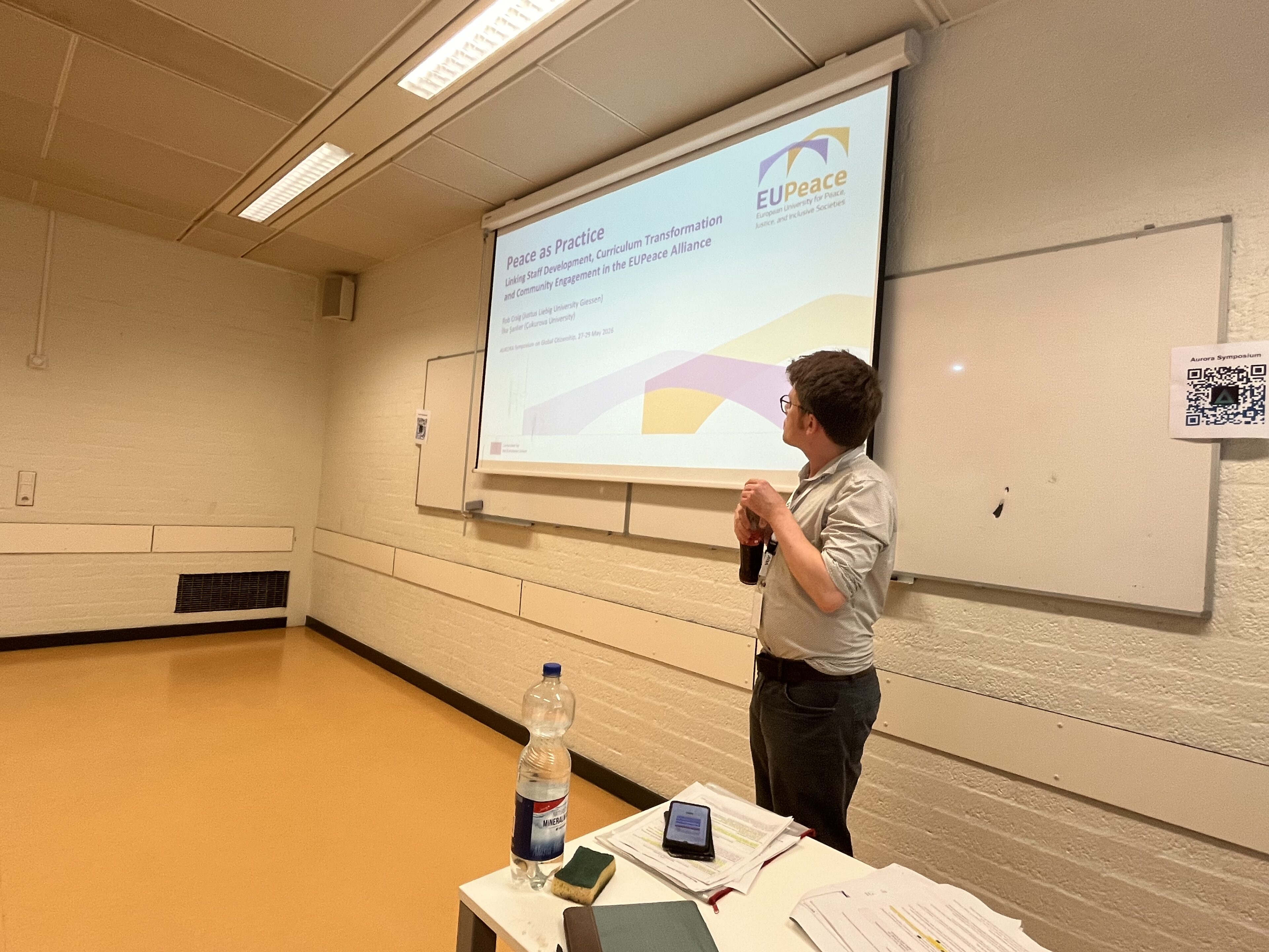

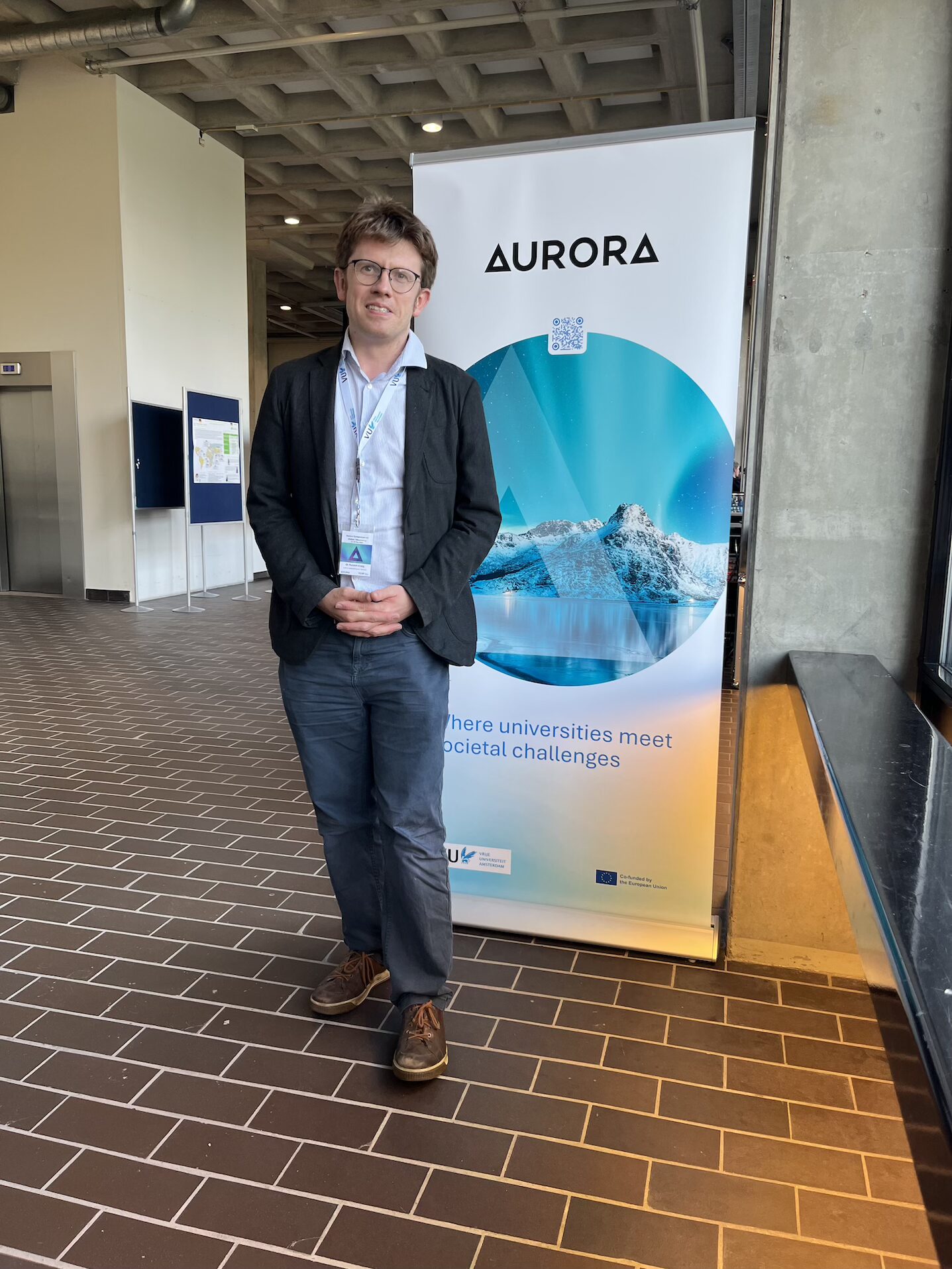
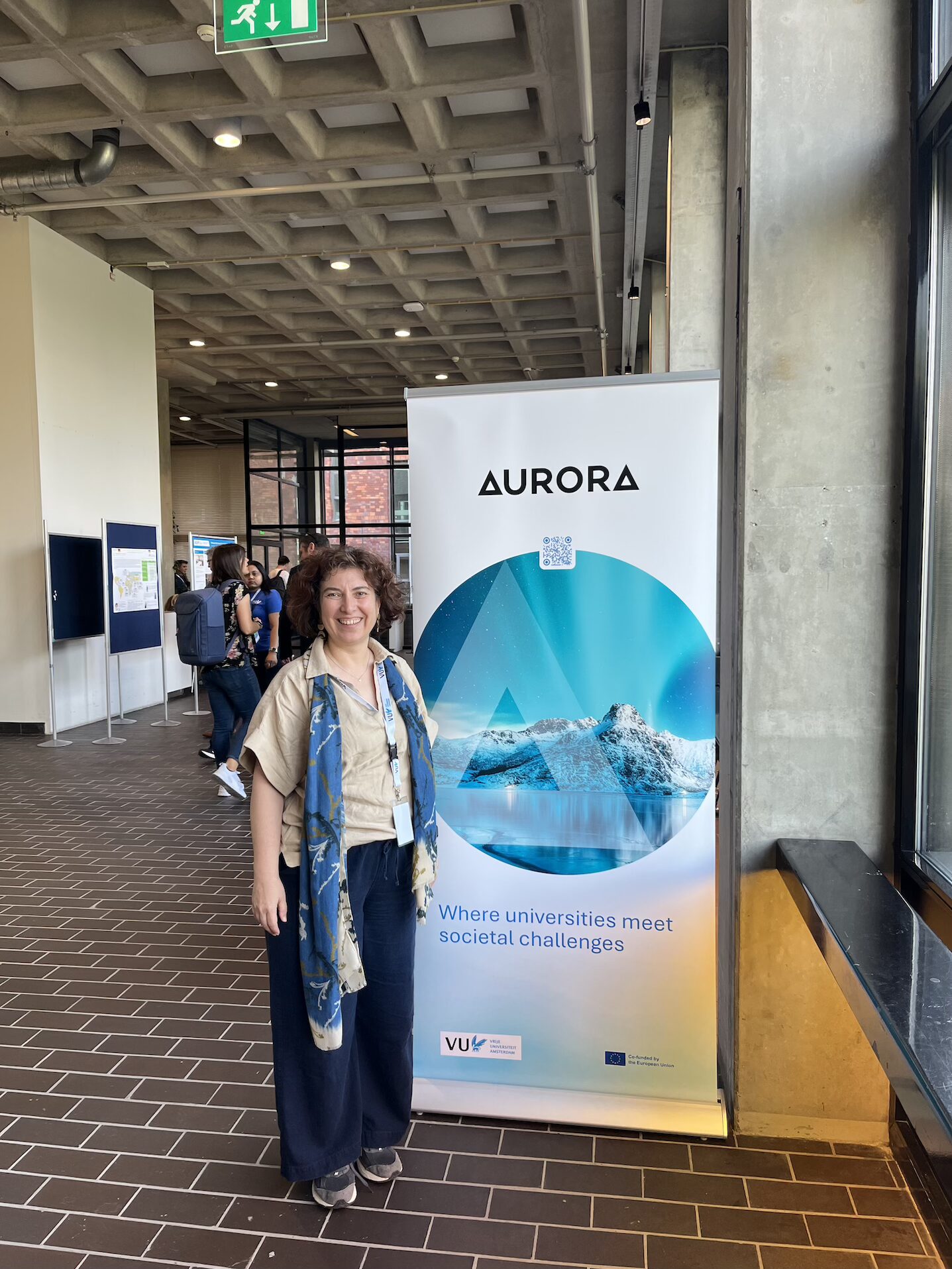
On 27 May 2026, EUPeace representatives İlke Şanlıer (Çukurova University) and Robert Craig (Justus Liebig University Giessen) delivered an interactive workshop at the Aurora Symposium on Global Citizenship, hosted by Vrije Universiteit Amsterdam.
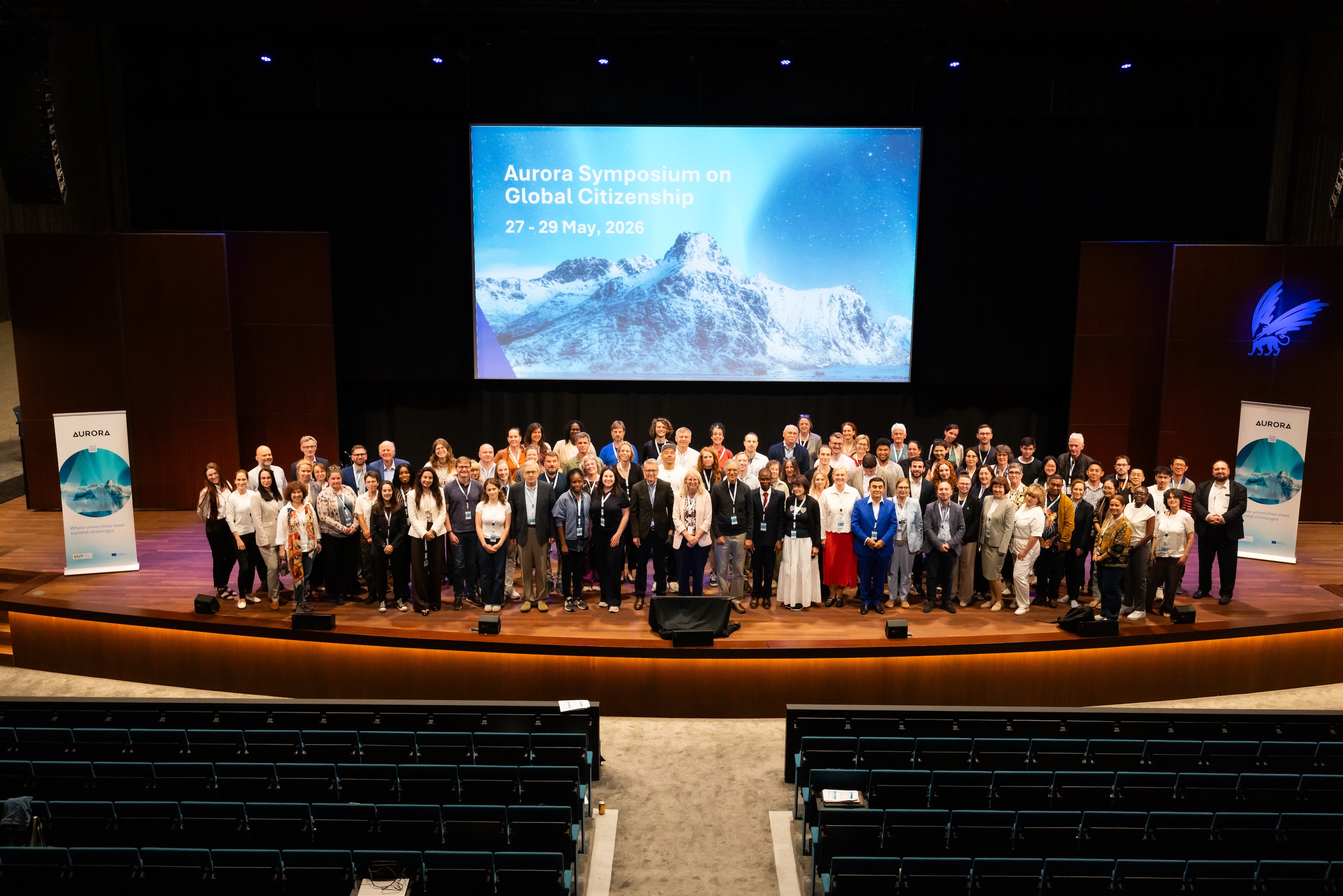
The three-day symposium brought together over 160 participants from more than 40 universities across 23 countries, making it one of the largest cross-alliance gatherings on global citizenship education in European higher education this year.
A Transformation Chain: From Staff Development to Community Engagement
The EUPeace workshop, titled “Peace as Practice: Linking Staff Development, Curriculum Transformation and Community Engagement in the EUPeace Alliance,” was part of the symposium’s Education for Global Citizenship strand. Rather than presenting peace education as a set of thematic courses, the workshop introduced EUPeace’s transformation chain model, which positions staff development as the enabling condition for curriculum transformation, which in turn makes genuine community engagement possible.
Setting the Frame: Teaching Staff Academy and Societal Dialogue
The session opened with a compact framing of two core EUPeace structures. Craig presented the Teaching Staff Academy, the Alliance’s cross-border capacity-building programme that equips educators with the competences and collaborative networks required for peace-responsive pedagogy. Şanlıer introduced the Societal Dialogue action line and community-engaged education with its two-tier architecture: asynchronous soft skills courses that cultivate transversal competences such as dialogical communication and intercultural literacy (Tier 1), and transnational challenge-based courses co-developed with societal actors, where students engage with real-world problems alongside community partners (Tier 2).
Co-Design in Practice: Mapping Institutional Gaps
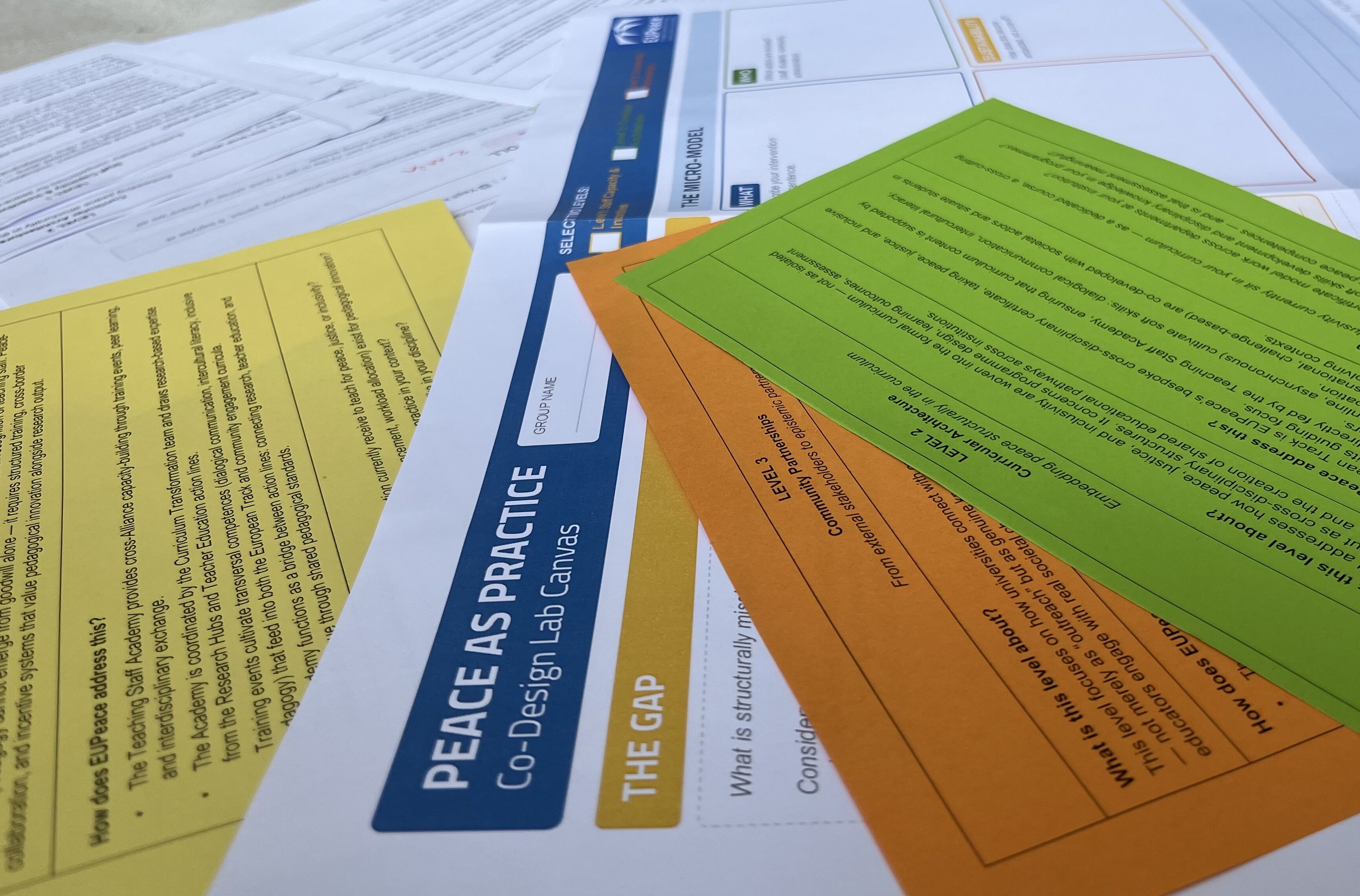
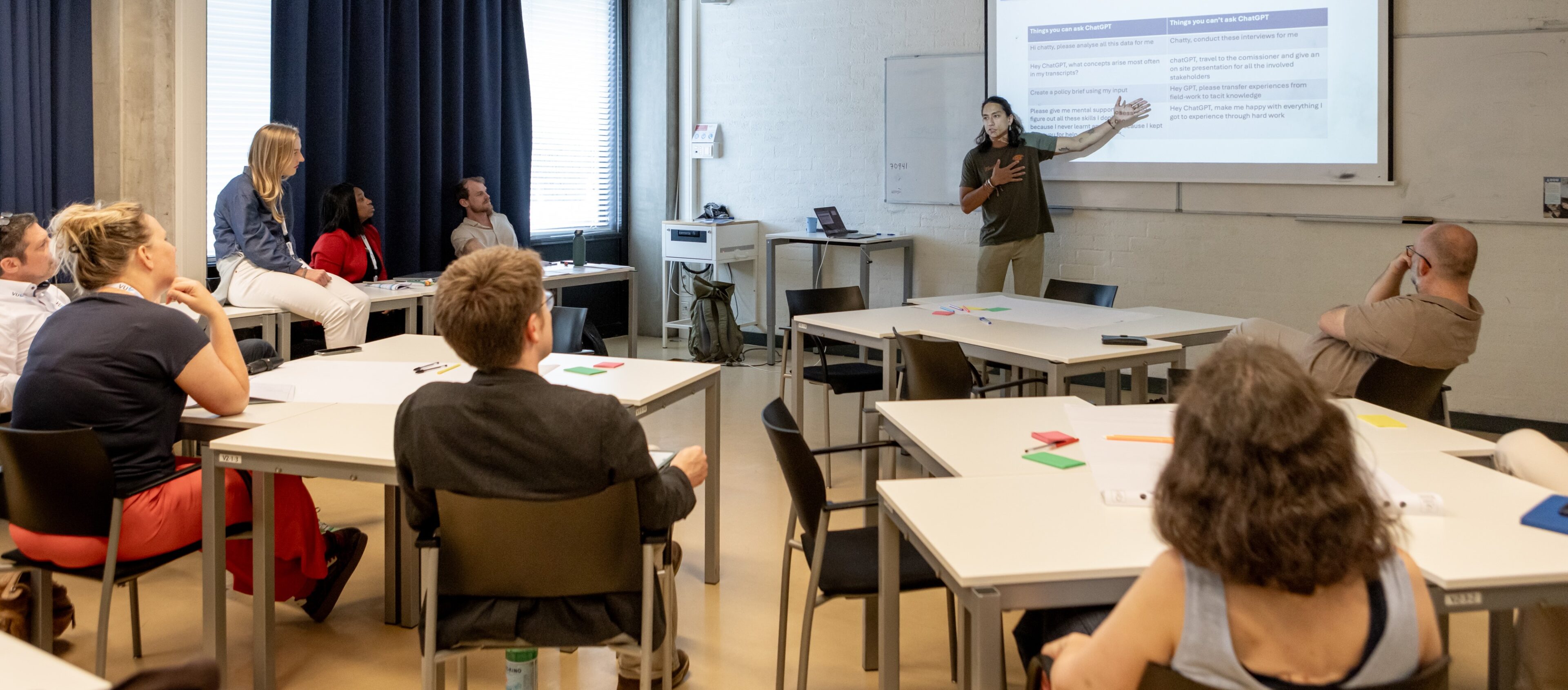
The workshop introduced the co-design methodology and structured canvas developed for the session, which maps three institutional levels, staff capacity, curricular architecture, and community partnerships, and invites participants to identify structural gaps between them. With participants, the session evolved into a rich, open discussion in which educators shared how peace and civic education initiatives are advancing at their own institutions. This format allowed for deeper exchange on common challenges, including the difficulty of creating institutional incentives for pedagogical innovation and the tension between community engagement as rhetoric and as embedded practice. The canvas framework served as a shared reference point throughout, grounding the discussion in concrete structural questions rather than abstract ideals.
The session closed with a collective synthesis drawing on patterns across the discussion. Recurring themes included the need for cross-disciplinary structures that go beyond individual courses, the challenge of sustaining community partnerships beyond project cycles, and the gap between institutional declarations on civic education and the structural conditions required to deliver on them.
Peace as an Ongoing Effort: A Wider European Conversation
The symposium’s broader programme featured keynote presentations, panel discussions, and workshops addressing topics from peacebuilding and societal resilience to democratic participation and community service learning. In his keynote, VU Amsterdam Rector Jeroen Geurts framed peace as an ongoing effort rather than the absence of conflict, a perspective closely aligned with EUPeace’s own foundational approach.
EUPeace’s participation in the Aurora Symposium reflects the Alliance’s commitment to sharing its models and practices beyond the consortium, contributing to the wider European conversation on how universities can structurally embed peace, justice, and inclusivity in their educational missions.