






Impact & Impact Monitoring in EUPeace
EUPeace is a European University Alliance working towards the long-term conditions for peace, justice, and inclusive societies. Impact and impact monitoring help us understand how our joint activities make a difference for students, staff, partners, and the wider communities we serve.
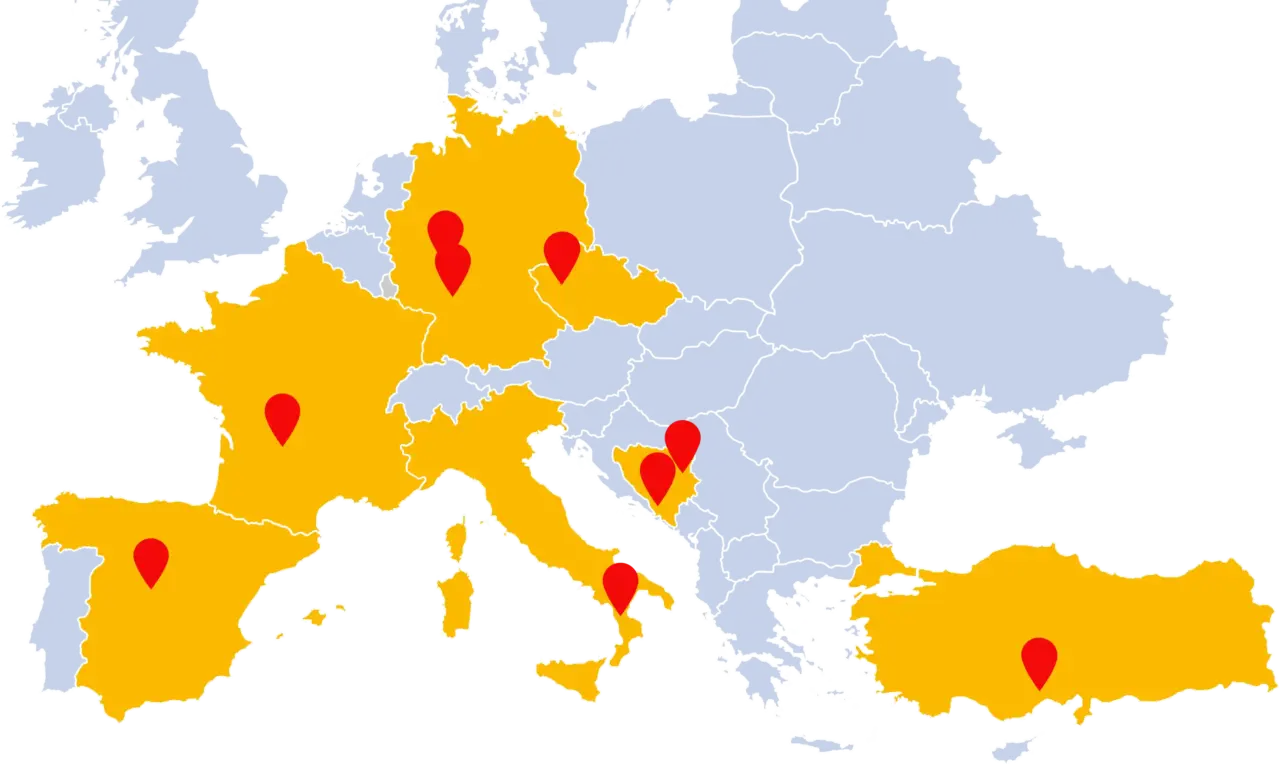
EUPeace brings together nine universities across Europe that share a commitment to collaboration, openness, and societal responsibility. Our geographic diversity—spanning Central, Eastern, Southern, and Southeastern Europe—enriches the Alliance with a wide range of cultural, social, and academic perspectives. This diversity strengthens our ability to address complex challenges and to co-create solutions that reflect the realities of a changing Europe.
Through joint programmes, mobility opportunities, research cooperation, and engagement with society, EUPeace creates environments in which new ideas, perspectives, and partnerships can thrive. Impact monitoring helps us understand how these cross-regional collaborations grow over time and how they contribute to meaningful, long-term change for students, staff, institutions, and communities.
What is Impact in EUPeace?
EUPeace works to support the long-term conditions for peace, justice, and inclusive societies.
In the Alliance, “impact” refers to the positive and lasting change created through cooperation in education, research, society, and institutional development.
EUPeace follows a shared Theory of Change, which outlines how our resources, activities, and collaboration contribute to these long-term goals. It connects what we invest (inputs), what we do (activities), what we create (outputs), and what changes as a result (outcomes and impact).
Transforming Learning Through
the European Track & VEEP
EUPeace has created two flagship formats—the European Track and the Virtual European Exchange Programme (VEEP)—that make international and intercultural learning available across all nine partner universities. Institutions without previous virtual teaching infrastructure now offer more than 150 virtual and nearly 200 on-site courses, opening new pathways for flexible cross-border learning. Over 500 students at the University of West Bohemia joined the first pilot, demonstrating strong demand and early success. This pathway—from shared investment to shared courses to stronger intercultural competencies—illustrates the Alliance’s Theory of Change in action.
Our Theory of Change (at a glance)
EUPeace’s Theory of Change describes how shared resources, activities, and collaboration lead to meaningful outcomes and long-term impact. It links what we invest (inputs), what we do (activities), what we create (outputs), and what changes as a result (outcomes and impact).
This shared model helps the Alliance plan strategically and understand how day-to-day work contributes to broader goals.
For example, a joint learning activity may lead to shared teaching materials (output) and strengthen intercultural competence among students (outcome).
The Theory of Change also supports impact monitoring by indicating where evidence of progress can be observed. It is complemented by the PPMI Monitoring Framework, which aligns Alliance-level developments with European higher education policy goals.
How EUPeace Works Towards Impact
Across all partner universities, EUPeace follows a shared approach to creating impact:
-
Engage – involving students, staff, and external partners in shaping activities and exchanging perspectives.
-
Share – making knowledge, results, and opportunities accessible across the Alliance through open science, collaboration, and communication.
-
Monitor – reflecting on progress to understand how activities contribute to outcomes and long-term goals.
This approach strengthens cooperation across the Alliance and creates conditions in which ideas, practices, and innovations can travel between institutions.
Strengthening Student Communities Across Europe
The EUPeace Student Association (EUPSA) and local student groups—such as the 600-member EUPeace Club in Adana—create new spaces for engagement, collaboration, and community-building. Through joint events, student-led challenges, and the first EUPeace Student Campus Festival in Limoges, students from all nine universities connect across disciplines and borders. These activities show how shared engagement and collaboration lead to new initiatives, stronger participation, and a growing sense of belonging within the Alliance.
What Is Impact Monitoring?
Living Peace Labs Connecting Academia and Society
The Living Peace Labs bring together students, researchers, public institutions, civil society and community members to address real-world challenges through co-creation. With more than 60% of participants coming from outside academia, they demonstrate strong societal reach and engagement. Through evidence-based dialogue and collaborative problem-solving, the Labs show how lived experience and monitoring insights inform better solutions.
A recent example is the EnerPeace Living Lab at Comillas, where experts, institutions and citizens co-developed data-driven responses to energy poverty in Spain. By linking research with everyday realities, EnerPeace illustrated how co-created knowledge can support more inclusive and effective public policies.
Impact monitoring helps EUPeace understand whether activities lead to the intended outcomes and contribute to long-term impact. It involves gathering information about what the Alliance does, who participates, and what changes as a result. Monitoring combines quantitative data with qualitative insights to build a fuller picture of progress and to identify patterns that may not be visible through numbers alone.
The process is guided by the Impact Logic Model, which shows how activities connect to outputs, outcomes and impact, and helps ensure that short-term achievements remain aligned with the Alliance’s long-term goals. For example, monitoring can reveal how a new joint activity strengthens cooperation between institutions, increases participation, or creates new learning opportunities for students and staff. It also helps the Alliance understand where additional support, coordination or adaptation may be needed. By reflecting on these developments, EUPeace can learn from experience, adjust its approaches, and continuously strengthen the quality and relevance of its work over time.
What We Monitor
To understand how our work evolves across the four impact dimensions, EUPeace monitors a set of core areas:
-
Activities and Outputs: for example, joint learning activities, research events, or outreach initiatives that bring partners together.
-
Participation and Engagement: such as student, staff, or stakeholder involvement in Alliance activities.
-
Visibility and Communication: for example, efforts that make results accessible, such as website updates, videos, or public events.
-
Institutional Development: such as strengthened cooperation between universities, new structures, or shared tools.
These categories offer a high-level overview of how progress becomes visible as the Alliance grows.
Building a Common Culture Through Staff Weeks & Shared Tools
EUPeace Staff Weeks in Marburg/Giessen and Adana brought together 79 administrative and technical staff to learn from one another, exchange ideas, and develop joint solutions. These gatherings foster trust, accelerate progress on shared tools such as the Course Repository, and make cross-institutional cooperation smoother and more effective. As a result, institutional development becomes visible in everyday collaboration, demonstrating how activities, participation, and shared structures build lasting impact.
Who Is Involved?
Impact monitoring is a joint effort across the Alliance. Key actors include:
- the Governing Board, which holds a strategic oversight role with regard to impact. It is informed by monitoring results and uses them for strategic decision-making;
-
the Steering Committee and the Monitoring Committee, which oversees monitoring and evaluation processes;
-
the Coordination Office, which supports data collection and alignment;
-
all Work Packages, which contribute information on their activities and results;
-
WP8, which provides communication, dissemination, and visibility data.
Looking Ahead
This page is the starting point for sharing how EUPeace approaches impact and success stories. As our work progresses, we will update this section with concrete examples, results, and insights from across the Alliance.