








The development of joint Master’s programmes and degrees represents one of EUPeace’s “flagship” projects. Our Alliance intends to:
- develop two programme pilots – one in the humanities and the social sciences and one in the STEM subject areas – for the deep integration of curricula based on the broad roll-out of the European Track. The two pilots will be followed by three additional degrees.
- integrate the experience of the European Track, the Research Hubs, and the Living Peace Lab into the development.
Our approach to developing these programmes will be very pragmatic. Rather than a joint degree with the ambition to tick all the boxes for the planned European Degree, we will develop programmes fostering strategic development interests of the members to build competence, test ideas and ensure buy-in.
Below, you will find a list of the seven current “high-potential areas” (HPAs) that the Alliance has identified for the development of joint Master’s programmes. Grouped within these areas, you’ll find described our current plans and projects. For general enquiries, or to suggest ideas for further high-potential areas, you are very welcome to contact the Alliance’s Coordinator of WP2 (“Transforming Curricula”), Dr Robert Craig, at eupeace.wp2@uni-giessen.de.
Strategy for identifying and developing high-potential areas:
In March 2025, the Education Board decided on the following strategy for identifying and developing high-potential areas for the development of joint Master’s programmes:
- High-potential areas must be linked to the core values of EUPeace: peace, justice, and inclusive societies.
- High-potential areas are of strategic interest for the Alliance and its partner universities. Strategic interest may be defined in terms of a combination of attractiveness for prospective students; post-degree employability; and degree of added value for our universities’ teaching and research profiles.
- High-potential areas are based on overlaps of study and research areas of the partner universities (hence on the results of curriculum mapping).
- High-potential areas can be proposed by any faculty within EUPeace and developed on the basis of networking with similar interested faculties across the Alliance: they should not simply be imposed “from above”.
Commitment to funding HPAs:
At the Alliance’s Autumn Meetings in September 2025, the Education Board approved the following seven high-potential areas, which have been confirmed by the Governing Board. Based on these areas and ongoing plans, the work package will work with the Boards to develop a funding scheme, prioritising projects that align with institutional strategies and generate strong faculty interest. The Education Board and Governing Board have explicitly committed to developing those projects that both align with institutional strategic priorities, and which are generating significant bottom-up interest within the faculties.
Contact
High-potential areas:
1. Peace and Conflict Studies in European and Global Perspectives:
This high-potential area directly relates, in the first instance, to the Alliance’s core values of peace, justice, and inclusive societies; and, as such, it is a highly suitable area of development for one of our pilot Master’s programmes. Secondly, the research hubs “Security and Conflict Transformation” and “Migration and Human Rights” are oriented directly towards interdisciplinary thematic areas that intersect with the field of peace and conflict studies. Thirdly, the curriculum mapping process conducted in 2024, and presented to the Education Board at the Autumn Meetings in Madrid in September 2024, was highly productive in yielding a very large number of Master’s programmes that might serve as the basis of new study programmes. A process of Alliance-wide mapping in this thematic area revealed a total of existing 29 Master’s programmes touching on the field and theme of peace and conflict studies. These sit within (and at the intersections between) the disciplinary fields of political science, international relations, sociology, security studies, and religious and interfaith studies. A process of mapping in the area of Migration and Human Rights additionally yielded a (substantially overlapping) total of 35 Master’s programmes which intersect with peace and conflict studies, political science, sociology, and also encompass both migration studies and international and human rights law.
In addition, the Alliance already has considerable expertise in developing and running Master’s programmes in this area, including Marburg University’s joint MA in Peace and Conflict Studies with the University of Kent; and “PoSIG”, the joint Master’s programme in Political Science: Integration and Governance in which the University of Sarajevo is a collaborator.
The existing expertise within the Alliance is feeding into the development of an interdisciplinary joint degree in Conflict Transformation and Security, coordinated by Marburg University, which also involves Comillas Pontifical University, Çukurova University, and the Universities of Sarajevo, Limoges and Mostar. This interdisciplinary study programme focuses on the analysis and transformation of peace, violence and conflicts within societies and in the international system. It will offer an integrated, joint cohort experience across a single academic track. Students will undertake at least two mandatory mobility periods at two partner universities. The programme will span two years and award 120 ECTS points upon successful completion.
To find out more, please contact Dr Robert Craig (WP2 Coordinator) at eupeace.wp2@uni-giessen.de
2. Securing Sustainable Futures: Nutritional, Agricultural and Environmental Sciences and Engineering
Two processes of curriculum mapping have revealed the considerable potential within this field. First of all, mapping conducted in summer-autumn 2024 – in the Research Hub-adjacent field of “Climate Science and Just Transition” – revealed a total of 448 degree programmes (at Bachelor’s, Master’s and doctoral levels) that either directly or indirectly touch upon themes within climate science and the green transition, from multiple disciplinary perspectives. Additional mapping conducted in the narrower field of Nutritional and Agricultural Sciences yielded a total of 85 existing degree programmes across the Alliance at both Bachelor’s and Master’s levels that either touch upon or crossover with this general field.
Concrete interest in developing joint programmes in this overall field is crystallising in two forms. Firstly, the Universities of Limoges, Gießen, Marburg, and Calabria are in the process of developing a joint Master’s programme in the area of Water Resources Management and Policy, for which they have received seed money from the EUPeace Fund (for more information on the project itself, see here). As an inherently interdisciplinary joint degree, it will address the themes of water resource management and policy from inter- and trans-disciplinary perspectives that encompass water engineering, biology, chemistry, environmental sciences, sustainability studies, and human and physical geography. In order to do this, it will leverage the existing research and teaching strengths, and the existing course and module offers, of the four partners. The project team is currently working on an innovative joint degree model that will be applied not merely to the development of the Water Resources Management master’s programme, but also to other joint programmes in STEM fields such as telecommunications, mechatronics, robotics, and material sciences. Mobility within the EUPeace Alliance will play an integral role in a jointly devised and specially tailored curriculum: alongside study at their home university, students will be expected to spend a semester studying at each of the two partner universities.
Colleagues at the Universities of Sarajevo, Mostar and Calabria, along with Çukurova University, have expressed concrete interest in developing a Master’s programme in the area of Agricultural Sciences and Food Engineering. The University of Sarajevo has agreed to coordinate the development of this Master’s programme from January 2026 onwards. A first — general — expert workshop to discuss general plans in the area of nutritional, agricultural and environmental sciences and engineering took place in June 2025. A second expert workshop, with a focus on discussing the purpose, the shape, the content and the learning outcomes of the Master’s programme, took place on 19 January 2026. A working group has been convened.
To find out more, please contact Dr Robert Craig (WP2 Coordinator) at eupeace.wp2@uni-giessen.de
3. Ethical Innovations: Computer Science, Data Science and AI
This high-potential area calls for a Joint Master’s programme in computer science and AI that combines cutting-edge research with ethical responsibility, preparing students for a fast-changing labour market while promoting peace, justice, and inclusive societies. This field has already been identified as one of particularly high strategic interest for the Alliance, as reflected in both the Alliance’s proposal for a fifth research hub dedicated to AI, as well as the thematic choice of the title “Advancing Justice, Peace and Inclusiveness in Times of AI” for the Alliance’s 2025 Conference. A process of curriculum mapping in 2025 revealed a current Alliance-wide total of 43 existing degree programmes – at both Bachelor’s and Master’s levels – dedicated to IT, Data Science, and AI, of which around 10 are offered either partly or fully in English. A first expert workshop to discuss general plans in the area took place earlier in 2025. Çukurova and Marburg Universities, and the Universities of Calabria, West Bohemia in Pilsen, and Sarajevo have expressed concrete interest in the development of a joint MSc. with an inter and cross-disciplinary focus on Computer Science and AI. The University of West Bohemia in Pilsen has agreed to coordinate the development of this Master’s programme from January 2026 onwards. A second expert workshop, with a focus on discussing the purpose, the shape, the content and the learning outcomes of the Master’s programme, took place on 22 January 2026. A working group has been convened.
To find out more, please contact Dr Robert Craig (WP2 Coordinator) at eupeace.wp2@uni-giessen.de
4. Building a Resilient Europe: International Economics, Business and Management:
Interest within this area runs in a number of different directions. Curriculum mapping conducted during 2025 revealed around 91 degree programmes across the Alliance – at both Bachelor’s and Master’s level – that either sit within or relate to the fields of business studies and economics. 29 of these programmes – i.e. almost a third – are offered either entirely or partly in English.
On the basis of ongoing discussions within the respective economics faculties, the Universities of Gießen, Calabria and Sarajevo are in the process of developing joint educational offers within the areas of the Economics of Global Risk (primarily the University of Gießen), Finance and Insurance (primarily the University of Calabria), and Global Economy & European Integration (primarily the University of Sarajevo). Over the course of three progressive project phases in the coming twelve months, the project’s aim is to formalise plans for potential study programmes between the three partners on the basis of a jointly developed and implemented legal and administrative framework. These collaborations are being supported on a “co-funded” basis through seed money from the different institutions, in the form of the EUPeace Fund.
The rationale for developing an EUPeace Master’s programme that spans – and combines – the subjects of the economics of global risk and finance and insurance relates to their profound significance to EUPeace’s central values. The twenty-first century is marked by multiple profound uncertainties, including financial crises, climate shocks, pandemics, geopolitical instability, and systemic risks that transcend national borders. Systematically confronting those challenges requires expertise at both the macro-level (understanding and analysing global risks) and the micro-level (designing effective financial and insurance mechanisms to mitigate risks).
Cooperation between the JLU and the University of Calabria would respond to this need by combining JLU’s strength in economics of global risk, geopolitics, and development under uncertainty on the one hand with the University of Calabria’s expertise in finance, insurance, risk management, and actuarial sciences. The value of this integration would prepare graduates to diagnose systemic risks and translate them into practical financial, insurance, and policy solutions. The contribution of the University of Sarajevo – which is to be discussed in more detail from early 2026 onwards – will lie in the general area of the economics of European integration. In turn, discussions will also be conducted with the Faculty of Economics and Business Administration at Comillas Pontifical University in 2026.
Concrete interest has also been expressed – by Çukurova University and the Universities of Limoges, Mostar, and West Bohemia in Pilsen – in developing a possible Master’s programme in the direction of International Business Administration and Management. A workshop to stake out concrete interest in this direction – and to begin to determine the purpose, the shape, the content and the learning outcomes of the Master’s programme – took place on 15 January 2026.
To find out more, please contact Dr Robert Craig (WP2 Coordinator) at eupeace.wp2@uni-giessen.de
5. Diversity, Equality and Social Transformation:
This theme directly reflects the Alliance’s central values of peace, justice, and inclusive societies; and it is also mirrored in current curricular developments within the Alliance: 20.3% (35) of the courses offered for the pilot phase of the European Track are assigned to the related thematic area “Democracy, Equality, Justice”; whereas 18.6% (32) are assigned to the thematic area of “Building Inclusive Societies”.
There is considerable concrete interest within the Alliance in the development of a Master’s programme in the direction of Gender Studies: colleagues from all nine partner universities took part in an initial expert workshop on 16 January 2026 to begin to stake out the general form and content of a possible Master’s programme. The theme of the proposed programme is closely related to the current cross-Alliance project – supported by the EUPeace Fund – to develop a Sexual and Gender Studies Track programme, which currently involves the Universities of Gießen, Calabria, West Bohemia in Pilsen, Çukurova University, and Comillas Pontifical University.
To find out more, please contact Dr Robert Craig (WP2 Coordinator) at eupeace.wp2@uni-giessen.de
6. Global Health: Thinking Beyond Borders and Boundaries
The rationale behind a high-potential area in “Global Health” relates to its thematic relevance to the fundamental values of EUPeace; and this is reflected, too, in the dedication of the fourth research hub to the to the theme of “Inclusive Health and Well-Being”.
Throughout the Alliance there is a sustained interest among multiple researchers to establish a joint European Master Degree on Global Health. A process of curricular mapping identified some 145 degree programmes that relate either directly or indirectly to this broadly defined and highly interdisciplinary area of study and research. In turn, an initial process of Europe-wide market research revealed a relatively small number of existing, dedicated Master’s programmes in the area of Global Health within the European Union: approximately 29. Many of these – notably in Germany – are professional Master’s programmes aimed at a target group of students wishing to extend their skills portfolios and credentials while already in employment.
A proposed (standard) Master’s programme would aim to address the broad scope of the topic of “Global Health” and further uphold, reinforce and promote the Alliance’s normative principles and goals. Its educational objective would be to provide an interdisciplinary international Master’s degree that prepares students from diverse academic backgrounds to contribute to inclusive health and wellbeing – essential preconditions for peace and inclusive societies – through their future professional or academic work in various fields.
The programmes would offer a joint core curriculum, spanning one semester, focusing on the interconnectedness of health, social justice, and inclusion, and taking into account the diverse national cultures and languages of the partner countries. Building on this foundation, the subsequent semesters would offer various complementary thematic tracks, including such topics as “one health”; non-communicable diseases, sports, and physical health sciences; nutrition; health systems and politics; sexual and reproductive health and rights; and digital health.
Each semester would include intercalated mandatory crosscutting thematic seminars for all students, aimed at advancing skills and experiences in interdisciplinary academic collaboration for the advancement of inclusive health. Additionally, one exchange semester at one of the nine EUPeace universities would be mandatory. An initial expert workshop has already taken place (on 22 July 2025) and revealed considerable interdisciplinary interest from eight of the nine partner universities.
To find out more, please contact Dr Robert Craig (WP2 Coordinator) at eupeace.wp2@uni-giessen.de
7. Ethics and Religion:
This high-potential area, directly proposed by the Education Board, reflects both the diversity of the Alliance’s constituent countries and their cultural and religious traditions (diverse even in comparison with many other Alliances). It mirrors the radically changing roles that religions play in our societies. By virtue of its past Master’s in Religious Education, the University of Sarajevo has particular expertise in this area. On an Alliance-wide basis, curriculum mapping has revealed that a total of approximately 81 degree programmes touch either directly or indirectly on themes in religious studies and applied ethics, whether from theological, sociological, philosophical or cultural studies perspectives.
To find out more, please contact Dr Robert Craig (WP2 Coordinator) at eupeace.wp2@uni-giessen.de
Our news linked to Joint Programmes
 © Dominik Kozanowski / FRSE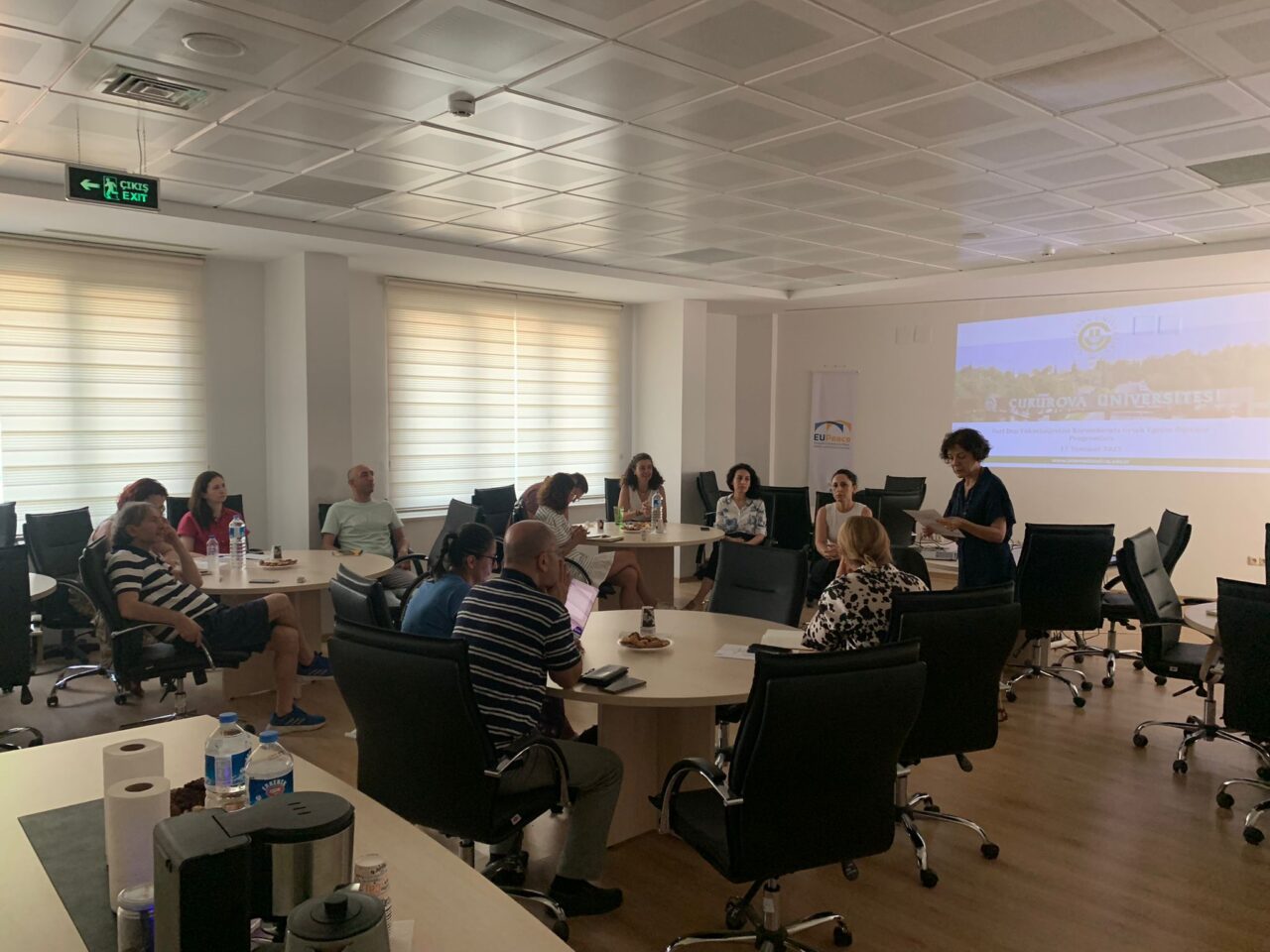

Our events linked to Joint Programmes
Expert Workshop on EUPeace collaboration “One Health” and “Global Health”
Joint Master’s programmes: agricultural, nutritional and environmental sciences
Workshop: Joint Master’s Programmes in Environmental, Agricultural and Nutritional Sciences