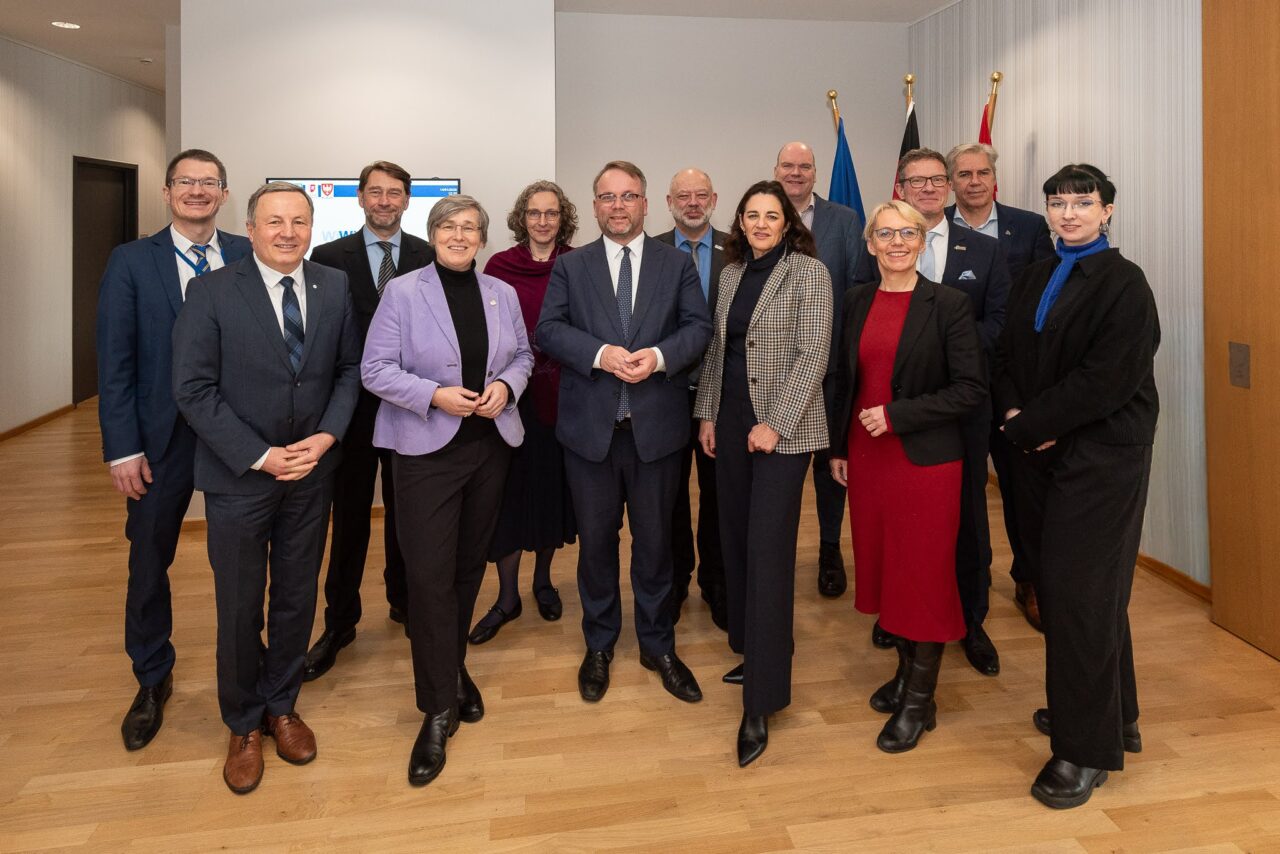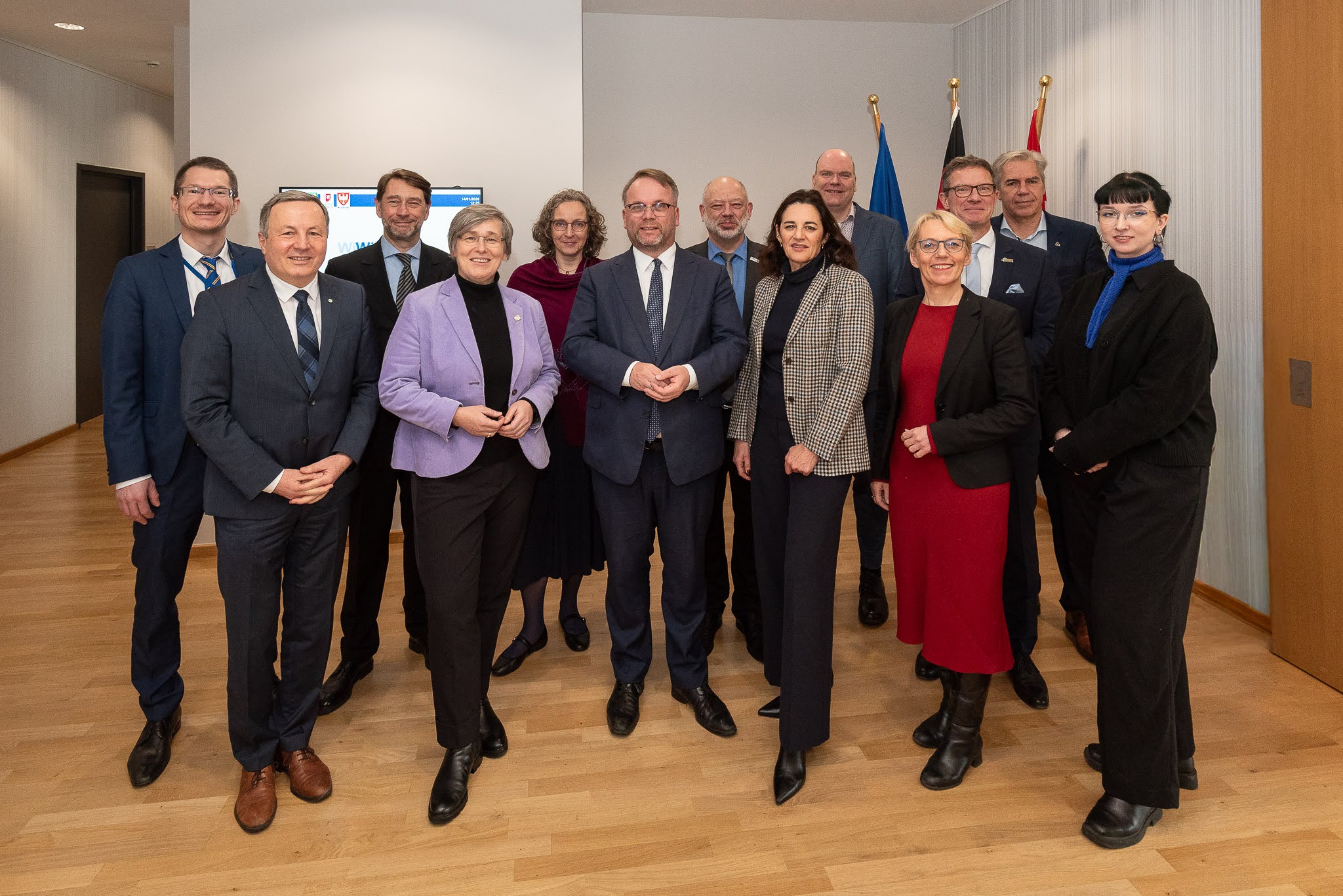










In January 2026, representatives of European University Alliances, policymakers and higher education leaders gathered at the Hessian State Representation in Brussels to discuss the role of European University Alliances and the future of Erasmus+ in strengthening the European Higher Education Area. The event took place against the backdrop of ongoing negotiations on the EU budget for 2028–2034 and the post-2027 framework for Erasmus+ funding.
European University Alliances as Drivers of Cooperation
During the conference, Hessian Science Minister Timon Gremmels emphasised the importance of sustained EU investment in Erasmus+ and European University Alliances to enable long-term, cross-border cooperation in education and research. Representatives of Hessian universities presented concrete alliance activities and highlighted how EU-supported cooperation has already enabled joint teaching formats, research initiatives and international partnerships that benefit students, institutions and society.
EUPeace: From Research to Societal Impact
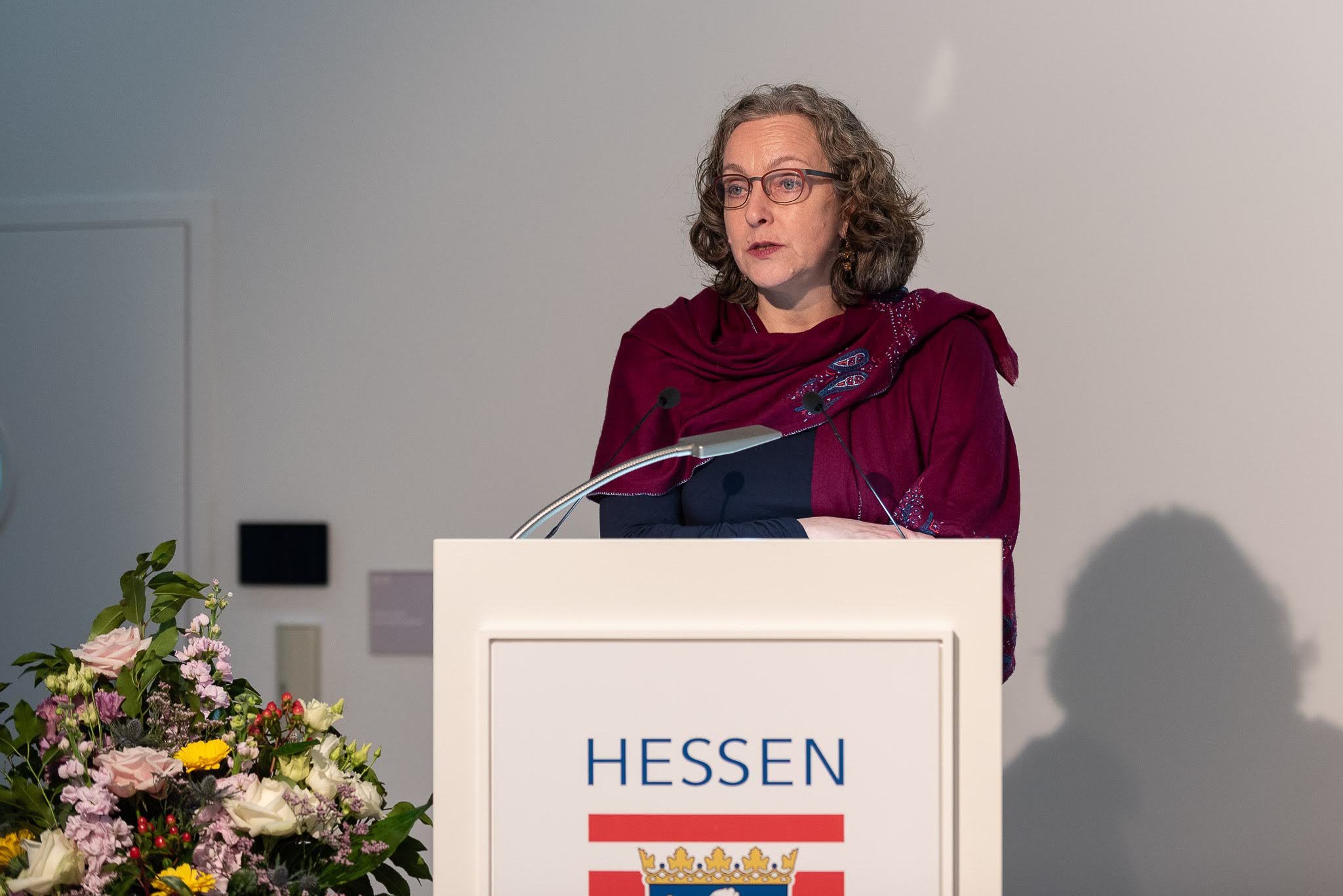
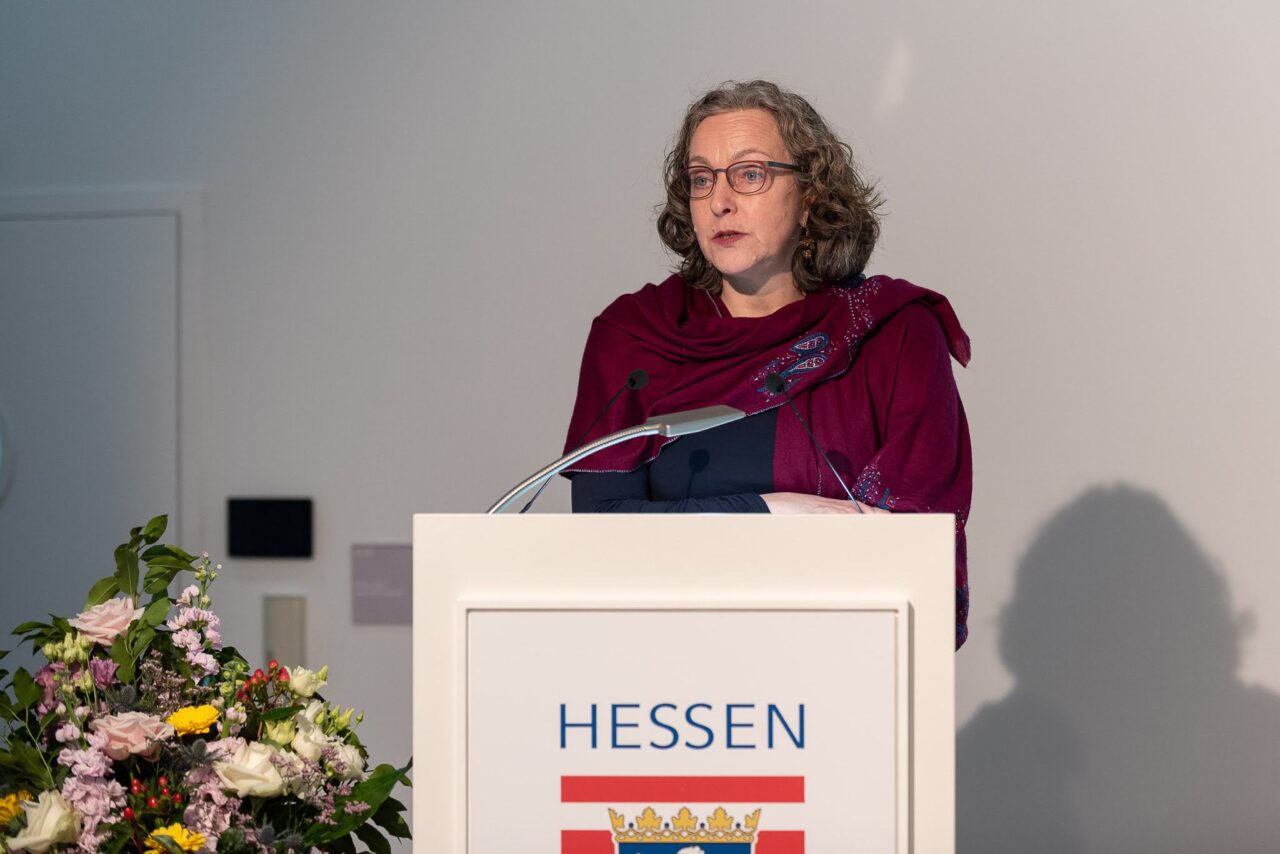
Prof. Dr. Evelyn Korn, Vice-President of Philipps-Universität Marburg, emphasised the distinctive contribution of the EUPeace Alliance:
“Democracy thrives when people from all backgrounds can shape their future. Through EUPeace, we translate research on peace, justice and inclusion into teaching and societal impact – from the European Track, which reaches over 200,000 students, to Living Peace Labs that connect universities directly with communities. By actively involving students, including those from non-EU partner countries, EUPeace enables young people not only to study democracy, but to practise it. This is the long-term return on investment in European University Alliances.”
— Prof. Dr. Evelyn Korn, Chair of the Governing Board of EUPeace, Vice-President of Philipps-Universität Marburg
Contact
 © private
 © Eric Berghen (Hessische Staatskanzlei)
 © Eric Berghen (Hessische Staatskanzlei)
A Call for Sustainable Frameworks Beyond Pilot Projects
The discussion also underscored the need for stable, long-term funding structures to ensure that alliances can move beyond pilot phases. As Prof. Dr. Katharina Lorenz, President of Justus Liebig University Giessen, stated:
“European University Alliances represent far more than mere collaboration; they constitute a profound commitment to a united Europe, where education, research, and innovation are held as pivotal. Through alliances such as EUPeace, regional academic excellence is – with EU support – scaled to a pan-European and global level. However, our dedication to a resilient Europe remains contingent upon sustainable research and innovation funding that transcends the scope of mere pilot projects.”
Strengthening Europe Through Education and Research
By bringing together universities, policymakers and international stakeholders, the Brussels conference highlighted how European University Alliances are contributing to a more connected, resilient and democratic Europe. For EUPeace, the discussions reaffirmed the importance of sustained political and financial commitment to enable alliances to continue developing inclusive education, impactful research and meaningful societal engagement across borders.