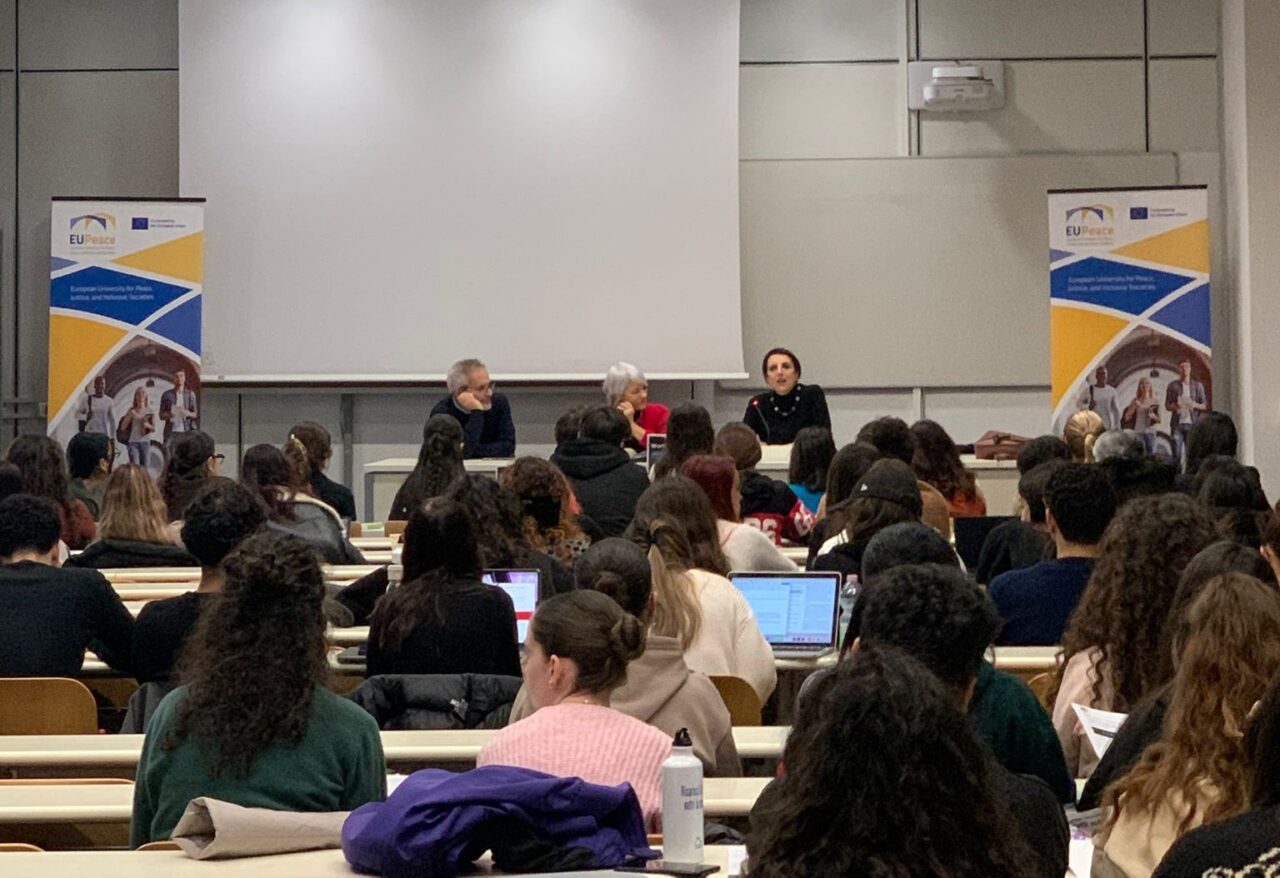






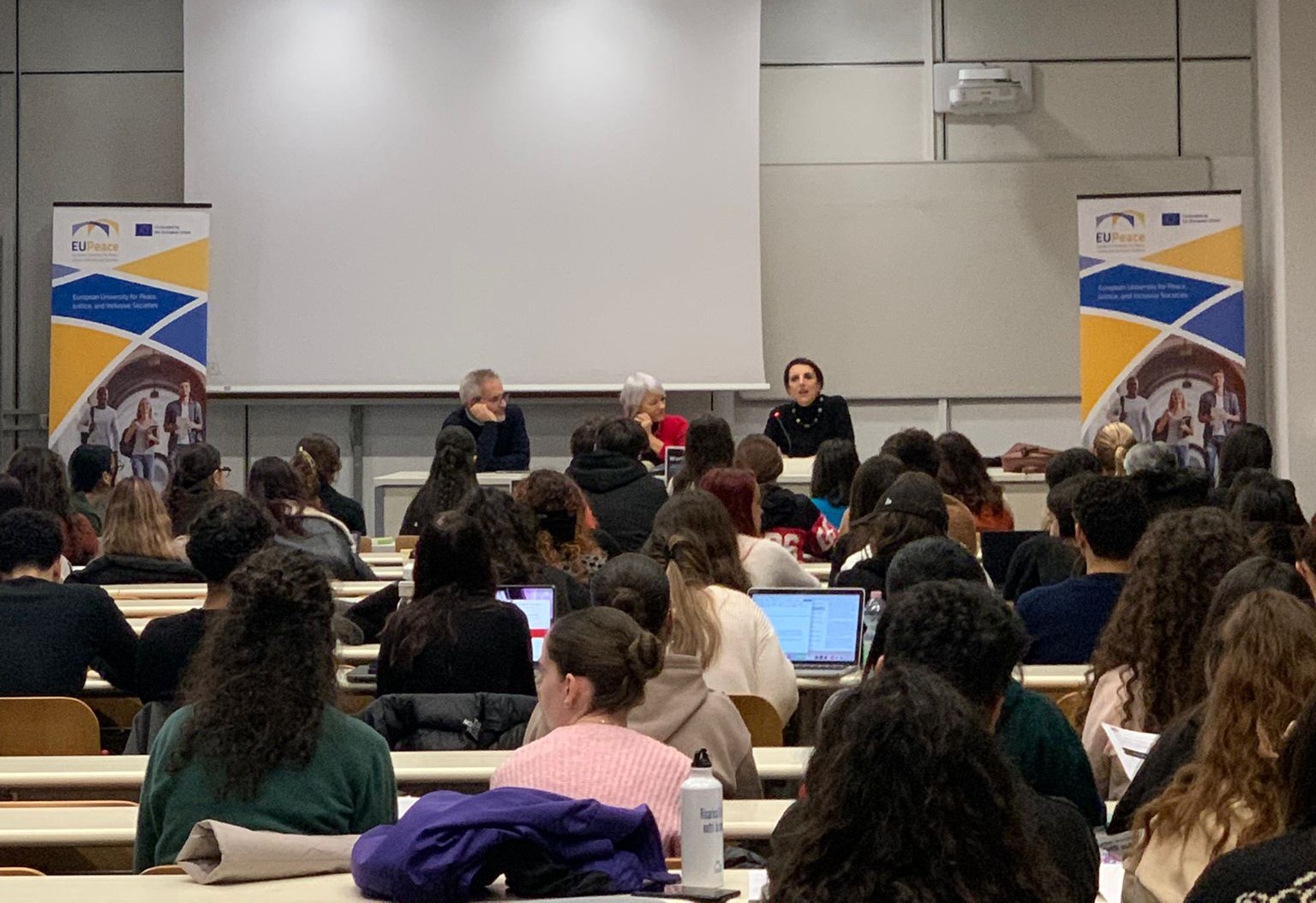
Between October and December 2025, Work Package 7 “Societal Dialogue” of EUPeace, coordinated by Prof. Emanuela Pascuzzi at the University of Calabria, delivered five micro-courses as part of the Empowering Community Engagement: Soft Skills Micro-Courses for Students and Staff programme. The initiative focused on enhancing soft skills through active collaboration with local communities, treating the surrounding territory as a dynamic environment for experiential learning and co-creation.
These micro-courses are part of a broader two-tier approach to teaching soft skills. Tier 1 consists of foundational, online courses shared across the Alliance, while Tier 2 focuses on challenge-based, community-engaged learning — where these recent courses fit in. The modules are flexible and stackable, making them easy to include in existing curricula and mobility pathways. Through this initiative, EUPeace is taking a big step toward building a shared framework that brings community engagement directly into teaching and learning across all partner institutions.
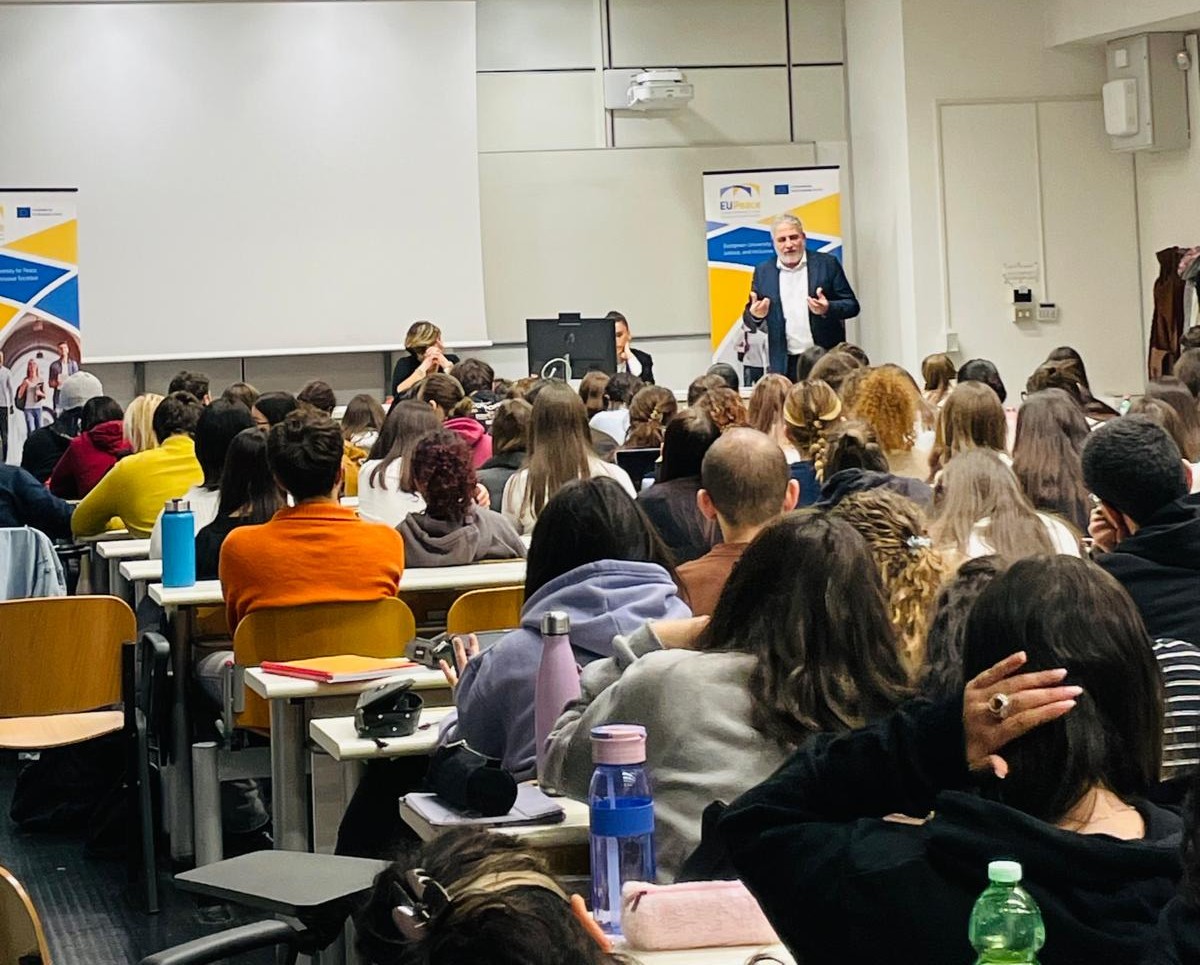 © EUPeace UniCal Team
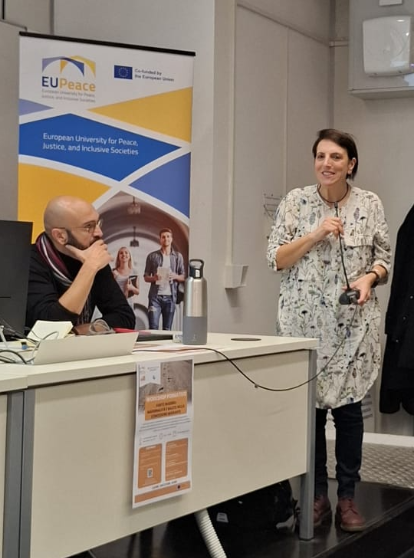 © EUPeace UniCal Team
Co-creating solutions to contemporary social issues
All activities adopted a Challenge-Based Learning methodology, encouraging participants to analyse real-world problems and develop context-specific responses rather than relying on traditional lecture-based teaching. UNICAL focused specifically on Critical Thinking, supporting participants in examining complex social issues, questioning assumptions and contributing to sustainable and inclusive solutions. Each course was co-designed together with local associations, professionals and established community networks to ensure relevance to genuine community needs.
- The first micro-course, Changing Habits, Changing the World: the challenge of a responsible wardrobe (23 October), addressed the impact of fast fashion in collaboration with the Munnizza Social Club collective. Participants analysed clothing supply chains and reflected on how individual consumption choices relate to broader environmental and social responsibility.
- The second course, Pathological Gambling: Shared actions against new addictions (20 November), developed with the social cooperative L’Ulivo, explored behavioural addictions through dialogue with practitioners and local testimonies, focusing on prevention strategies targeting young people.
- The third micro-course, Invisible Wounds: Marginality and Health in the migrant condition (26 November), involved organisations engaged in the protection of migrants’ rights, including the AltraMarea collective and specialised support networks for survivors of torture. Participants examined structural inequalities affecting migrant wellbeing and discussed inclusive local responses.
- On 27 November, Socialisation and Longevity: designing connections across generations, organised with Auser Rende, promoted intergenerational dialogue as a strategy to counter isolation among older adults and strengthen community cohesion.
- The final micro-course, Imagining the Possible: Community Welfare for Mental Health and Social Inclusion (4 December), was delivered in collaboration with Comunità Progetto Sud and explored the Budget di Salute model as a community-based welfare approach. Through exchanges with practitioners, participants reflected on personalised mental-health pathways capable of fostering autonomy, wellbeing and social justice.
Strengthening university–community partnerships for sustainable impact
Overall, the five micro-courses contributed to EUPeace objectives while shaping a practical model of university engagement grounded in partnership and co-creation. The experience strengthened existing collaborations and opened new opportunities for institutional and civic cooperation, demonstrating that soft skills develop most effectively when tested in real-life contexts and in continuous dialogue with local actors.