
Which courses did you take, and what did you find interesting about them?
The courses on offer were really interesting. I took AI and the Democratic Public Sphere at Justus Liebig University Giessen in Germany, Gender and Politics at Çukurova University in Adana, Turkey, and Interpersonal Communication, Interpersonal Communication with Persons with Disabilities and Interpersonal Conflict at the University of Mostar in Bosnia and Herzegovina. Five courses in total. I also enrolled in a German Language Course: Schnupperkurs A1 at Justus Liebig University Giessen, but I did not complete it.
Did the courses and their international lecturers meet your expectations?
All the courses, except German, were very interesting and beneficial. They covered topics that, in my opinion, are not discussed very much here in the Czech Republic, and they broadened my horizons considerably. Gender and Politics and AI and the Democratic Public Sphere dealt with subjects that I consider very important and relevant today. However, my favourite courses were the communication courses at the University of Mostar. They were partly connected and built on one another. I am very interested in social issues and the rights of people with disabilities, so I found these courses particularly valuable. The lecturers delivered engaging classes and were all extremely kind, helpful and accommodating whenever students needed anything. In my case, for example, they allowed me to complete a course earlier than originally planned because of my final state examinations.
Why did German not work out?
I found that course a little disappointing. I expected regular online classes, as there were for the other courses, but the course was based almost entirely on homework and independent exercises, with little teaching or explanation. Without lessons, it did not really make sense to me, so it was also the only course I ultimately did not pass.
What were the classes at the partner universities like? Did they differ from teaching at the University of West Bohemia?
Each university approached teaching a little differently, and the classes were all online. The courses I took included regular classes as well as additional homework. For some courses, we wrote short essays and submitted them throughout the semester via Google Classroom; for others, we prepared a presentation on a topic of our choice and presented it at the end. It was quite similar to the way we study at the University of West Bohemia. Perhaps the most noticeable difference was the timing of the courses. The academic calendars at the other universities were slightly different, but there were no major differences.
Contact


You are the first student at the University of West Bohemia to achieve Level 3. What motivated you to go that far?
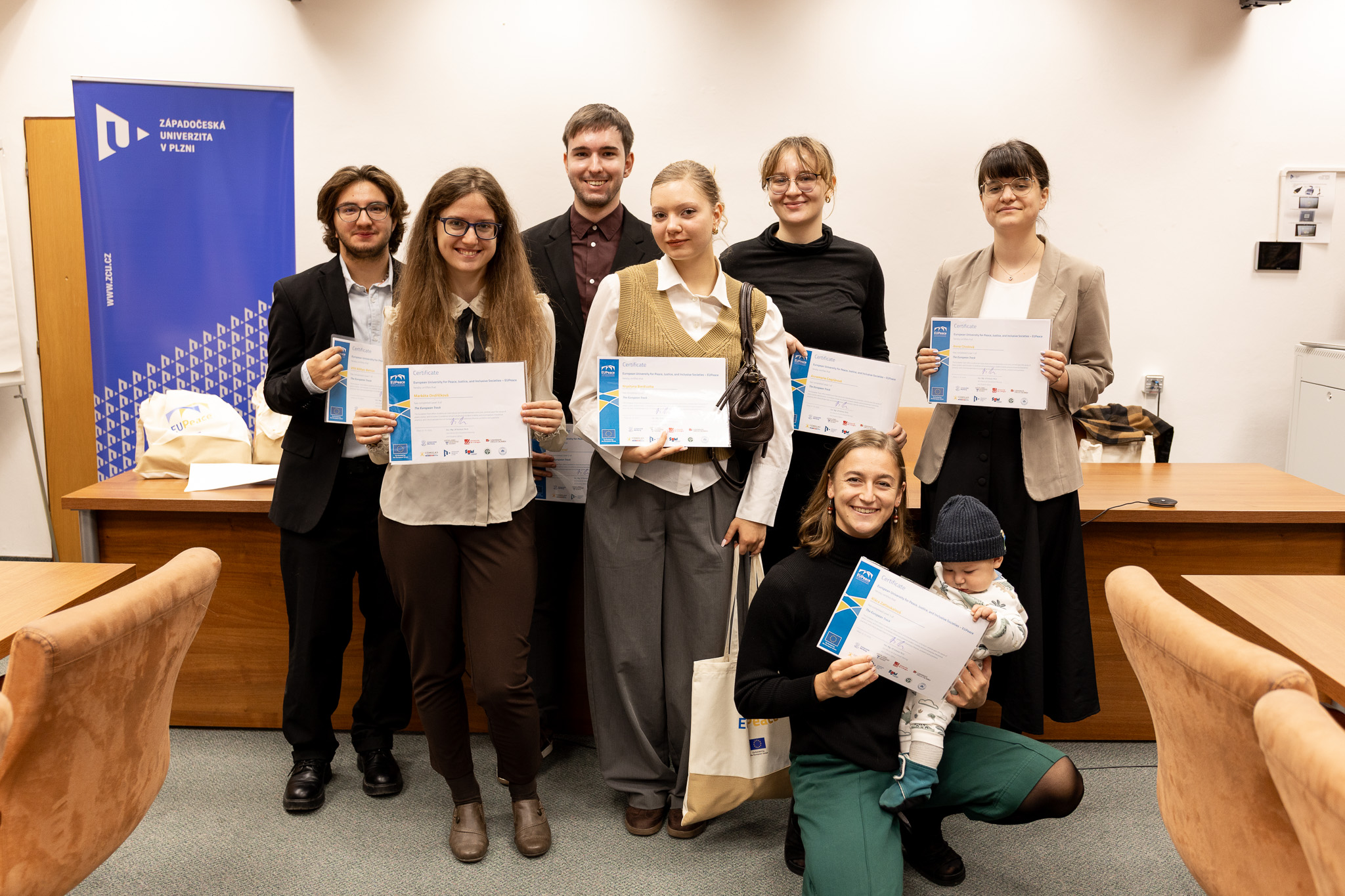
It was because I found the courses so interesting that I wanted to enroll in practically all of them. Even now, when I look at the courses currently available through EUTrack, there are so many I would love to take. Unfortunately, that is no longer possible because I am about to finish my degree. If I were in an earlier year of my studies, I would definitely have earned many more EUTrack credits.
Would you recommend EUTrack to your fellow students?
I would definitely recommend it to them. I would love to take more courses, ideally all of them. I am also considering studying another subject, either psychology at another university or, alternatively, special needs education at the University of West Bohemia. If I end up studying at the University of West Bohemia, I would definitely enrol in more EUTrack courses.
What attracted you to law when you applied to the University of West Bohemia?
I originally chose law because I wanted to work for the criminal police, and I was advised that a law faculty would be the best route. However, I became ill during my studies, so for health reasons that career is no longer an option. I like the fact that the law offers a wide range of career opportunities. I also enjoy the diversity of topics it covers.