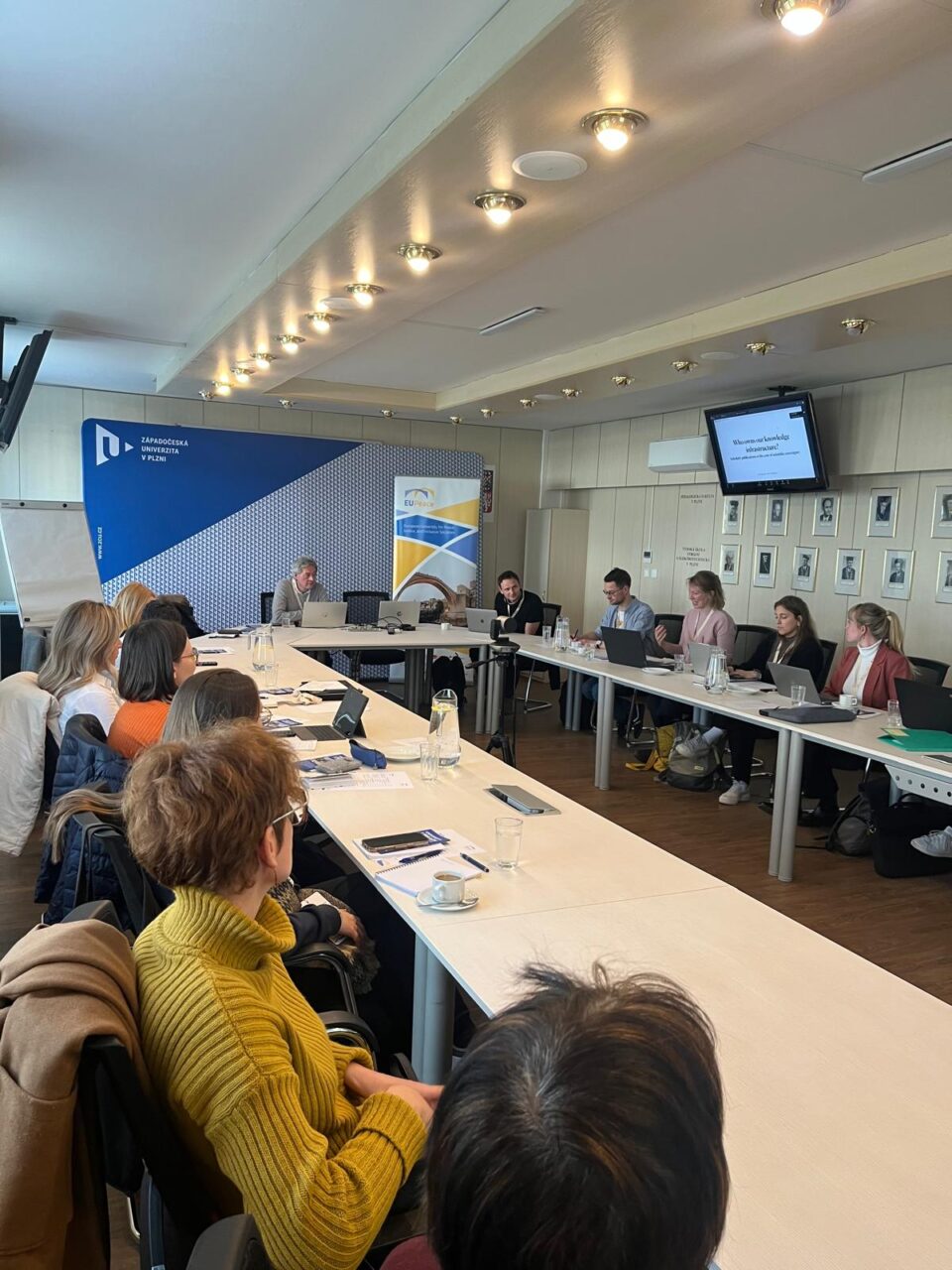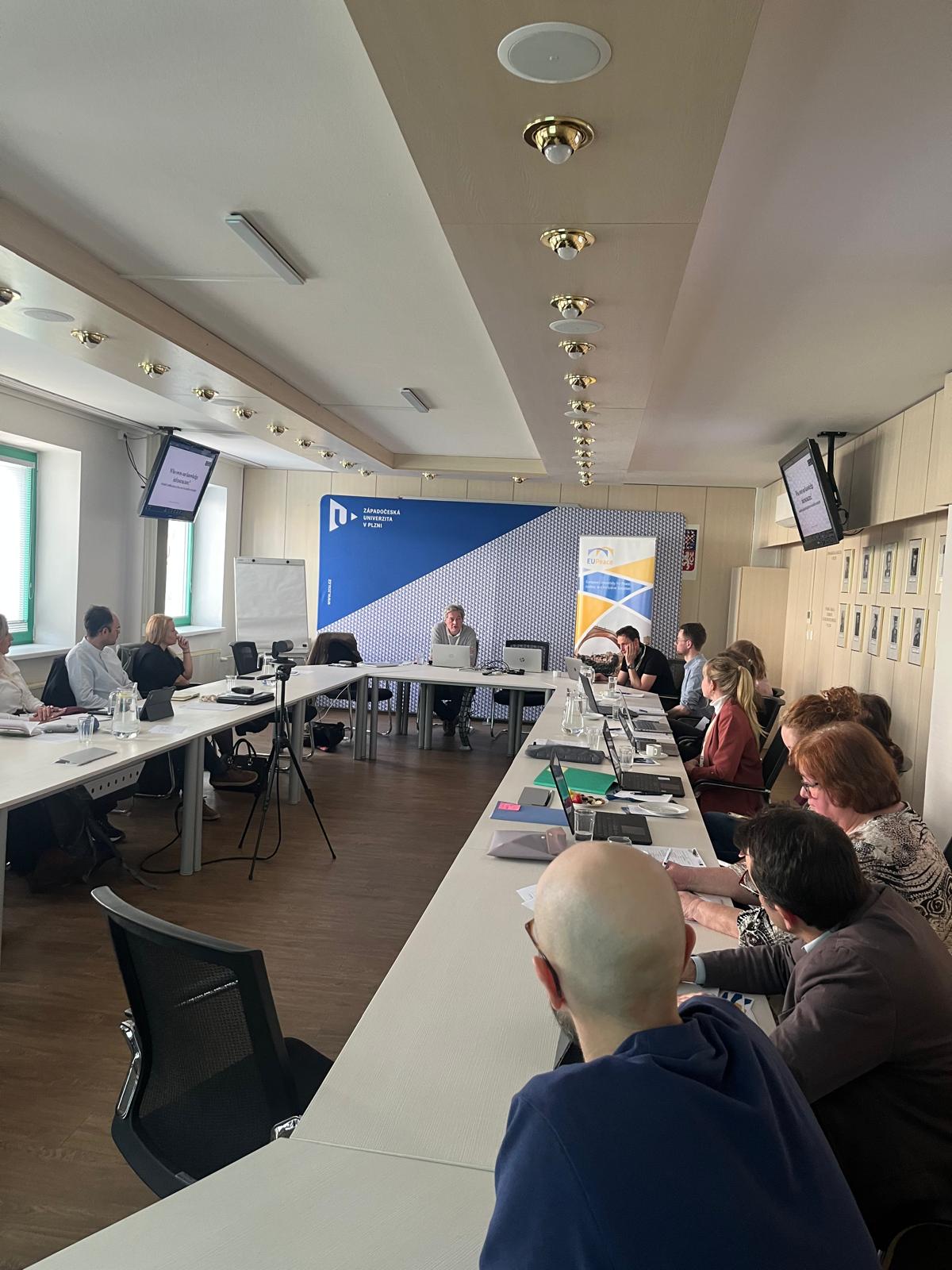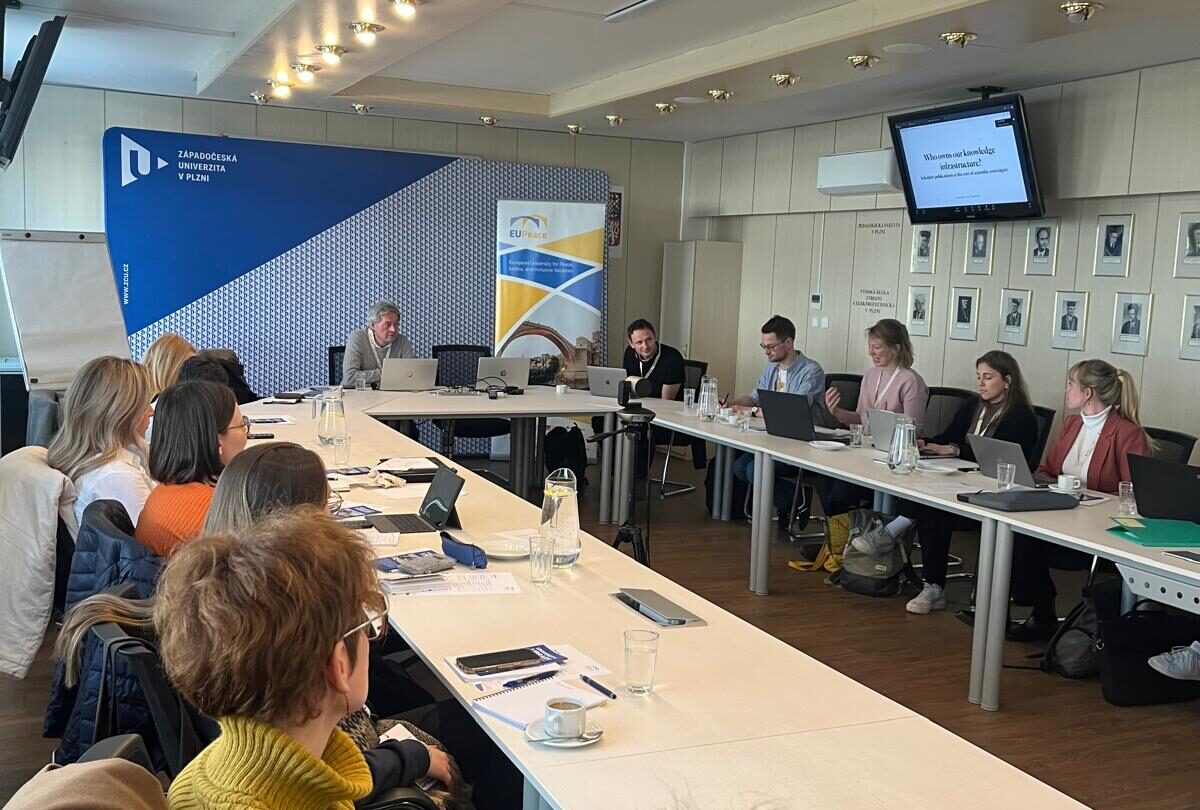









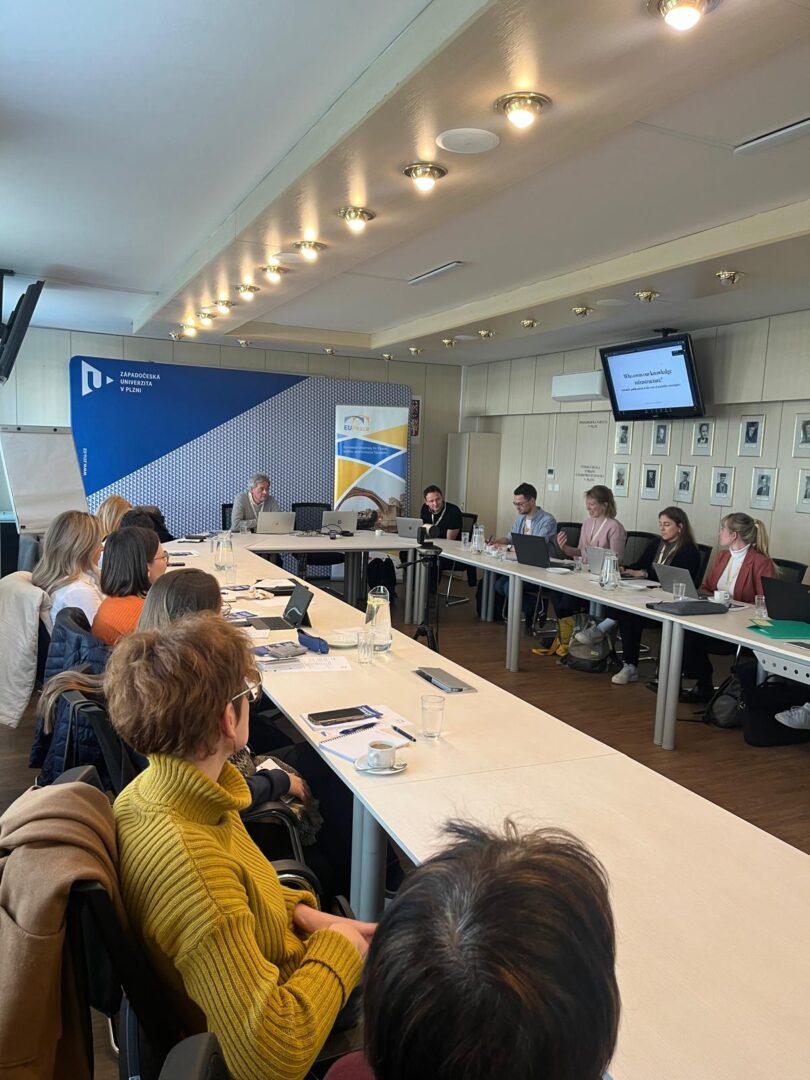
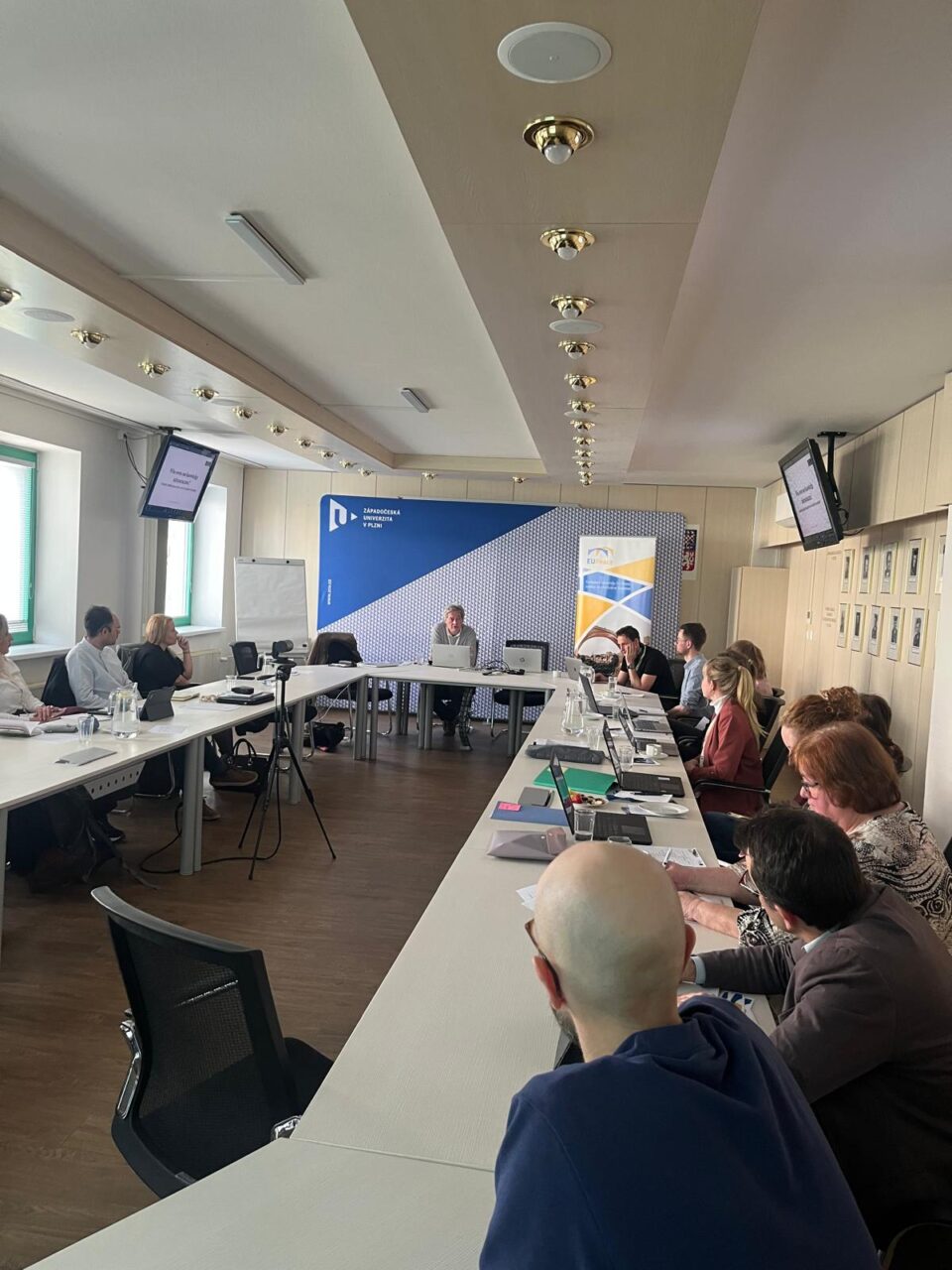
On 23 March 2026, EUPeace members met at the University of West Bohemia in Pilsen as part of the EUPeace Fund project “Educating on Open Science and Open Infrastructures”. The keynote “Who owns our knowledge infrastructure?” was delivered by Pierre Mounier (OPERAS) and brought together members of the EUPeace Open Science and University Libraries groups, including library staff, Open Access and Open Science specialists. The session was livestreamed and open to a wider public audience.
From technical innovation to governance challenges
The keynote outlined the development of Open Science across three phases: technical innovation, economic models and governance. Early initiatives such as the Budapest Open Access Initiative (2001) enabled broad access to research through digital publishing. However, the emergence of commercial publishing models, particularly article processing charges (APCs), has led to rising costs, inequalities in access to publishing, and concerns about long-term sustainability.
These developments now raise fundamental governance questions, including who controls scholarly publishing infrastructures and how research communities can retain autonomy.
Diamond Open Access as an alternative
A key focus of the keynote was Diamond Open Access, a model based on community-owned and non-profit publishing without fees for authors or readers. Unlike commercial approaches, Diamond OA is often supported by universities, research organisations and scholarly communities, and operates partly through shared resources and collective effort.
Contact
 © Hana Vlčková
The model was presented as a way to strengthen equitable access to knowledge while placing control of publishing back into the hands of the academic community.
Open questions for research communities
The subsequent discussion addressed key challenges for Open Science, including how to define “community ownership”, how publishing relates to other parts of the research ecosystem, and how to coordinate fragmented initiatives across disciplines and regions. Participants also noted that community-led approaches require careful governance to ensure openness and fairness.
Implications for EUPeace collaboration
The exchange provided valuable input for the EUPeace Alliance’s work on Open Science and Open Infrastructures. Pierre Mounier’s contribution and the subsequent discussion helped shape ideas for joint initiatives within the Alliance and beyond in the area of community-driven publishing and European Diamond Open Access initiatives.
Building on this, the associated workshop (as part of the EUPeace Fund project) further developed concrete proposals for joint initiatives on Open Science and Open Infrastructures.