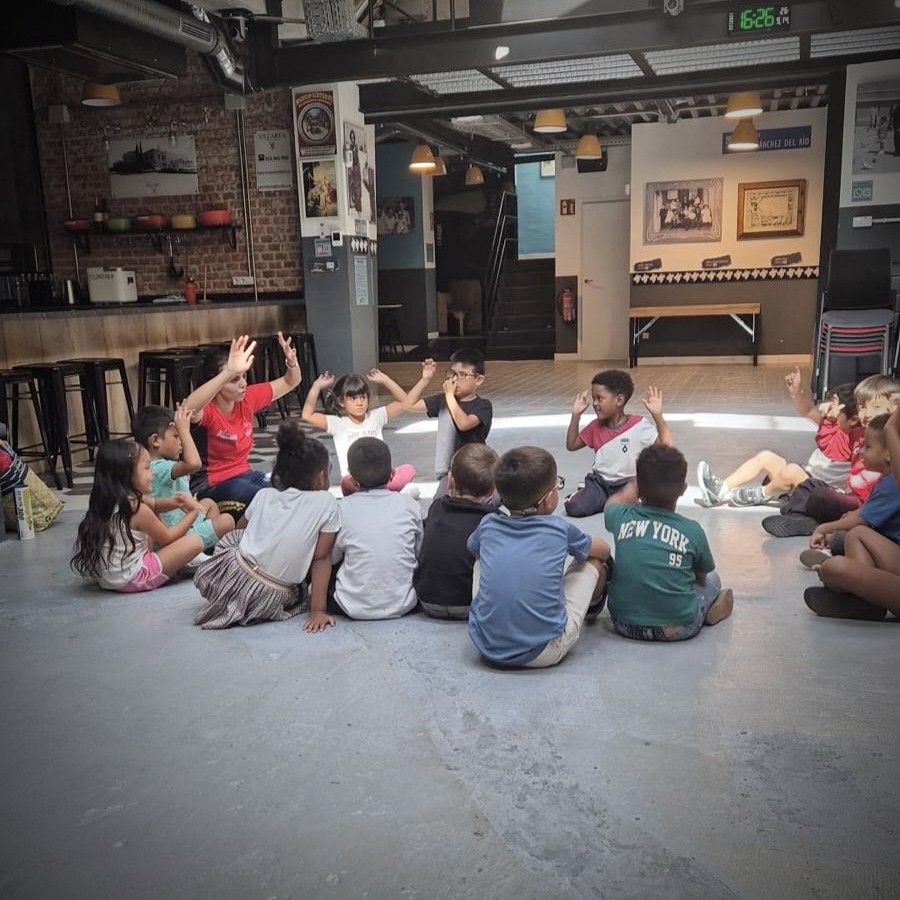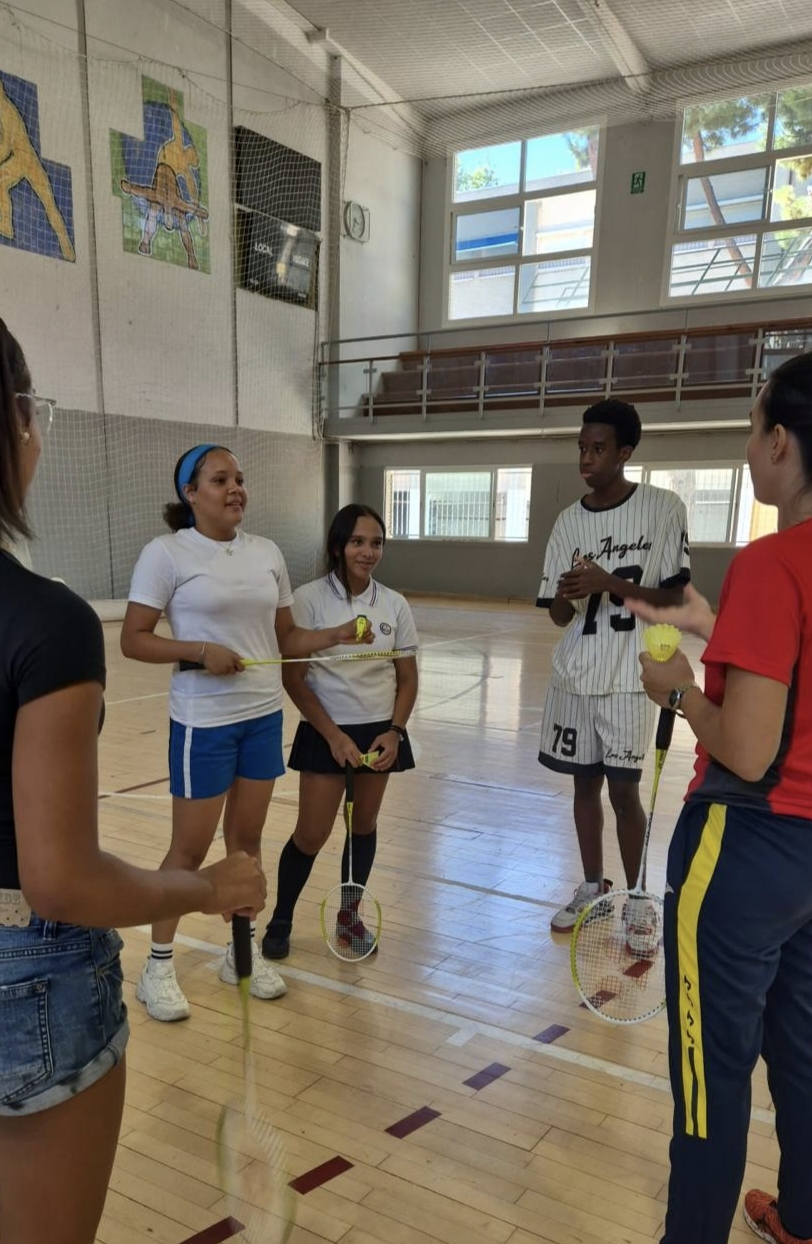

Sport-Between officially started in September. The project team is already working with the partners involved to make sport a tool for personal, social and educational development.
Why Sport-Between?
The project is part of the EUPeace Living Peace Labs, collaborative spaces where universities, civil society and citizens co-create solutions for peace, justice and inclusion. Sport-Between was set up in response to high rates of child poverty and social exclusion in Spain. These rates are especially high among migrant populations in vulnerable districts of Madrid, where residential and school segregation limit educational, social and sporting opportunities. The needs assessment found gaps in psychosocial well-being, sense of belonging, access to structured activities and support networks, all of which are key to integration.
Sport as a bridge
To meet these challenges, Sport-Between starts from the idea that sport is not an end in itself. Instead, it is a space in between: a place for encounter, connection and change. The word between stands for sport’s role as a bridge between people, cultures, institutions and territories. First, sport sits between the programme’s participants. It works as a common language that makes intercultural interaction easier, helps build relationships and develops personal and social responsibility, in line with the Teaching Personal and Social Responsibility model (Hellison, 2011). The project uses badminton as a structured socio-educational tool to create safe settings that strengthen psychosocial well-being, belonging and group cohesion.
Second, sport connects children with their community. It encourages families, schools and associations to get involved, and supports work-life balance and socio-educational support in vulnerable settings.
Finally, the project links the present and the future. It is testing a model that can be replicated, one that connects social intervention, sports structures and the potential involvement of companies and social entrepreneurs committed to community impact.
A project built together
Sport-Between is built on co-creation and collaboration between social organisations, public and private sports bodies, academia and society. It brings together the knowledge and experience of each partner while ensuring technical quality, institutional sustainability and the potential to scale up to other areas. This collaboration combines different perspectives, knowledge and experience to design and deliver proposals that respond to participants’ real needs. The project is led by Comillas Pontifical University and the Madrid Badminton Federation (Federación Madrileña de Bádminton). The university contributes academic knowledge and expertise, and the Federation brings its experience in sport, especially badminton. Social organisations, schools and local authorities add their experience and knowledge of the area, making this a project built jointly by all involved.
Contact

Living Lab Projects

More sport, more connection
Regular socio-educational badminton sessions began in the first few weeks and will continue throughout the academic year. These sessions are the project’s main tool. They use sport as a space to develop personal and social responsibilities that help participants face everyday challenges, such as self-control, goal-setting, peaceful conflict resolution and helping others.
This start also marks the beginning of a shared process. Throughout the project, the team will learn from the experience of participants, professionals and partner organisations. They will assess what works and what can be improved, and explore new ways to use sport as an educational and social tool. This collaboration gives the project a shared vision, one that sees sport as a space for relationships and change: a meeting point for inclusion, well-being, community and sustainability.


The launch of Sport-Between coincides with the European Week of Sport (23–30 September), the European Commission’s #BeActive initiative promoting sport and physical activity across Europe. The project shares its core message: sport is for everyone, and it can bring people and communities together. As part of the EUPeace alliance, Sport-Between shows how European universities can turn that message into practice, putting peace, inclusion and social cohesion at the centre of their work with local communities. Through the EUPeace Living Peace Labs, the alliance gives the project a European framework for exchanging knowledge, learning from other partner universities and eventually taking the model to other cities and countries.
September marks the start of this journey. Sport-Between is up and running, and all its partners will keep building it together.
And this is only the beginning: more activities, more sports and many more adventures are coming soon.