
EUPeace Teaching Europe Conference “Sustainable Futures”
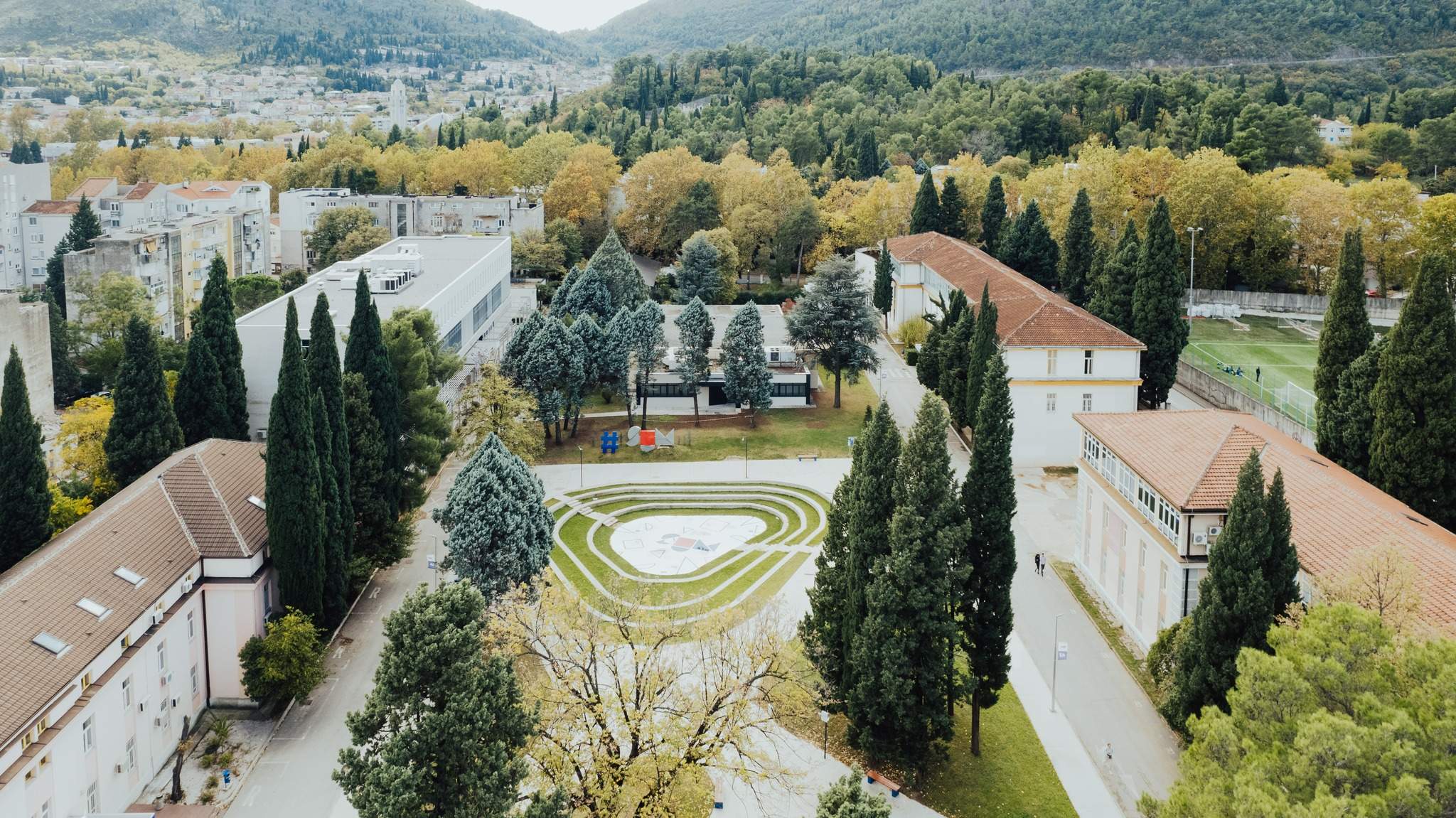
The third annual EUPeace Teaching Europe Conference will take place from 16-17 November 2026 at the University of Mostar in Bosnia and Herzegovina. We invite educators, researchers, and students to explore how we can Teach Europe as a blueprint for sustainability. A society that is truly attuned and alert to problems and questions of sustainability needs its citizens both to conceive themselves and to act as active agents of sustainability. This, in turn, calls for new and ever more effective ways of teaching sustainability that empower citizens with solid understandings of sustainability across a variety of academic, scientific and professional fields.
The primary focus of this conference is not on questions of sustainability as understood from a strictly scientific perspective, but rather on theories and methodologies of communication and education: how do experts communicate scientific knowledge in ways that are accessible to pupils, students, and non-experts?
Effective and broad-based sustainability education — at primary, secondary and tertiary levels and beyond — has never been more important. It is one of the most vital means we have of equipping our citizens with the ability and confidence properly to navigate the interconnected challenges of peace, justice, ecological coexistence, and sustainable development in its myriad dimensions. Our sustainable futures depend on it.
It’s against that backdrop that the EUPeace Alliance invites educators, researchers and students to consider both the differences and the overlaps between what we teach regarding “sustainability” and how we teach it. In so doing, we want to examine how we might best equip our students and societies citizens with robust and multifaceted understandings of sustainability. By bringing together students, researchers from all fields of academia, and teachers from all levels of education, one core objective of this Teaching Europe Conference will be the co-construction of a Blueprint for Teaching a Sustainable Europe.
Participants are invited to submit proposals within the following broad thematic areas:
- Climate science
- Biodiversity conservation
- Renewable energy
- Circular economy
- Waste management and reduction
- Role of AI, IoT (“Internet of Things”), and Big Data in achieving green goals
- “One Health”: human health and Earth health
- Environmental footprints of different professional practices
- Eco-anxiety
- Integrating aesthetics, sustainability, and social inclusion in design
- Inclusive public spaces and climate-adaptive buildings
- Sustainable practices in preserving and re-purposing historical spaces
- International, European, national and local legal regulations and economic frameworks for a sustainable Europe
- Sustainable management and corporate social responsibility (CSR)
- Sustainable innovation and green entrepreneurship
- How to teach each of the many complex facets of social sustainability: e.g., peacebuilding, strategies for establishing and maintaining social cohesion, the protection of human rights, democratic resilience, Memory Politics & Conflict Transformation, reconciliation, intercultural dialogue, etc.
We also welcome talks and posters discussing sustainability education from the point of view of its implementation and management within higher education. Topics might include (but are not limited to):
- Good practices in embedding the Sustainable Development Goals across diverse study programmes;
- Measuring learning outcomes related to critical thinking and future-oriented skills;
- Whole-Institution Approach to Scaling ESD from the classroom to university governance and campus management;
- University-Society Interface (Community Engagement): Establishing collaboration with local authorities, industry, and civil society on sustainable development projects, engaging citizens and the local community in research processes (Citizen Science).
Please find more information, including the format and submission guidelines as well as the submission form, in the Call for Papers. Students can also find out how to contribute here.
Contact

Please make sure to register via this form, if you want to participate as a speaker. This is required additionally to the “Extended abstract submission”.
The submission period for this form has ended.