






The EUPeace Handbook on Internationalising Teacher Education (HITE) is a strategic publication developed within the EUPeace Alliance. It emerges as a natural extension of the conceptual document School for All, the first deliverable of Work Package 3 (WP3), which invites educators to reflect on how educating all learners forms the basis of a more peaceful, just, and inclusive society.
HITE provides practical strategies, conceptual frameworks, and real examples to help integrate international perspectives into teacher education programmes. It emphasises the importance of developing intercultural competence, democratic culture, and inclusive teaching practices.
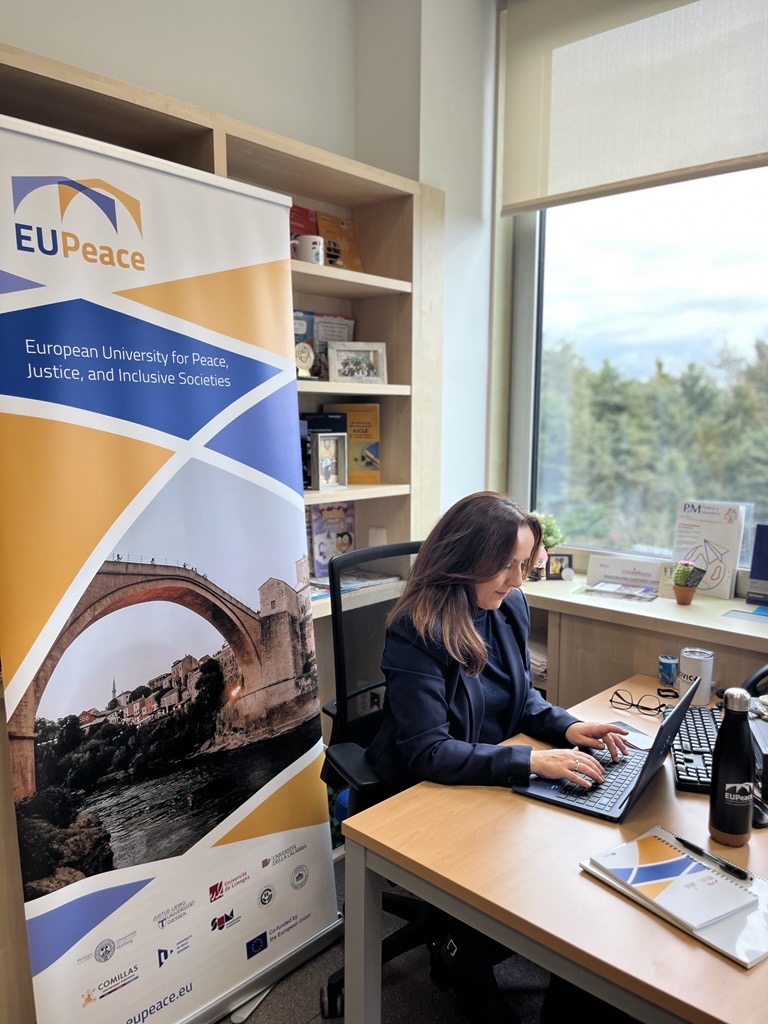
To gain insight into its creation and purpose, we spoke with Magdalena Custodio Espinar, professor at Comillas Pontifical University, expert in TEFL and bilingual education through CLIL (Content and Language Integrated Learning), and a former coordinator for WP3 in the EUPeace project.
Introducing Magdalena Custodio Espinar
Magdalena Custodio Espinar is a lecturer in the Department of Education, Research Methods and Assessment at the Faculty of Humanities and Social Sciences, at Comillas Pontifical University.
She teaches Teaching English as a Foreign Language (TEFL) and Content and Language Integrated Learning (CLIL) as part of the Foreign Language Specialisation studied by all Comillas Education students, which qualifies them to be English teachers.
In addition, she is a researcher in the field of teacher training for bilingual education and has published numerous studies on the CLIL skills of education students and in-service CLIL teachers.
Within EUPeace, she coordinated WP3 at Comillas during the first two years of the Alliance. When the opportunity arose to join the subgroup responsible for drafting the HITE, she eagerly accepted.
“It was a chance to learn first-hand how we can integrate international perspectives into teacher education programmes, equipping teachers with the skills and knowledge to thrive in a globalised world,” she explains.
During the handbook’s development, she actively participated in its conceptualisation, writing, and revision alongside colleagues from across the consortium, particularly Cem Can and Zuhal Okan from Çukurova University, who led the working subgroup.
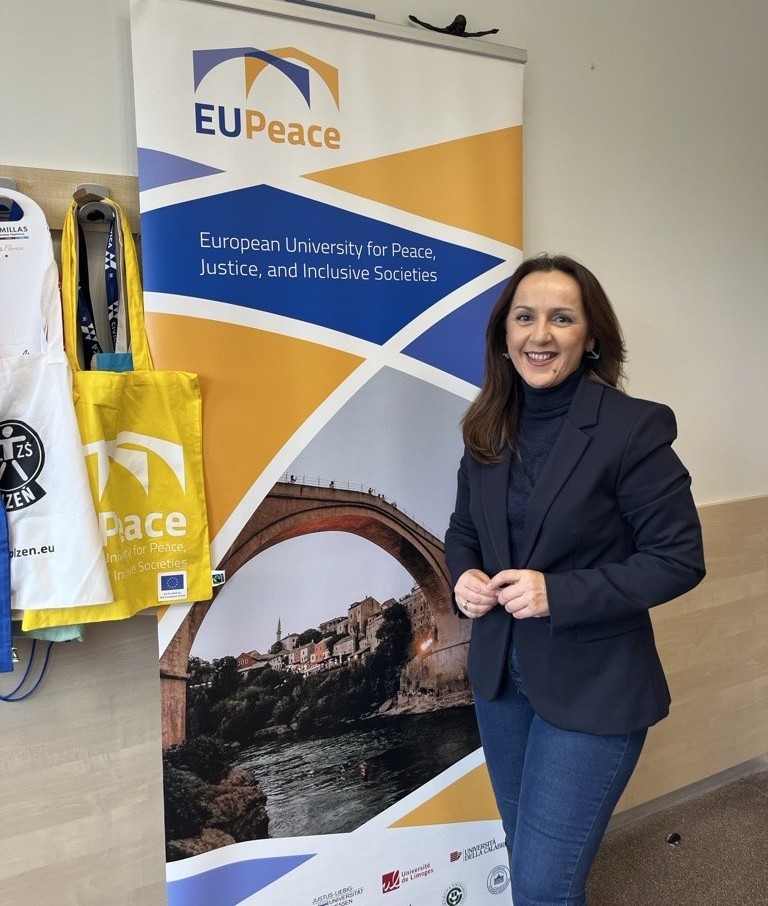 © EUPeace Comillas Team
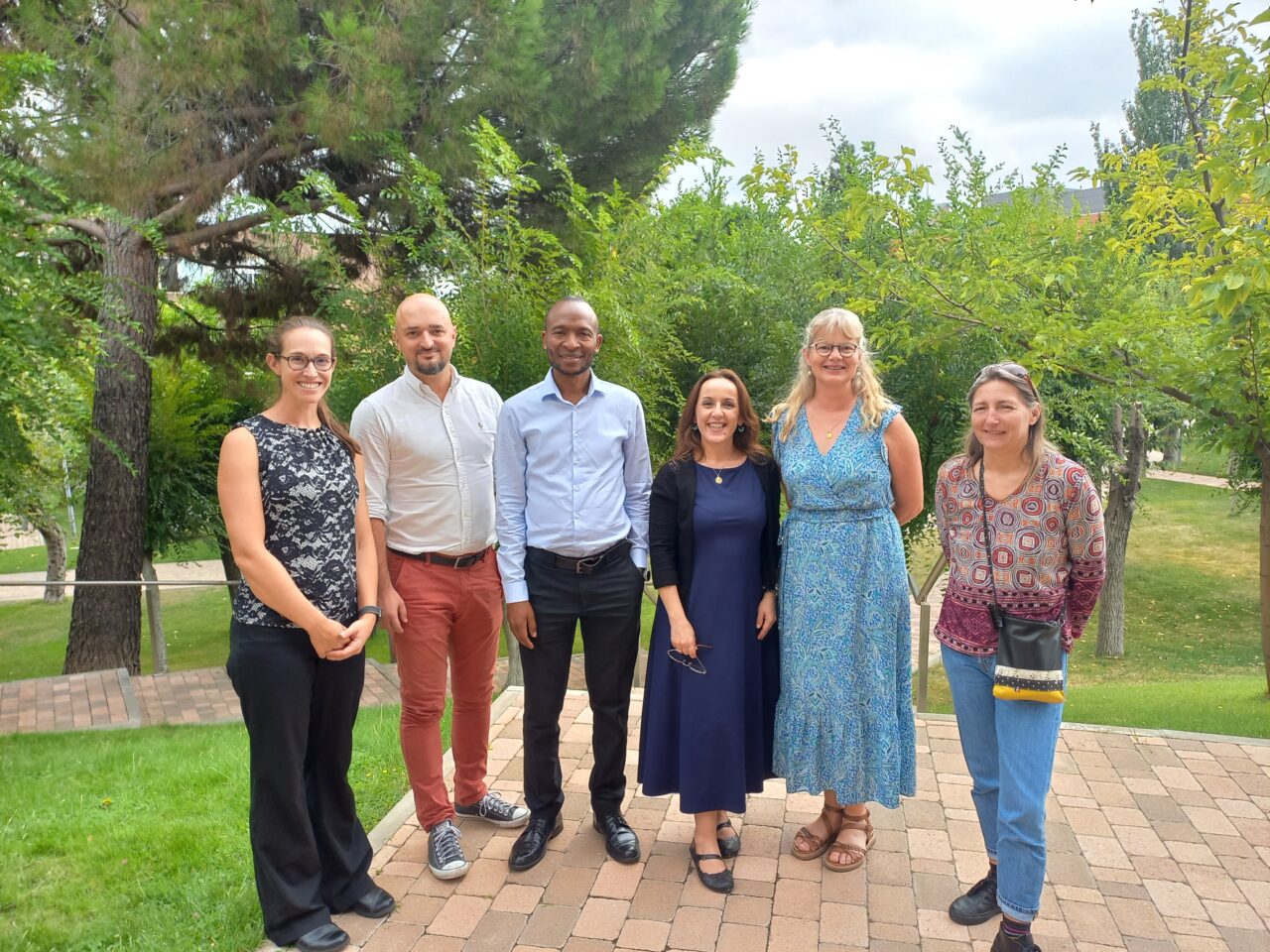 © EUPeace Comillas Team
A Truly Collaborative Effort
Magdalena emphasises that HITE is a product of collaborative work across EUPeace universities.
“Everything is defined, agreed upon, and executed based on principles of participation and mutual respect, which makes the work flow efficiently and fruitfully.”
Working with her colleagues at Comillas—Javier Pinilla Arbex, Guillermo S. Reher, and Israel García Paredes—and with the other eight universities in the Alliance, Magdalena describes the experience as;
“One of the most enriching experiences in the academic sphere, but also on a personal level, thanks to the human qualities of the people who make up WP3, led by our dear coordinator Yann Brener from the University of Limoges.”
Despite the inherent challenges of coordinating people from diverse cultural, linguistic, and societal backgrounds, Magdalena notes that the WP3 team has grown increasingly cohesive and resilient.
“This unity allowed us to successfully navigate the complexities of the project and bring the HITE to life.”
Reflecting on her own experience, Magdalena highlights the personal and professional rewards of this collaborative process.
“The most gratifying part was seeing diverse teams transform collective work into a resource with real impact. Moving from local initiatives to a shared European construction allowed us to learn from one another and create something beyond any single university. It was also especially enriching to see the handbook translate theory into practices that are already improving teacher education and fostering new forms of international collaboration.”
From School for All to HITE
Magdalena had previously been involved in other EUPeace initiatives, including the School for All concept paper.
“The HITE is a natural extension of School for All, which invited educators to rethink inclusive education. Our goal was to encourage reflection on how educating all learners is foundational to building a peaceful, just, and inclusive society.”
The handbook adds an international dimension to this vision, providing a strategic guide for integrating global perspectives into teacher training.
“HITE equips future and current teachers with global and intercultural competencies to teach in diverse and increasingly interconnected contexts,” she explains.
It also offers concrete examples, methodologies, and real experiences—such as virtual exchanges or international internships—that can be directly applied in teacher education programmes. At its core, HITE aims to support education that promotes peace, justice, and inclusion in line with EUPeace’s mission.
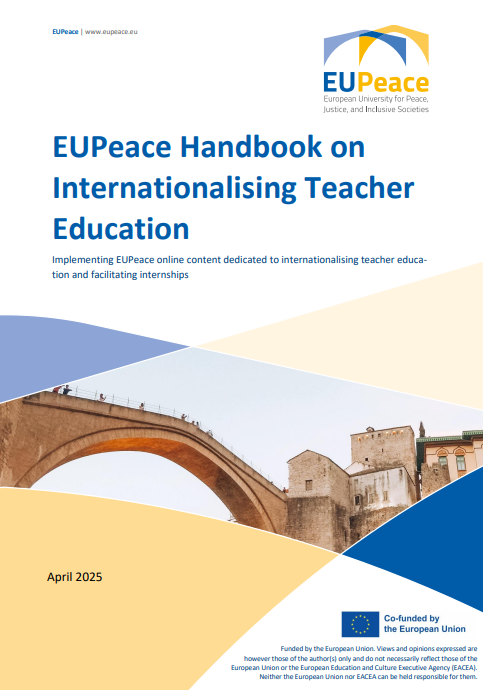 © EUPeace Team
Key Themes and Benefits
According to Magdalena, the HITE addresses a set of interconnected themes that are central to internationalising teacher education.
“The handbook explores how to internationalise the curriculum, how to develop intercultural competencies, and how to take advantage of both physical and virtual mobility opportunities,” she explains.
It also highlights the role of educational technologies in fostering global learning, while promoting inclusion, democracy, and global citizenship.
“For teachers, it offers practical strategies and examples that can be directly applied in the classroom and in pre-service and in-service training. For researchers, it provides theoretical frameworks, case studies, and references that can inspire new projects and comparative analyses. And for the general audience, it helps make clear why internationalising teacher education is crucial in a world that is increasingly interconnected.”
By combining theory with real-world application, Magdalena emphasises, the handbook demonstrates how teacher education can prepare educators to respond to diverse and globalised educational contexts while fostering values of equity, inclusion, and intercultural understanding.
Innovative Sections and Case Studies
For Magdalena, one of the most useful and innovative sections of the HITE are case studies.
“This section is particularly valuable because it translates the principles of internationalisation into real, transferable experiences,” she explains, highlighting examples such as COIL projects and hybrid mobility initiatives.
She coordinated one COIL project, Storytelling for Inclusive Education, which brought together education students from three EUPeace universities—Limoges, West Bohemia, and Comillas—to work collaboratively online.
“Students created children’s stories focused on inclusion, diversity, and the School for All concept. The project combined international teamwork, intercultural feedback, and digital tools, allowing students to develop intercultural, linguistic, and pedagogical competencies simultaneously,” she says.
“It was especially rewarding to see virtual collaboration turn into a real space for shared learning and critical reflection on inclusive education across different educational contexts. This was true not only for the students but also for the professors involved, including my dear EUPeace colleagues Sandrine Simon, Leslie Amiot, Vaclav Stacke, Martin Kavua, and Barbara Campbell, who is not part of WP3 but contributed so meaningfully to the project.”
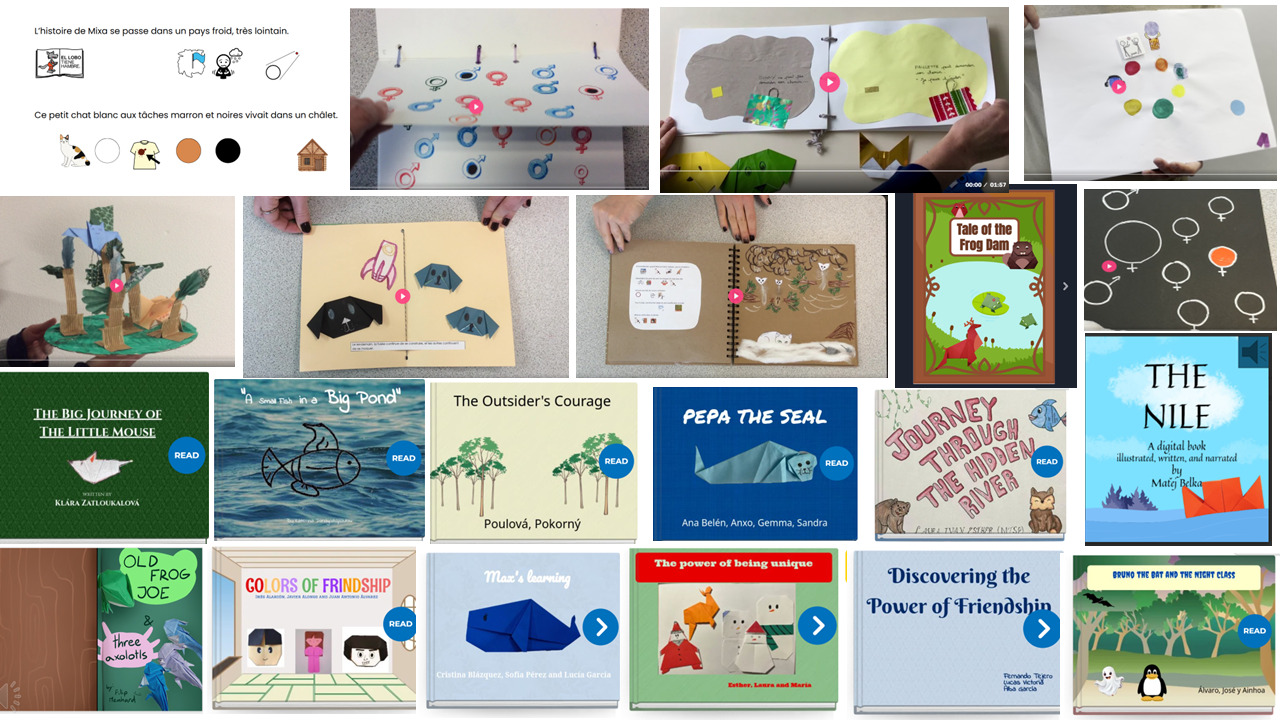 © Students for the COIL Project’s Storytelling-Storytelling for Inclusive Education
Internationalisation Is a Dynamic Process
She also points to the section on internationalised curriculum design as a standout feature.
“It provides clear guidance on integrating a global dimension without having to create entirely new programmes. I find this combination of theoretical foundations and practical examples particularly valuable, because it connects academic reflection with classroom realities. By focusing on intercultural and democratic competencies, it offers an innovative perspective, showing how teacher education itself can be a tool for building more just and inclusive societies.”
“Internationalisation is a dynamic process, not a static one. Educational contexts, policies, technologies, and cultural realities change rapidly, requiring constant review of content, approaches, and examples. Sustained coordination across institutions, teams, and countries is time- and resource-intensive, but it is also what makes the handbook so valuable: it stays relevant, connected to practice, and capable of addressing current challenges in global teacher education.”
Who Can Benefit from the Handbook
HITE is recommended particularly for teacher educators and academic leaders, as well as in-service and pre-service teachers.
“It offers clear, practical ideas for internationalising teacher training, while connecting theory to current, real-world examples. Overall, it is highly valuable for anyone interested in understanding how education can better respond to an increasingly diverse and globalised world,” she notes.
Magdalena emphasises that ongoing collaboration is essential to the success and sustainability of HITE.
“Since keeping the handbook as a living document is one of our main challenges, collaboration is crucial. Other researchers and universities can contribute projects, case studies, or joint initiatives to enrich future editions. This step from local to collaborative work makes HITE—and the EUPeace experience—a transferable model for other European universities seeking to internationalise teacher education in a coordinated, sustainable, and impactful way,” she explains.
One Sentence to Summarise HITE
“A living and practical guide that shows how teacher education can open up to the world, making teachers more inclusive, critical, and prepared for diverse educational contexts.”
– Magdalena Custodio Espinar
We thank Magdalena Custodio Espinar for generously sharing her insights and for exemplifying Comillas’ commitment to the internationalisation of teacher education. The HITE stands as a testament to the collaborative spirit of the EUPeace Alliance, fostering more inclusive, just, and peaceful societies across Europe.
(This interview was originally conducted in Spanish. The full version is available on the Comillas website).
Author: Carolina Sánchez Caminal, Comillas Pontifical University