




Staff
With Erasmus+ training opportunities are available to staff working in education, both in teaching and non-teaching capacities.
Erasmus+ Key Action 1 – Learning Mobility of Individuals provides opportunities for higher education academic and nonacademic staff to engage in professional development activities abroad. It also allows professionals from various fields to teach and train students or staff at higher education institutions. These opportunities can include teaching assignments or training experience, such as job shadowing, observation periods, or participation in training courses.
To ensure high-quality mobility activities with maximum impact, the mobility activity must be related to the staff’s profession and address their learning and personal development needs.
Staff teaching mobility in EUPeace
A teaching mobility abroad takes place at a partner higher education institution. The teaching period abroad enables any teaching staff member at a higher education institution or staff from enterprises to teach at a partner institution abroad. Staff mobility for teaching can occur in any study field. A teaching mobility lasts from 2 days to 2 months (programme countries) or a minimum of 5 days (partner countries) and the teacher commits to a minimum of 8 teaching hours per week. The staff member must be selected in advance within a selection process at their home institution.
Staff training mobility in EUPeace
A training mobility abroad takes place at a partner higher education institution. The training period abroad enables any staff at a higher education institution to take part in a training activity abroad that is relevant to their day-to-day work at the esteemed institution. This may include training events or job shadowing. The training mobility lasts from 2 days to 2 months (programme countries) or a minimum of 5 days (partner countries). The staff member must be selected in advance within a selection process at their home institution.
A period abroad may combine both teaching and training activities.
For either Staff Training or Staff Teaching, it is recommended to use Erasmus+ funds from the participant’s home institution. Travel and accommodation costs can be covered through Erasmus+ KA131 or KA171 funds. The University of Mostar and the University of Sarajevo use International Credit Mobility (KA 171) while other universities use Erasmus+ KA131 funding.
If you are interested in Staff Training or Staff Teaching, please contact the International Relations Office at your home institution.


Testimonials

What was your favourite place during your mobility?
The Yellow Fortress in Sarajevo: A beautiful view over the city, very picturesque, and a man proposed to his future wife right next to us (she said “yes”).
What did you enjoy most about your mobility experience?
Meeting our colleagues in person, discussing and clarifying our topics together, learning about BiH history and culture, especially in Sarajevo and Mostar.
What surprised you about your host country or university?
I was not surprised, but the hospitality and friendliness of every single person we have met during our stay was extraordinary and very welcoming.
Any advice for future mobility students?
If you have a personal contact in BiH, let them show you their country! Our former exchange student showed us her Sarajevo, it was the best day!

What was your favourite place during your mobility?
My favorite place during my stay in Madrid was the Plaza de la Armería next to the Royal Palace of Madrid. We ended our walking tour of Madrid there. The sun was setting, there was music playing, families with kids who were running around and playing catch, friends hanging out. I loved this place and returned to it a couple of times during my evening walks.
What did you enjoy most about your mobility experience?
I truly appreciate the chance I had to exchange ideas and best-practices with alliance colleagues who work in similar projects and/or areas.
What surprised you about your host country or university?
It wasn’t a surprise because I was anticipating it already. Everyone we met was very hospitable and warm.

Three reasons to become mobile:
- Get out of your comfort zone to make new experiences
- Meet nice people and enhance your network
- Experience a different culture and learn that things can be done in a different wa
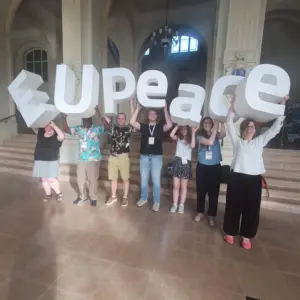
What was your favourite place during your mobility?
Since the days were quite hot, I thoroughly enjoyed taking walks in the early morning, giving myself time to reflect on the previous day’s experiences.
What did you enjoy most about your mobility experience?
I was so happy to connect with colleagues from other universities. Even more wonderful was seeing how the students formed friendships that crossed borders.
What surprised you about your host country or university?
In Germany, academic titles and status still play a significant role. Here, however, I felt they were entirely irrelevant. Until the very end, I couldn’t tell who was a professor, a junior researcher, or a staff member. Everyone felt equally responsible for our collective success.
Any advice for colleagues considering a mobility opportunity?
There is nothing more valuable than personal contact if we want to experience Europe and work together toward building a shared Europe.

What was your favourite place during your mobility?
Stari Most
What did you enjoy most about your mobility experience?
Meeting faculty, staff, students, and partners from around Europe.
What surprised you about your host country or university?
Most striking for me was the campus in Mostar: a city with historical layers and cultural diversity. Mostar offers a vibrant student culture, impressive historical landmarks, and a central location in the region. This combination creates an inspiring environment for research and exchange.
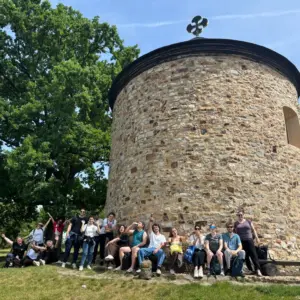
What was your favourite place during your mobility?
My favourite place during the mobility was the hills and nature around Pilsen that we saw during our hike. It was part of our programme to do a “hike and talk”. The trail was really varied, and we had a great teambuilding experience wandering through nature while discussing the buddy system.
What did you enjoy most about your mobility experience?
I truly enjoyed the connections I made with my colleagues from the partner universities. We now share a strong bond and can take our work on the buddy system to the next level. Working face-to-face on the project brought up new ideas that we can now try to implement on various scales.
What surprised you about your host country or university?
The campus is incredibly welcoming and vibrant. There are lounge areas all around, communal kitchens to use, and student pubs. It’s really a “lived-in” campus, and I love that!
Any advice for colleagues considering a mobility opportunity?
Don’t hesitate to do it! Find a programme that suits you and go for it. This was already my second mobility within the alliance, and I can truly say that I feel more connected to my colleagues with every encounter!
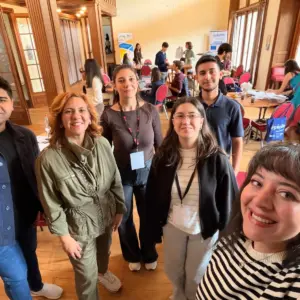
What was your favourite place during your mobility?
My favourite place was the Zoo du Reynou!
What did you enjoy most about your mobility experience?
Our work paying off with a magnificent event where students from all EUPeace universities produce together.
What surprised you about your host country or university?
I was surprised with the zoo being huge and encountering with the various animals such as polar bear, red panda…
Any advice for colleagues considering a mobility opportunity?
It is truly amazing to see the positive outcomes of our work while collaborating with colleagues from different countries, sharing experiences, and having a great time together along the way.

What was your favourite place during your mobility?
Walking through Baščaršija and absorbing the impressions. The team at the University of Sarajevo also organized a city tour for us, which provided very interesting information and historical context.
What did you enjoy most about your mobility experience?
Networking with other international colleagues, expanding my knowledge, and gaining new impressions and ideas.
What surprised you about your host country or university?
I felt very welcome, and it was deeply meaningful for me to experience the EUPeace alliance and its significance through active participation in the program.
Any advice for colleagues considering a mobility opportunity?
I highly recommend taking part in a mobility program: it is a valuable experience that impacts your professional work, expands your international network, and fosters personal growth by broadening your horizons.

Three reasons to become mobile
- To develop intercultural skills
- To know better our home university
- To exchange best practices

Three reasons to become mobile:
- Professional Growth: Develop new skills, enhance your resume, and expand your international network.
- Cultural Enrichment: Broaden your perspective, build resilience, and enjoy unique experiences in a new environment.
- Institutional Impact: Share innovative ideas and strengthen partnerships between universities.
Upcoming Staff Weeks & Similar


Past Staff Weeks & Similar

EUPeace Summer School 2026: What does it mean being a teacher today?


Staff Training Week at the University of West Bohemia in Pilsen


EUPeace Cross-WPs Staff Training Week 2025: Building bridges to facilitate mobility

5th International Erasmus+ Staff Mobility Week “Building Effective University Alliances” at the University of Mostar

