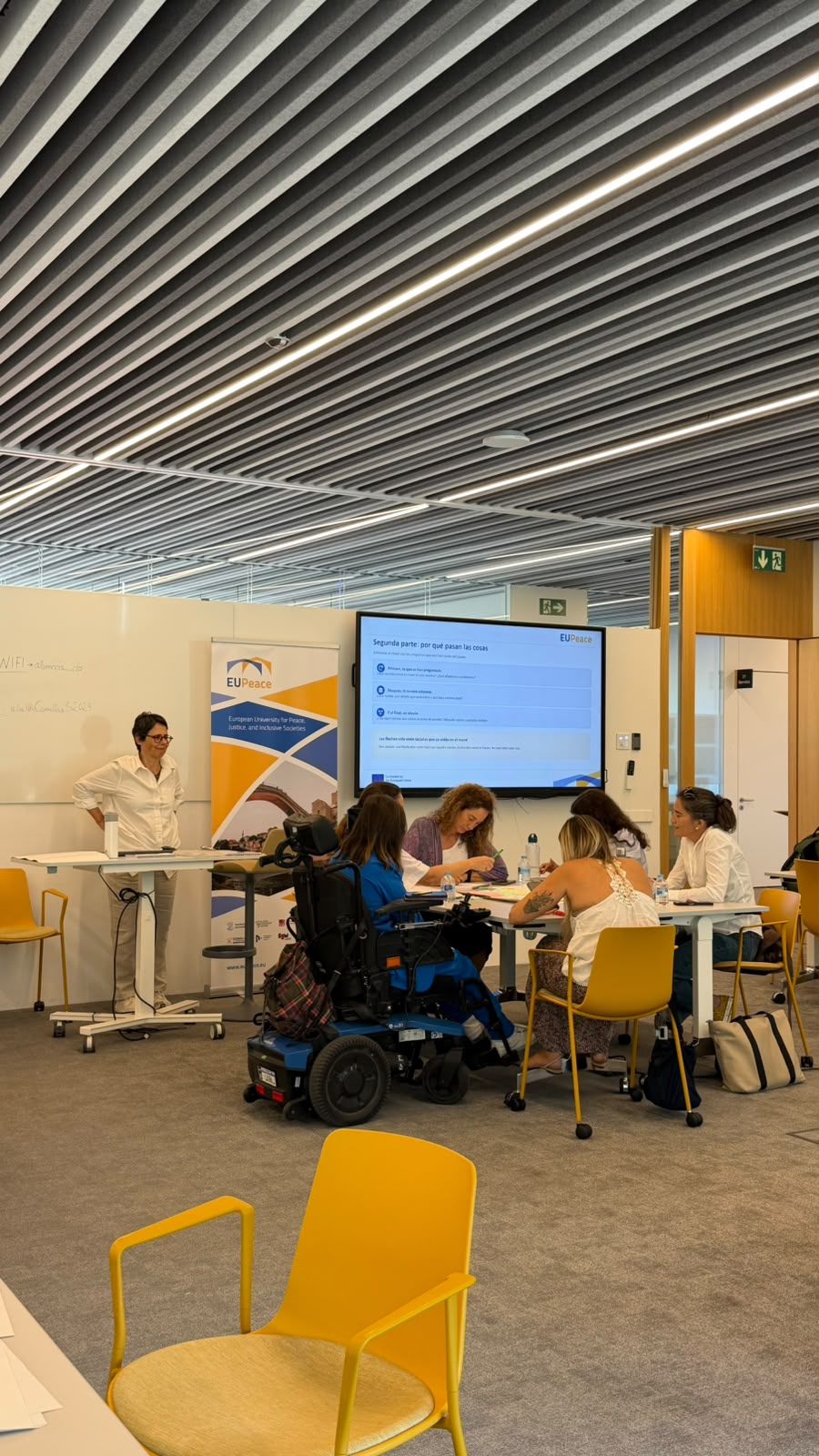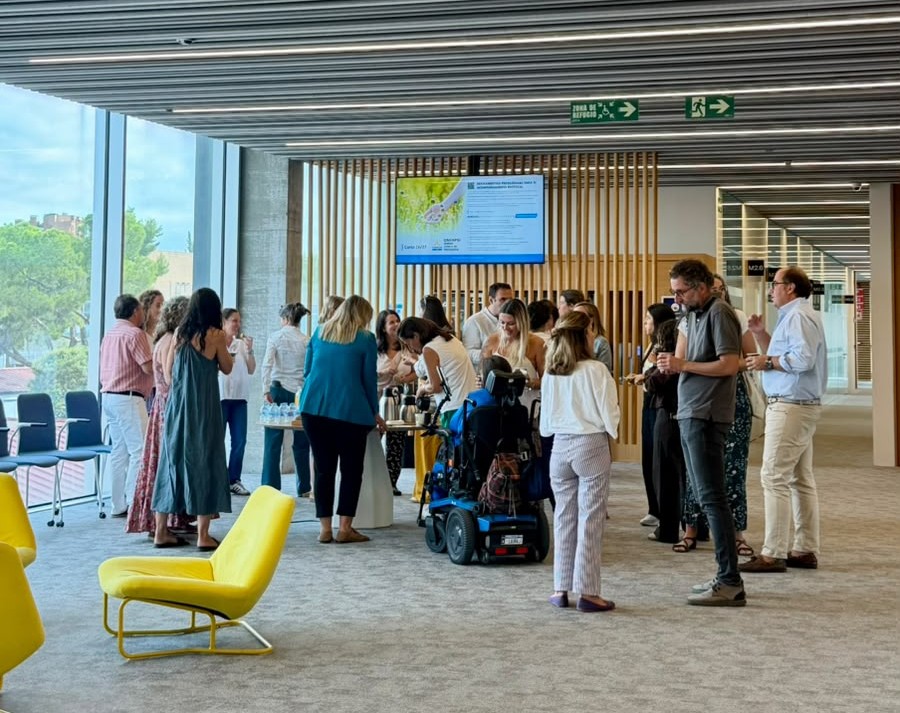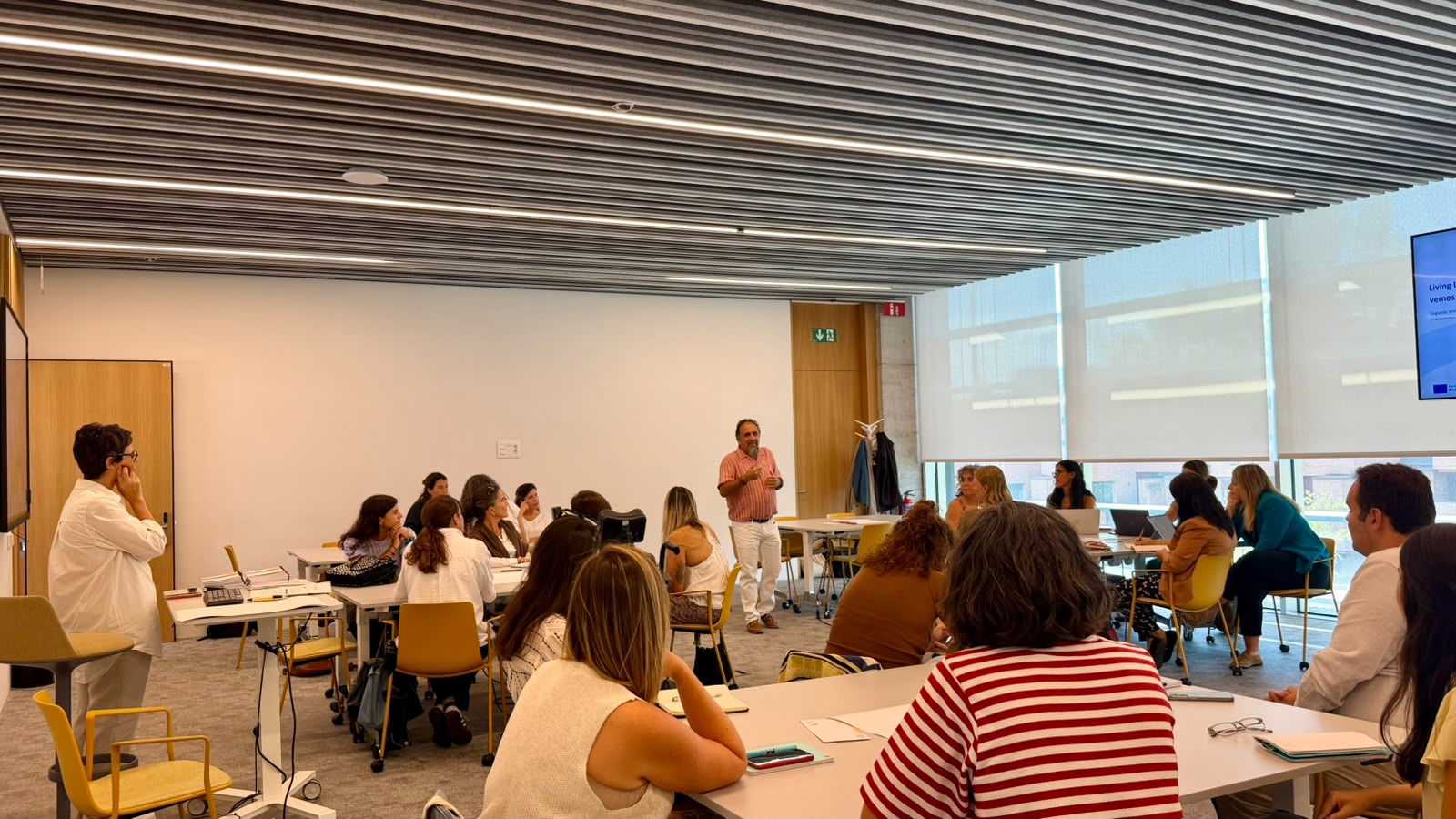

On 17 September 2026, the second in-person session of the ImpactABLE Living Lab took place at Comillas Pontifical University. The Living Lab is led by the Chair of Social Impact at Comillas Pontifical University as part of EUPeace. The session brought together participants from business, the third sector (NGOs & foundations), public administration and academia.
About ImpactABLE
ImpactABLE is an open innovation ecosystem working towards an inclusive society that recognises and values the diverse abilities and talents of every person. It works with the stakeholders involved to develop clear, accessible and robust proposals for assessing the social impact of public and private initiatives that promote the inclusion of persons with disabilities. It takes a systemic approach to this work.
A process in several phases
This session opened the second phase of a process that will run until September 2027. The process follows the evaluative inquiry for systems change methodology developed by Emily Gates and Pablo Vidueira. The first phase explored the current situation. It included a workshop with people with intellectual disabilities from Afanias and an analysis of the regulatory framework and the available data on inclusion and how it is measured.
Contact


Seeing and mapping the systems
Building on that work, the goal of this second session was to see and map the systems involved: to understand which actors take part, who makes the decisions, and which rules, resources and ideas keep barriers to inclusion in place over time. Changing a reality takes more than looking at each initiative on its own. You have to understand the whole.
Carlos Ballesteros, Director of the Chair of Social Impact, welcomed participants and placed the session within the Living Lab’s wider journey. Bárbara Calderón, a researcher at the Chair of Social Impact, facilitated the day and gave the closing remarks.
Two questions, three levels
Participants worked in four groups, using murals built around two big questions. The first was the path of a person with a disability through life, from childhood and school to entering employment and adult life. The second was what persons with disabilities contribute to society (at work, among the people around them, in the community and in culture) and why that contribution often goes unrecognised.
Each mural had three levels: what happens to the person, who supports them and who makes decisions, and which rules, resources or ideas sustain that situation. In the second part of the day, the groups looked for connections between these elements and for the feedback loops that make some problems come back year after year.
Next steps
Based on the proposals from the session, the Living Lab’s steering group will meet on 19 November to identify levers for change. The end goal is to build tools that measure progress towards an inclusive society and its impact on people, organisations and society as a whole.
A collaborative, interdisciplinary project
The project draws on the good practices of the think tank run by the Chair of Social Impact at Comillas Pontifical University. The think tank brings together more than a hundred organisations from the “quadruple helix”: the private sector, the third sector, public administration and academia. The project also builds on the research and practice of an interdisciplinary team from the Faculties of Economics and Business Administration (CEE) and Humanities and Social Sciences (CIHS).