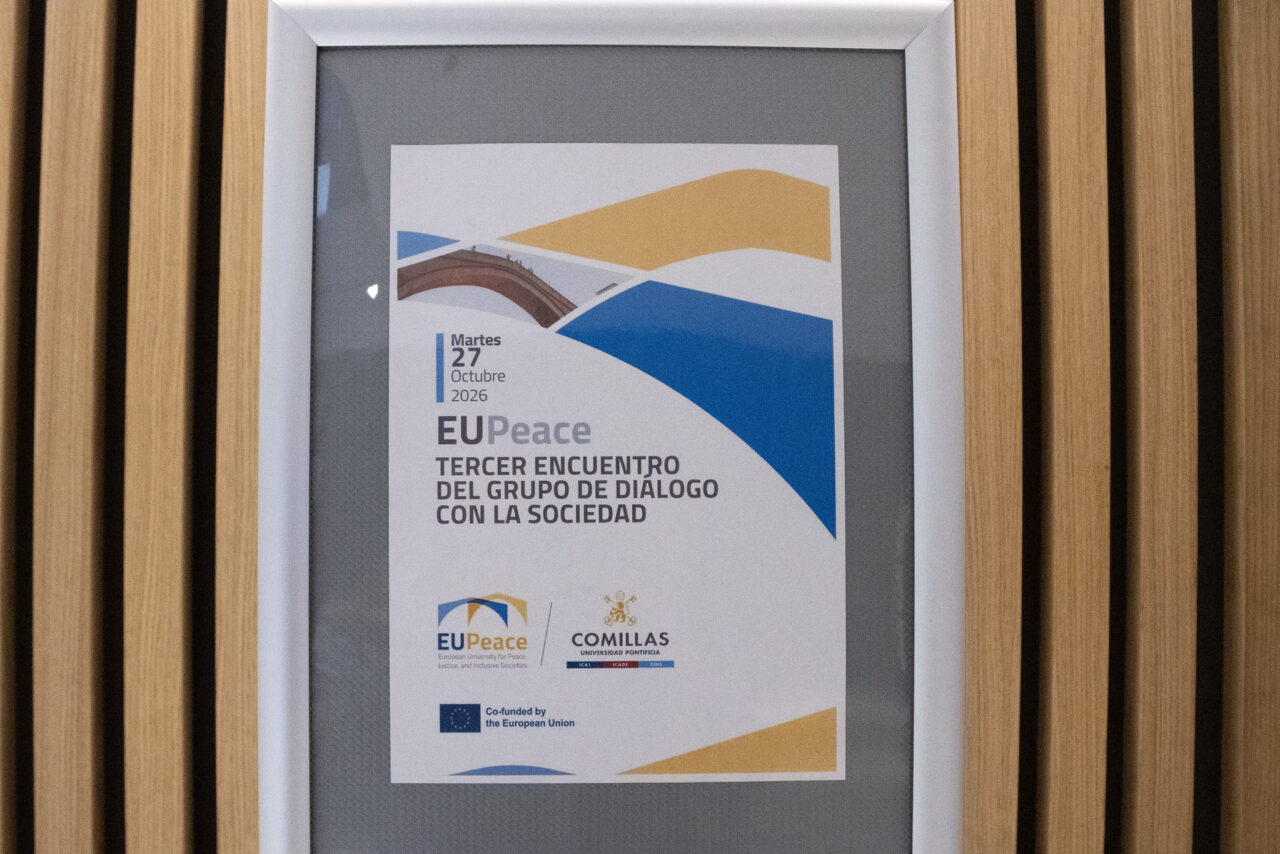
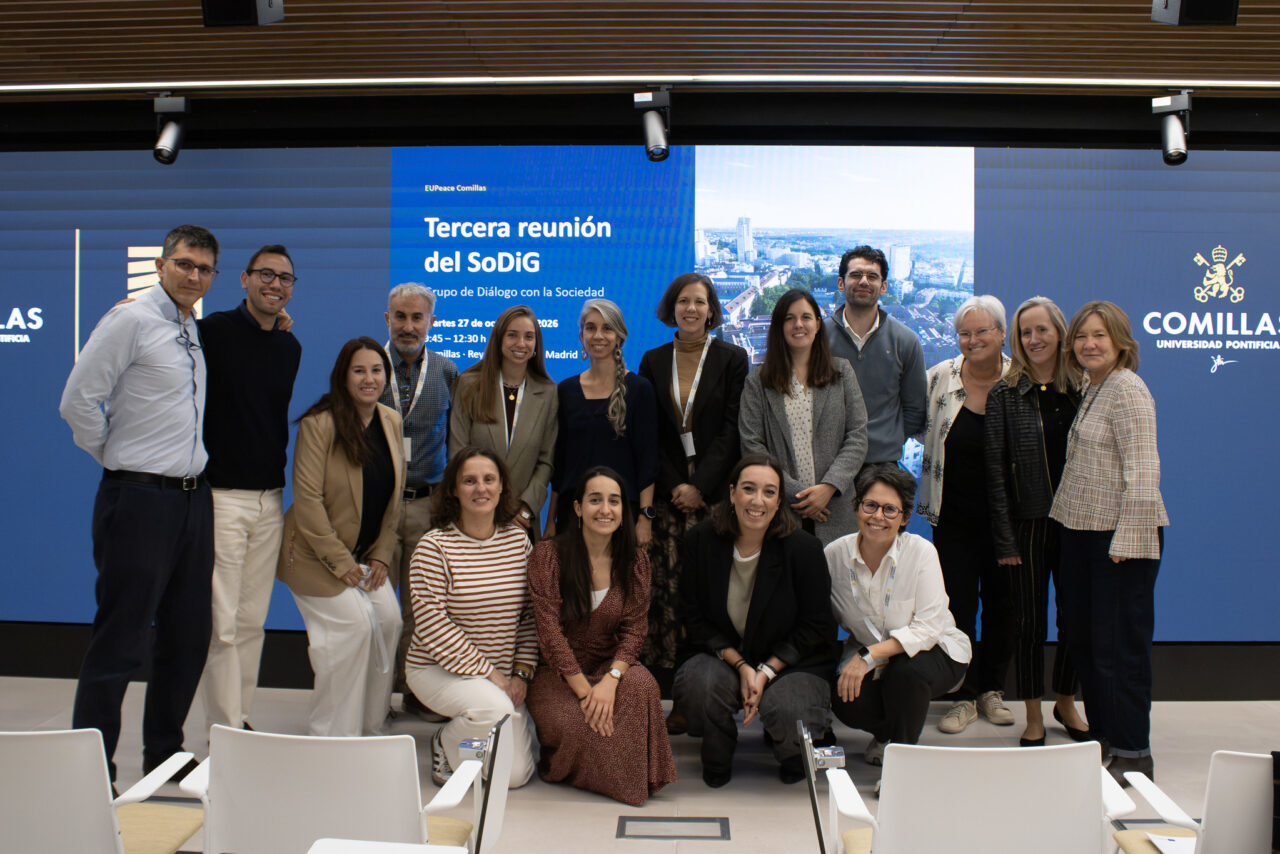
On 27 October 2026, the EUPeace Societal Dialogue Group (SoDiG) at Comillas Pontifical University held its third meeting in Madrid. The group brings together civil society organisations and members of the university community with one shared aim: to connect research with the needs and knowledge of society.
The meeting had two parts. First, three Living Labs presented their progress. Then participants reflected together on the challenges that digital environments pose for children, adolescents and young people.
Three Living Labs, three questions for the SoDiG
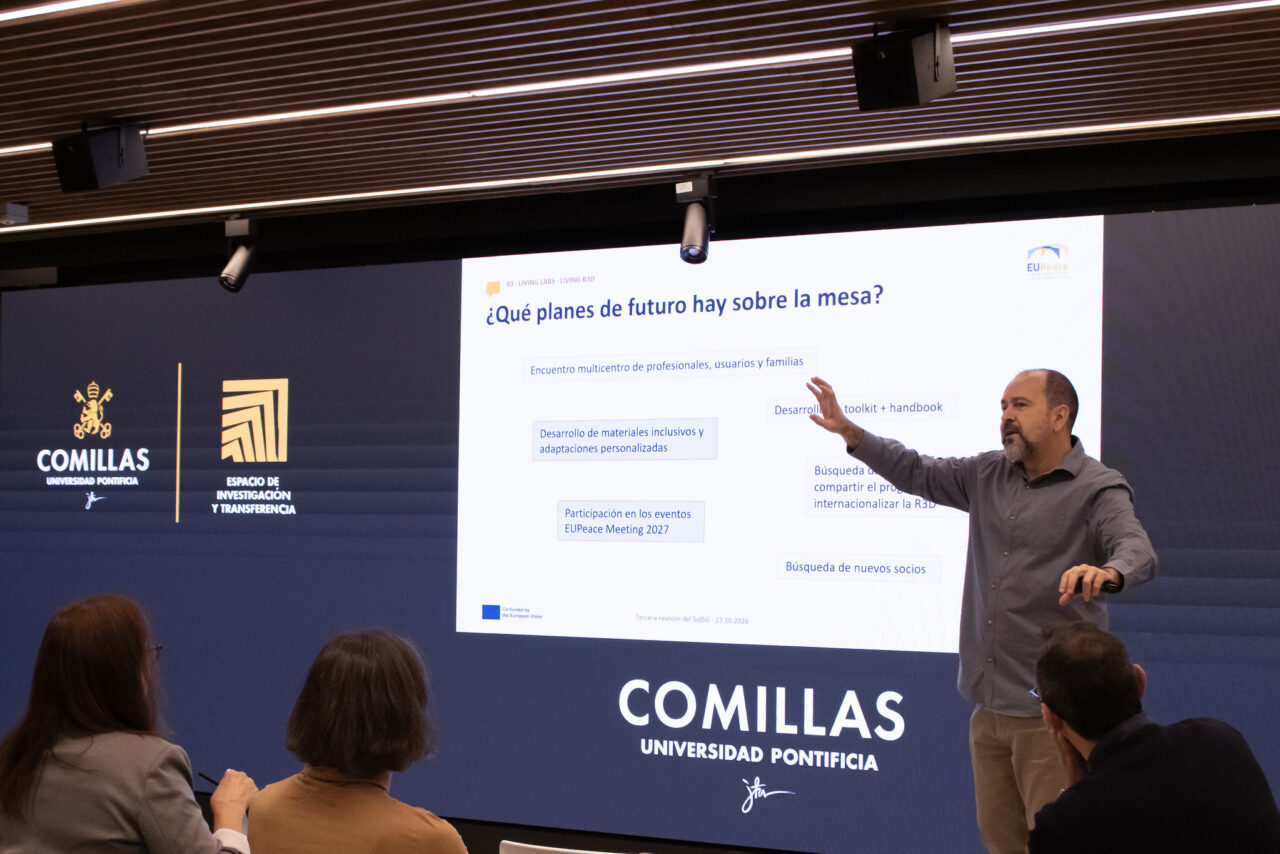
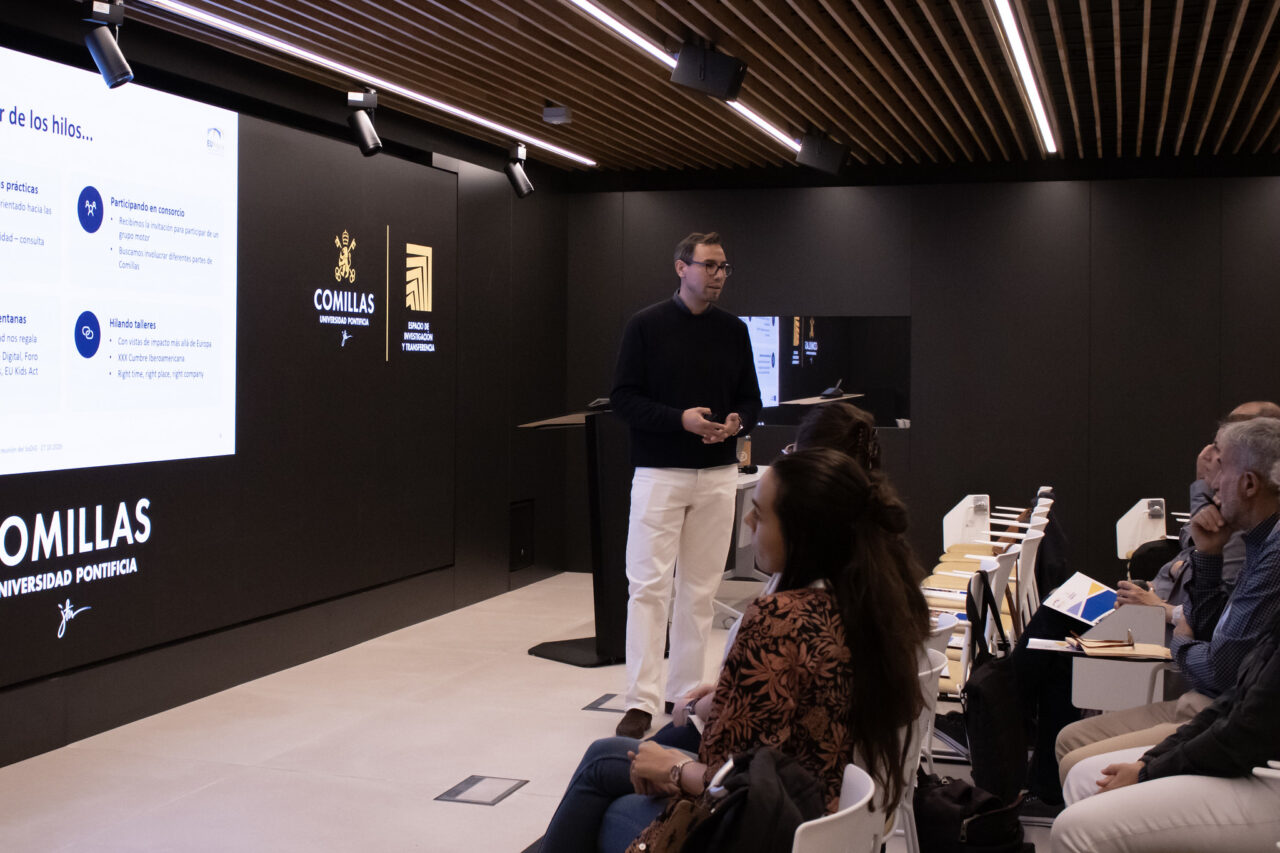
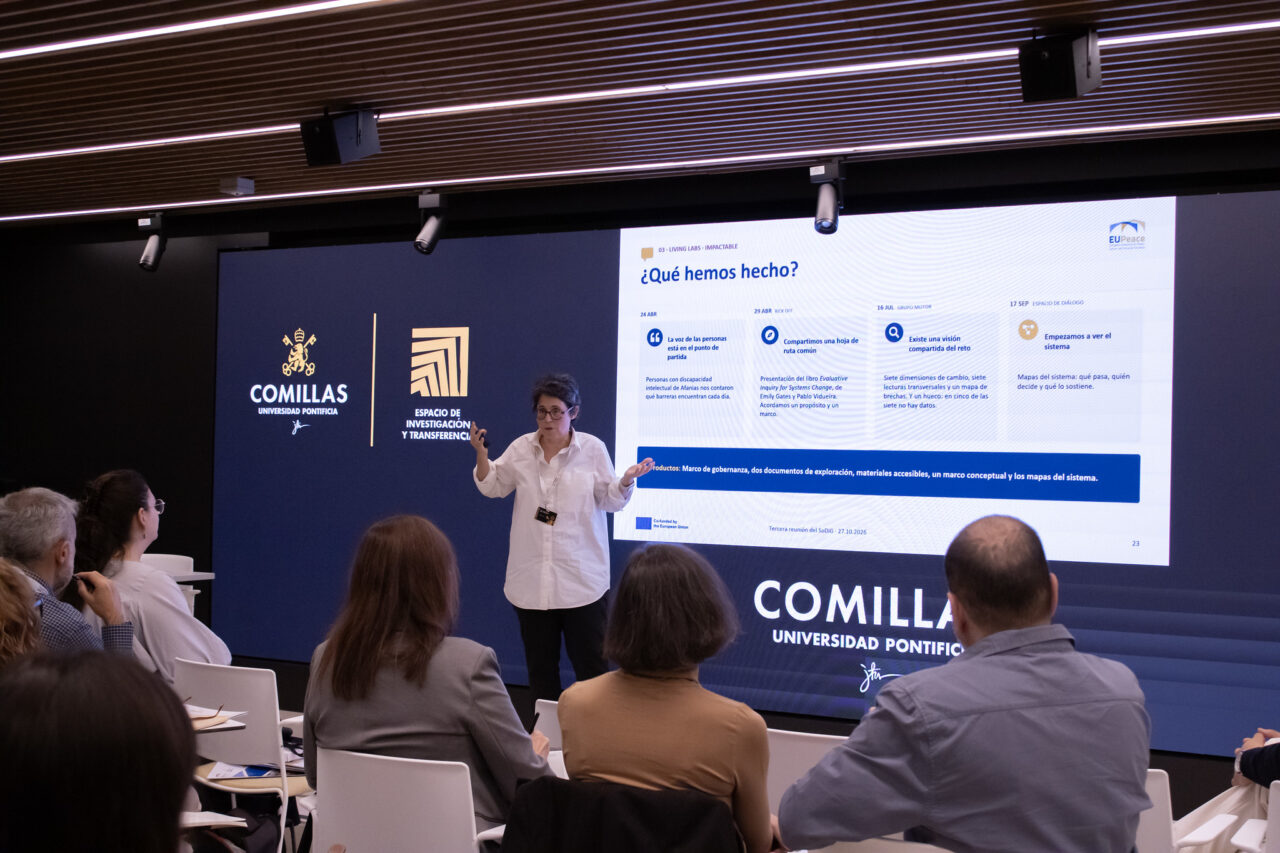
Following a method based on dialogue and co-creation, each project shared its progress and put one concrete question to the group. Living R3D asked for help in finding new partners with complementary knowledge and skills. Sport-Between looked for strategic alliances to widen its cooperation and the reach of its activities. ImpactABLE focused on measuring social impact. It asked how to build simple, workable measurement systems from indicators and tools that already exist, such as those of Spain’s National Statistics Institute (INE).
All three presentations showed how the SoDiG works as a bridge between the university and society. It helps the Living Labs make contacts, build alliances and gain new perspectives that make each project more relevant.
Young people and the digital world: three perspectives
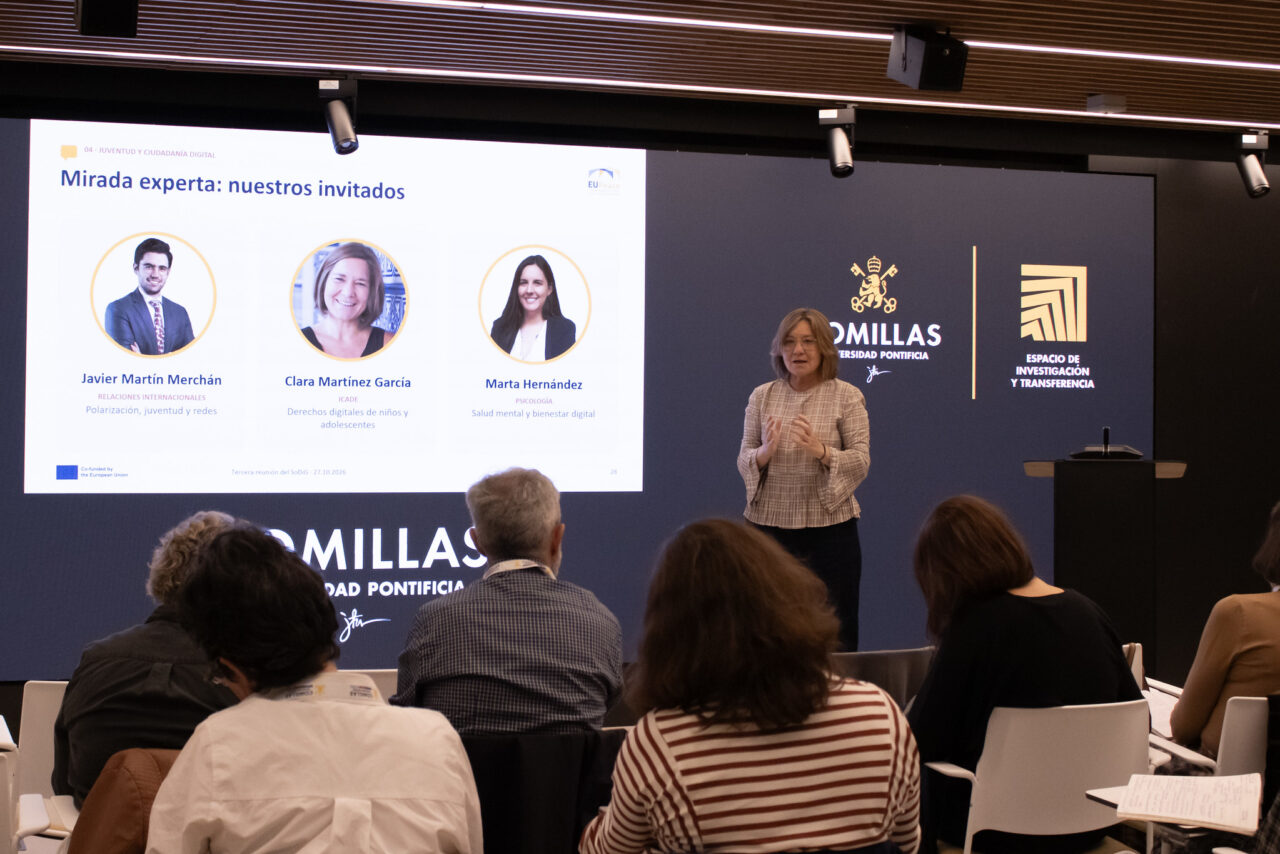
In the second part of the meeting, three Comillas experts approached the topic from international relations, psychology and law.
Javier Martín Merchán looked at young people, social media and polarisation, and challenged some common assumptions. Generation Z is in fact the least polarised generation, although social media dynamics can widen divides. He focused on affective polarisation, the emotional rejection of people who think differently. He warned that it is much easier to create than to reverse, and argued that personal contact and spaces for meeting others are the best antidote.
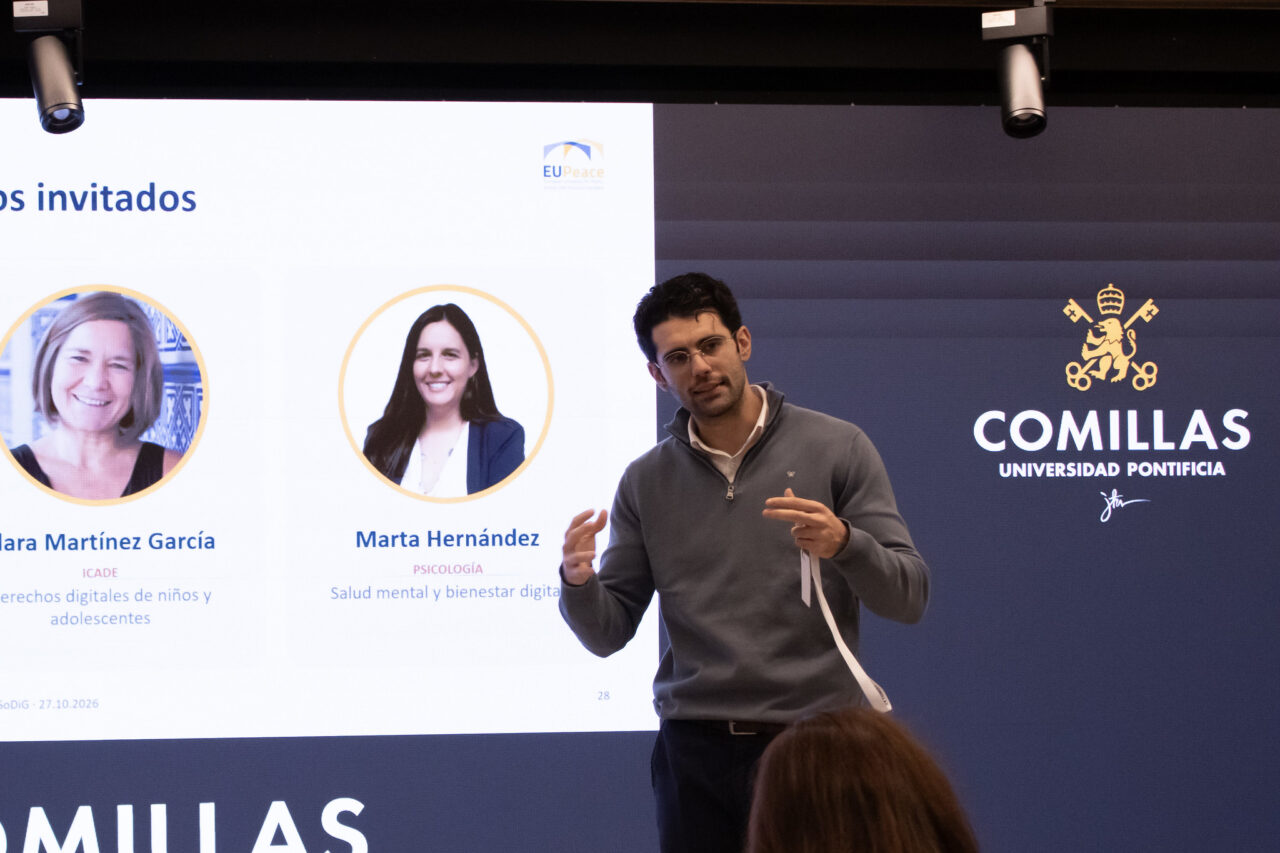
Marta Hernández reflected on how screens affect the emotional wellbeing and relationships of children and adolescents. Rather than looking only at screen time, she suggested asking what young people stop doing when they spend six hours a day in front of a screen, and what they might be escaping from. She questioned the idea of “digital natives” and spoke about sustained attention, about a sense of purpose as protection against excessive use, and about “technoference”, the way technology interferes with relationships. She also made the case for analogue habits such as writing with pen and paper.
Clara Martínez García brought a legal and children’s rights perspective, centred on the best interests of the child. Instead of debates that focus on banning or restricting, she invited participants to ask which rights should be protected and how children can exercise them, recalling that children and adolescents are rights holders. Taking the 1989 UN Convention on the Rights of the Child as her reference point, she warned about “sharenting”, when parents share images and information about their children online, and its effects on privacy, data protection and digital identity.
From reflection to collaboration
The discussion produced several shared ideas: moving beyond simplistic views of young people and technology, rebuilding personal relationships, taking a holistic approach to digital wellbeing, putting children’s rights at the centre, and valuing interdisciplinary dialogue to build fuller answers.
With this third meeting, the SoDiG strengthens its two roles. It supports the EUPeace Living Labs, and it offers a space to reflect on emerging social challenges, where academic knowledge and the experience of civil society organisations turn into new opportunities for collaboration.