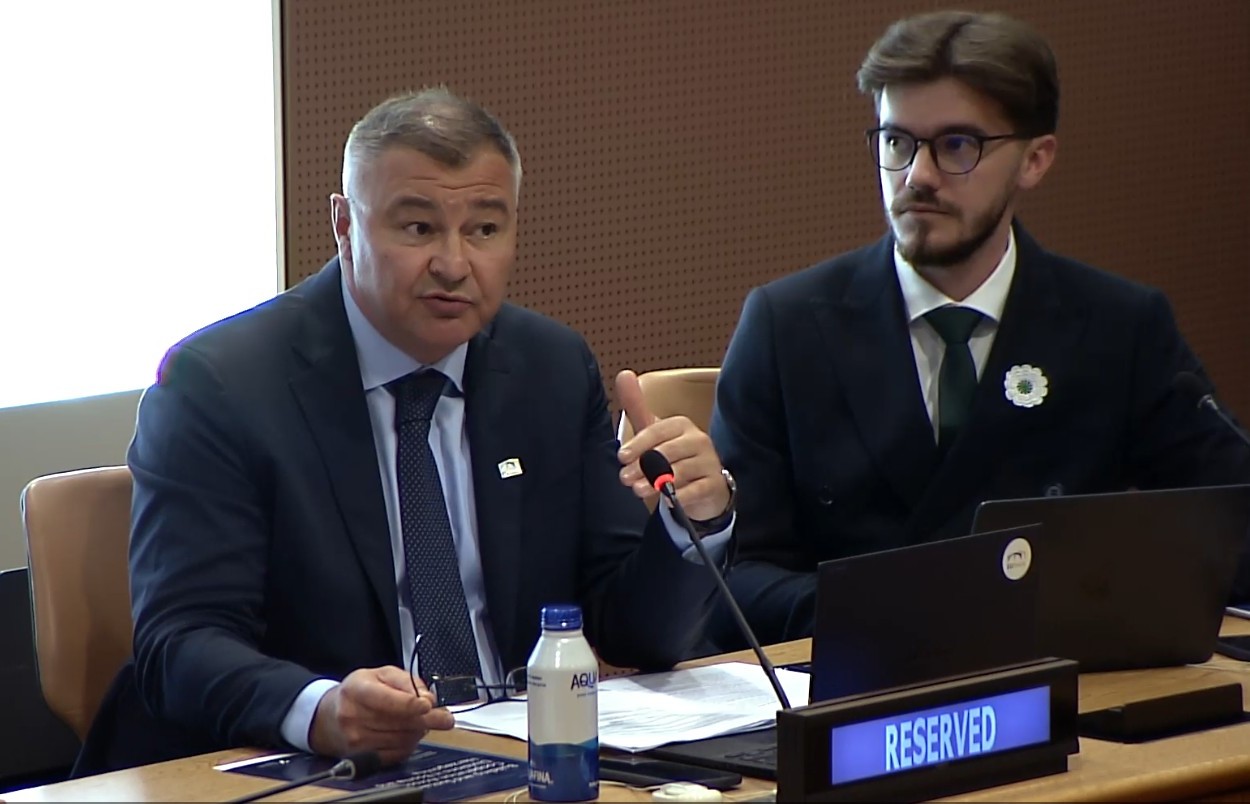
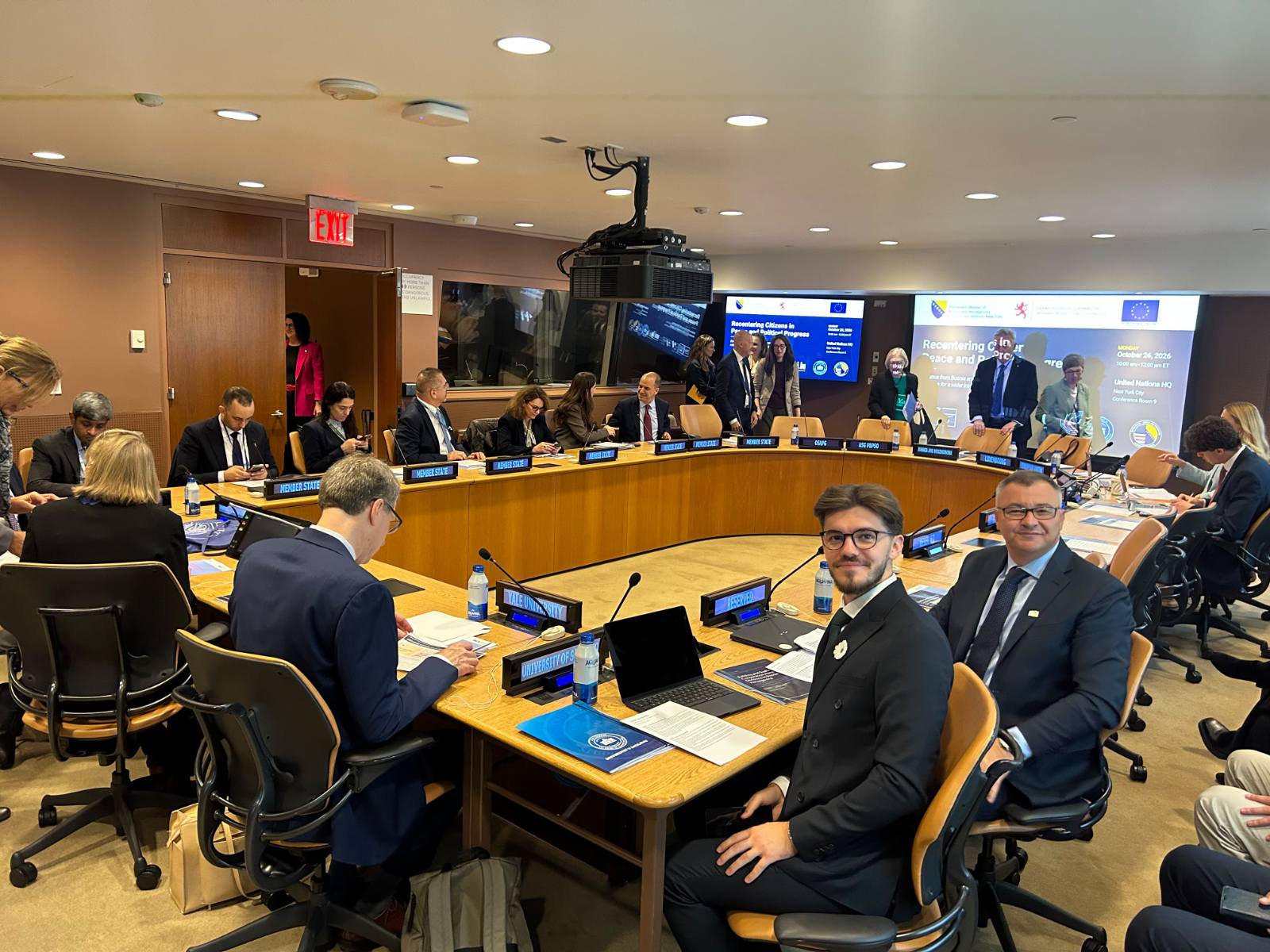
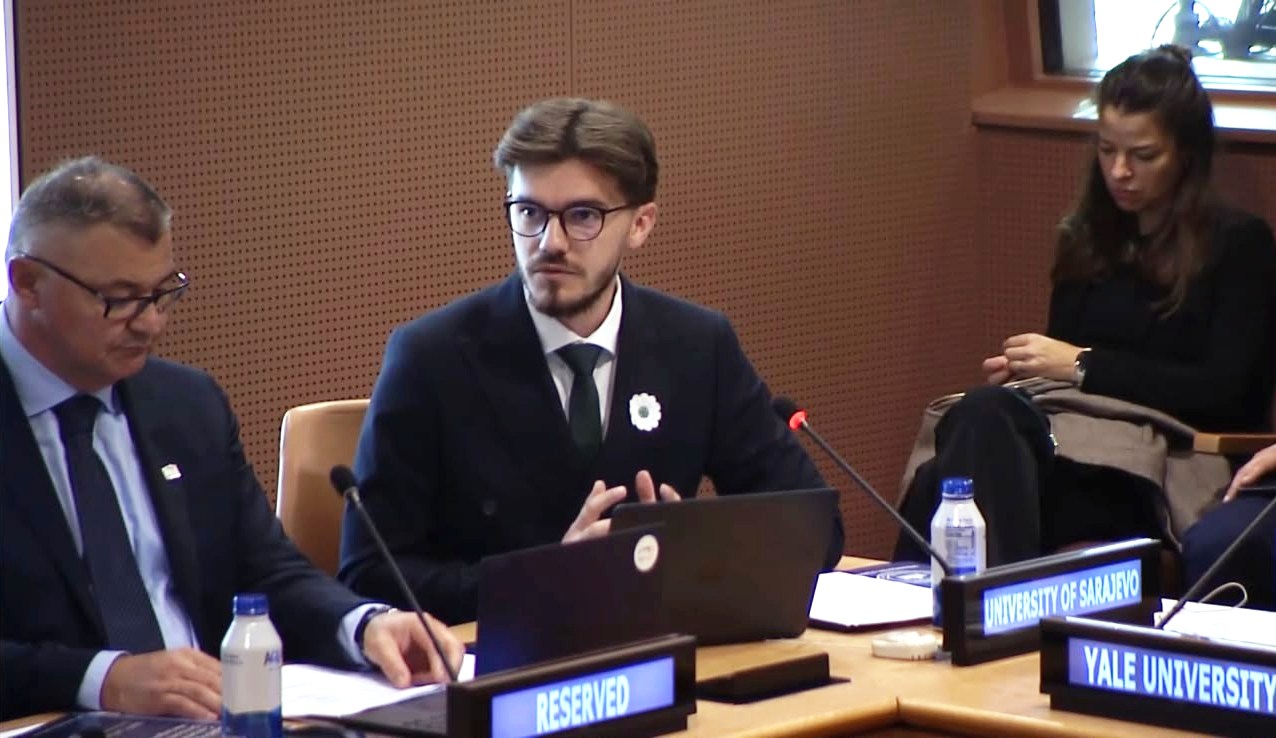
The University of Sarajevo, one of EUPeace’s nine partner universities, presented the Students’ Peace Declaration at the United Nations Headquarters in New York during the international event ‘Recentering Citizens in Peace and Political Progress: Evidence from Bosnia and Herzegovina – Relevance for a Wider International Agenda’. Professor Kemal Durić, Vice-Rector for International Relations, and Imran Pašalić, a representative of the University’s Centre for Research and Development and former President of its Student Parliament, represented the University. Pašalić presented the Declaration and EUPeace activities, while Professor Durić contributed to a moderated panel on universities’ responsibility to educate young people as active contributors to social change.
Connecting research and student action
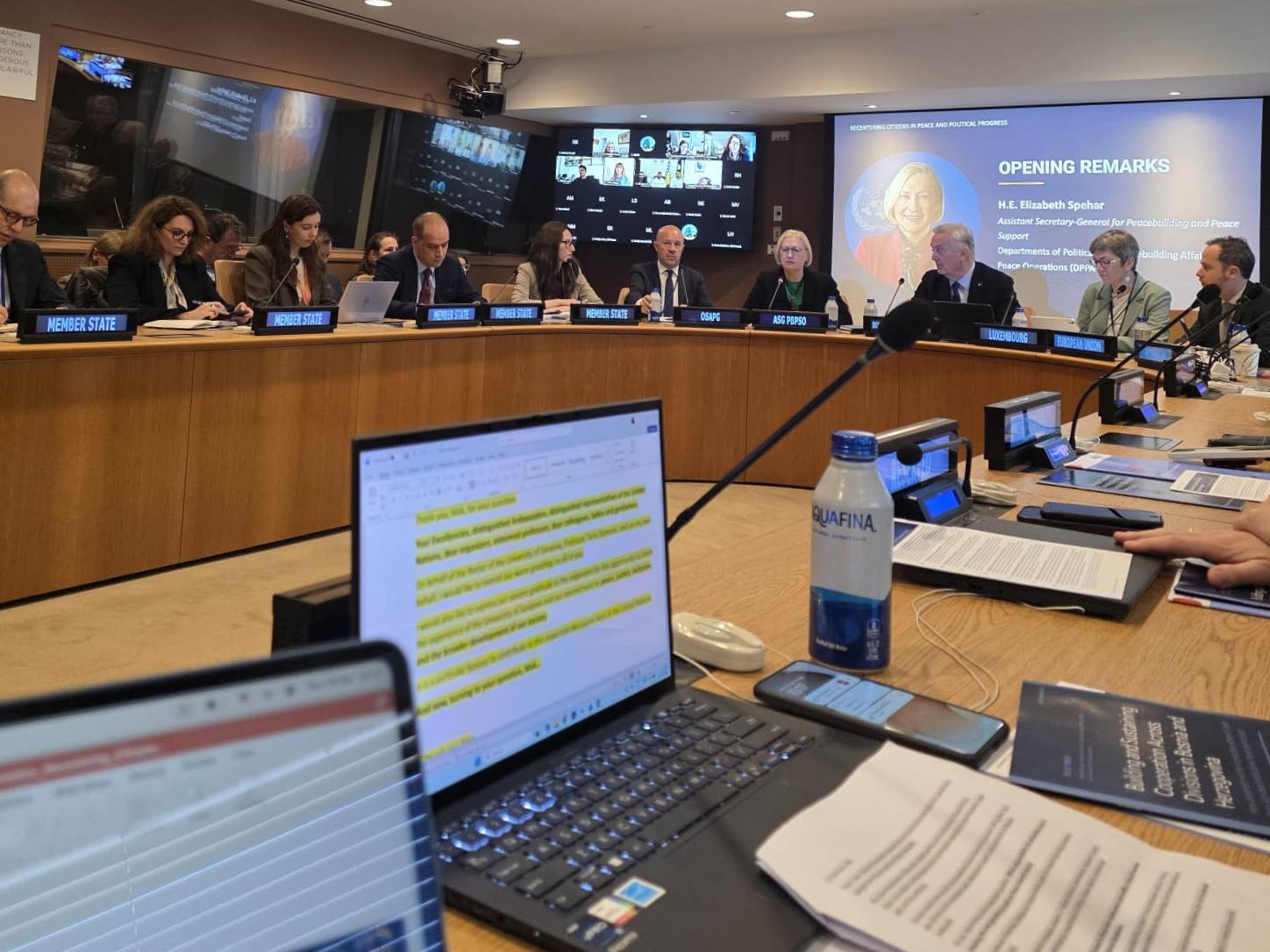
The event was organised by the Permanent Missions of Bosnia and Herzegovina and Luxembourg to the United Nations, in cooperation with the United States–Bosnia and Herzegovina Exchange Council. It brought together representatives of international institutions, diplomats and researchers to explore cooperation in divided and post-conflict societies. Discussions focused on research findings concerning shared civic interests, trust, accountable institutions and practical cooperation across social and political differences. The Students’ Peace Declaration connected these findings with a student initiative seeking to translate peace, dignity, inclusion, academic freedom and dialogue into everyday university and community life.
From Sarajevo to an international network
Initiated by students at the University of Sarajevo and developed within EUPeace, the Students’ Peace Declaration was formally signed at the Parliamentary Assembly of Bosnia and Herzegovina on 17 September 2025. Since then, support has grown from 103 to 156 signatories, connecting students, universities and partners committed to peace and cooperation. EUPeace provides a framework for developing this collaboration across institutions and countries, through education, exchange and student activities. Presenting the Declaration at the United Nations extended this dialogue and highlighted the importance of sustained action and institutional support in turning shared commitments into practice.
Peacebuilding across academic disciplines
Professor Durić emphasised that universities’ responsibility extends beyond professional education: ‘Our responsibility is not only to educate competent professionals, but also responsible citizens. Peacebuilding must not be limited to those studying peace and conflict; it should become an integral part of education across all academic disciplines.’ He highlighted the Declaration as an example of what students can achieve with institutional support and international partnerships such as EUPeace. ‘Our task is not only to help societies overcome existing divisions, but also to educate generations capable of preventing new ones,’ he added.
Turning commitments into practice
Pašalić stressed the importance of moving from endorsement to implementation: ‘Peace is not a final destination; peace is the very way we travel.’ He explained that the signatories seek to turn the Declaration’s words into practices that give them meaning, supported by a growing network of universities and students. For the EUPeace community, this initiative illustrates how student participation, university support and international cooperation can work together to advance peace, justice, and inclusive societies.
Contact